



Oops! Something went wrong while submitting the form.
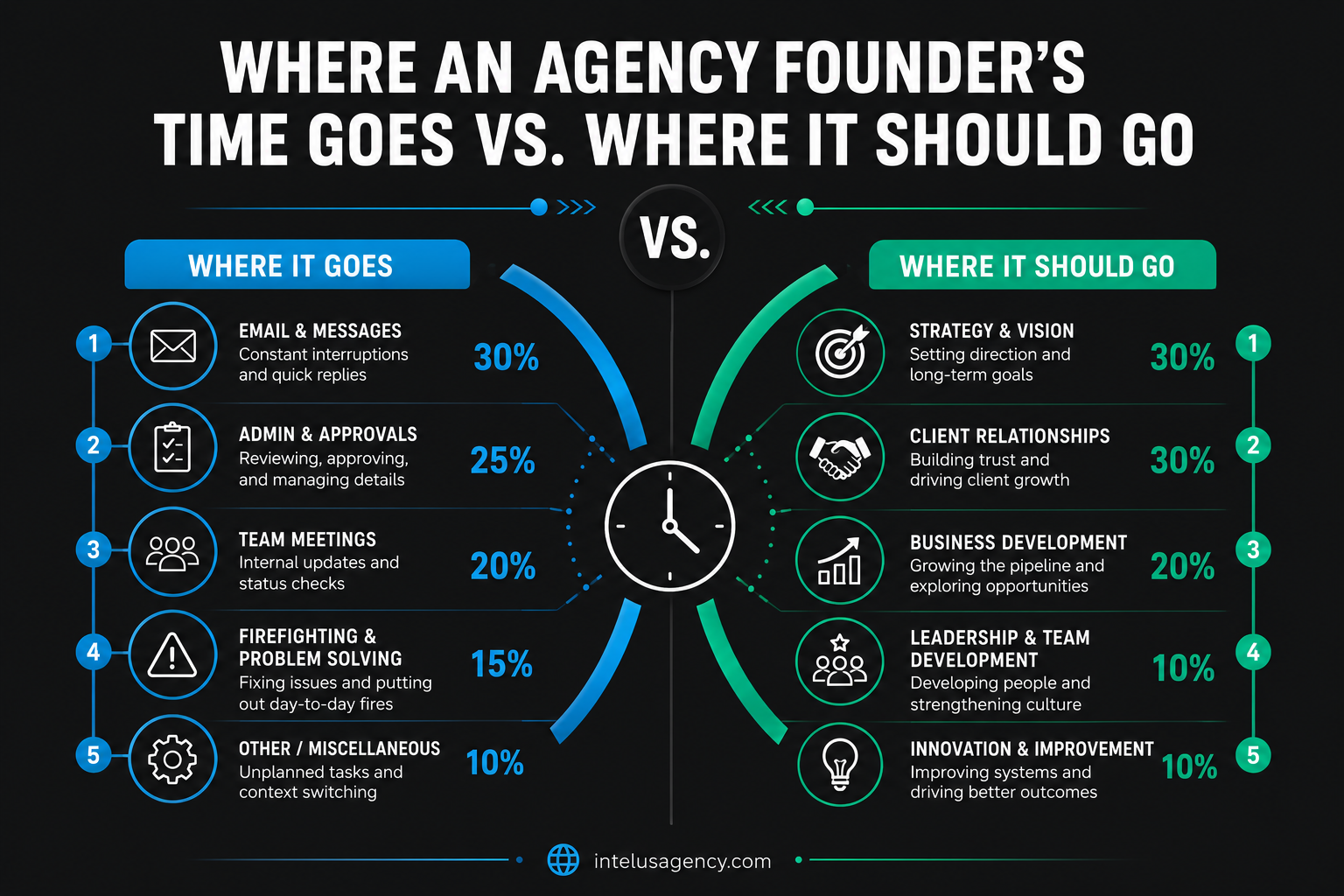
From the outside, agency life can look exciting. New clients are coming in. Revenue is growing. The team is busy. But behind the scenes, many agency owners feel overwhelmed. Their days are packed with meetings, emails, and constant decisions. Even when they work nonstop, they still feel behind.
This is not a time management issue. It is a leadership efficiency issue.
An Executive Assistant often becomes the turning point between feeling stuck and running an agency that actually moves forward.
Why Leadership Efficiency Is the Real Growth Bottleneck
Many agency owners believe their biggest problem is not having enough hours in the day. They try new tools, productivity hacks, and routines. What they miss is that the real issue is being the center of everything.
When every decision, approval, and meeting runs through the founder, growth slows down. The agency depends on one person’s attention, and that attention is limited. Busyness starts to feel like productivity, but nothing truly scales.
Leadership efficiency matters more than hustle. Agencies grow when leaders focus on strategy, relationships, and direction instead of handling every detail themselves. That is why so many founders eventually explore remote staffing solutions that allow them to step out of daily operations and lead at a higher level.
Studies back this up. Research from Harvard Business Review on how CEOs manage time shows that top leaders protect their focus and design their schedules around priorities, not interruptions. Insights from McKinsey on decision-making and organizational performance also show that companies move faster when decisions are structured instead of bottlenecked at the top.
Leadership efficiency is designed. It is not discovered by working longer hours.
The Executive Assistant as a Leadership Multiplier
An Executive Assistant is often misunderstood as just advanced admin support. In reality, the role acts as a force multiplier for leadership.
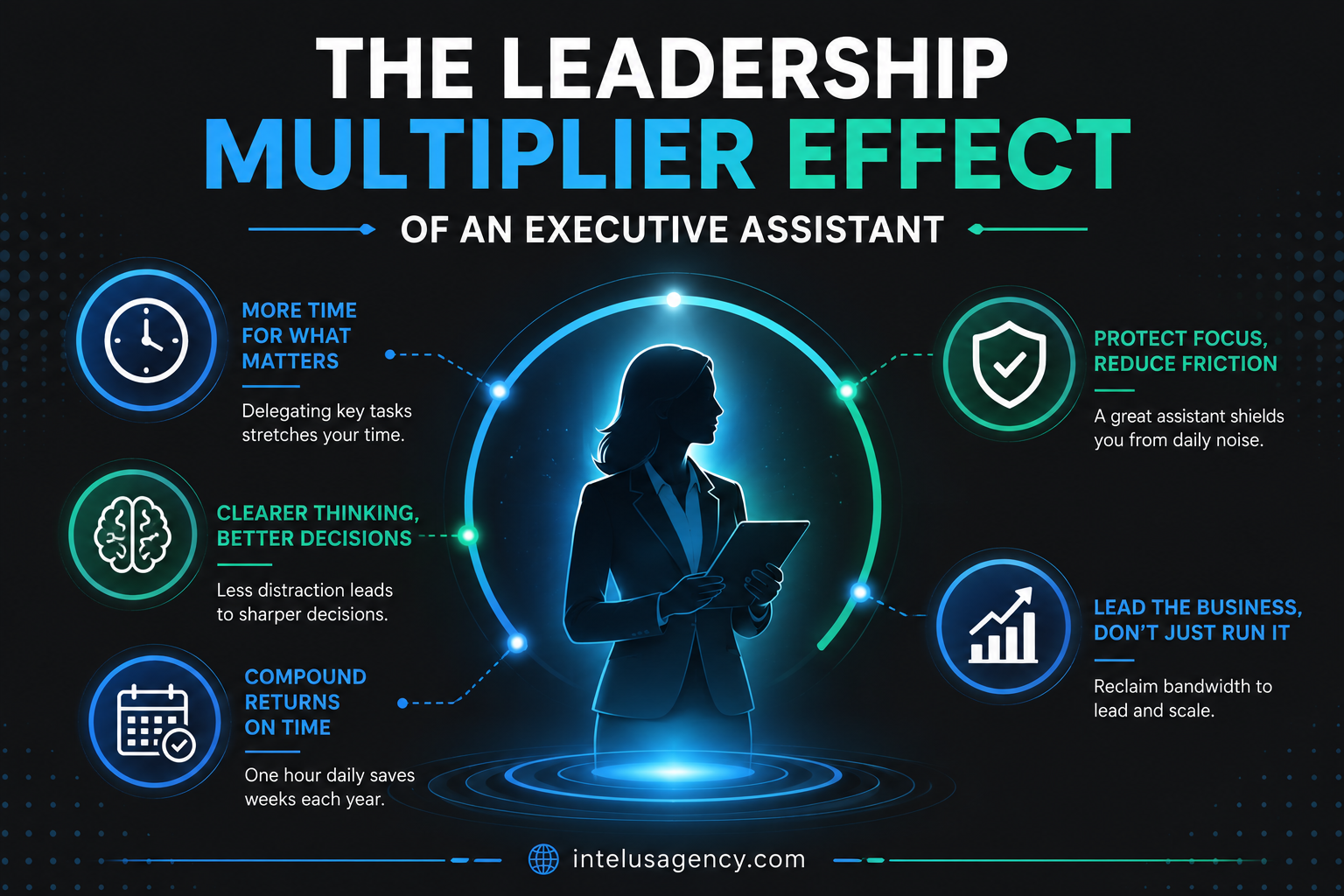
When a leader delegates coordination, preparation, and prioritization, their time stretches. They stop reacting all day and start thinking clearly. Meetings improve. Decisions happen faster. Energy comes back.
Strong leaders do not wait until burnout forces them to ask for help. They build leverage early. They understand that one hour saved every day turns into weeks of reclaimed time over a year.
This is why leadership experts at Forbes regularly explain why every executive needs a great assistant. A high-level assistant protects focus and reduces friction so leaders can operate at their best.
Agencies that invest in executive assistant services see this shift quickly. Instead of being pulled into everything, founders finally have space to lead the business instead of running inside it.
What an Executive Assistant Actually Takes Off Your Plate
Many agency owners hesitate to hire an Executive Assistant because they are not sure what the role truly covers. The impact usually becomes obvious within weeks.
Calendars stop feeling chaotic. An Executive Assistant controls priorities instead of letting meetings fill every open space. Focus time becomes protected instead of constantly interrupted.
Inboxes become manageable. Instead of reading every email, founders only see what truly needs their attention. Messages are filtered, organized, and handled before they become distractions.
Meetings improve as well. Preparation is done ahead of time. Notes are captured. Follow-ups happen automatically. Nothing slips through the cracks.
This is why agencies rely on executive and administrative assistants who are trained to support leadership, not just complete tasks. Leadership moves from reactive to intentional.
Research from Atlassian on reducing meeting overload at work shows that fewer, better-run meetings significantly improve productivity. An Executive Assistant makes that structure possible every single week.
Decision Fatigue Is the Silent Agency Killer
Decision fatigue rarely feels dramatic, but it quietly drains leaders. By the end of the day, even simple choices feel exhausting. Focus drops. Confidence slips.
Every small decision costs mental energy. Approving schedules. Responding to messages. Reviewing documents. Over time, these micro-decisions add up and slow everything down.
Harvard Business Review explains why leaders make bad decisions when tired, showing how exhaustion leads to rushed choices and short-term thinking. This is one of the biggest hidden threats to agency growth.
An Executive Assistant reduces decision fatigue by acting as a buffer. They handle low-impact decisions. They prepare options. They make sure leaders only decide on what truly matters. The result is better judgment and stronger leadership.
Executive Assistant vs. Virtual Assistant — Why the Difference Matters
Many agencies begin with a Virtual Assistant and later realize the role no longer fits their needs. This happens because Virtual Administrative Assistants and Executive Assistants serve different purposes.
A Virtual Assistant or administrative assistants focuses on tasks. An Executive Assistant focuses on flow. A Virtual Assistant waits for instructions. An Executive Assistant anticipates needs and prevents problems before they happen.
As agencies grow, complexity increases. Clients, tools, and team members multiply. At that point, leadership needs coordination, not just execution.
The Indeed Career Guide explains the executive assistant role overview and highlights why executive-level support requires judgment, discretion, and proactive thinking. Understanding this difference saves agencies months of frustration.
The Executive Assistant as an Air Traffic Control Tower
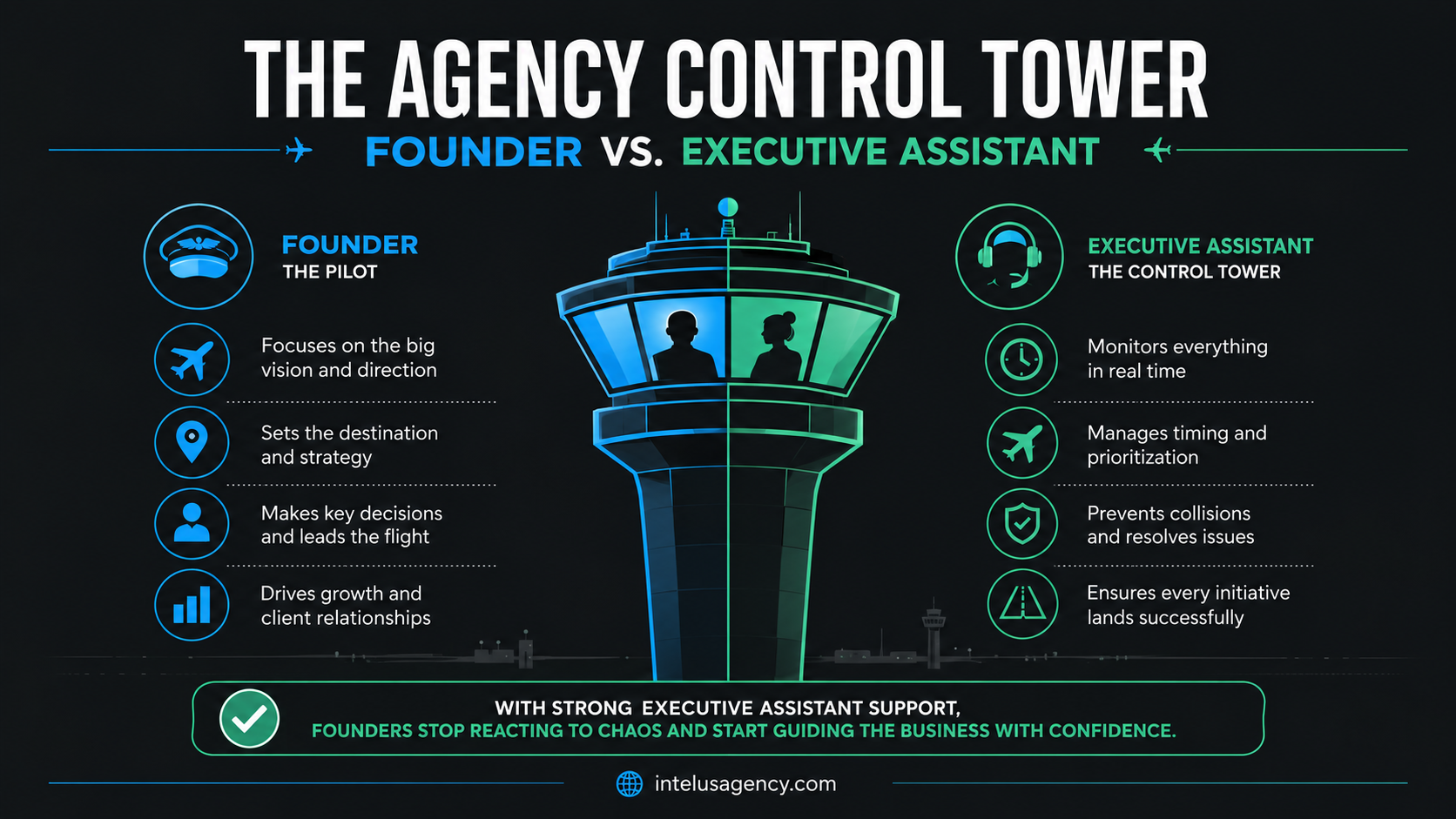
Picture your agency as an airport. Projects are planes. Deadlines are runways. Clients are destinations. The founder is the pilot.
Now imagine that airport without air traffic control.
Flights stack up. Delays grow. Near misses happen. Even the best pilot cannot manage every landing alone.
The Executive Assistant becomes air traffic control. They manage timing. They prevent collisions. They ensure every initiative lands safely. This is why agencies invest in leadership support roles that bring order to growing complexity.
With strong executive assistant support, founders stop reacting to chaos and start guiding the business with confidence.
How Executive Assistant Support Changes Agency Culture
Leadership behavior shapes culture. When founders are overwhelmed, stress spreads. Communication becomes unclear. Teams hesitate to move without approval.
Executive Assistant support changes this dynamic. Decisions happen faster. Communication improves. Accountability increases because follow-through becomes part of the system.
Gallup research on leadership clarity and employee engagement shows that teams perform better when direction is consistent. Insights from MIT Sloan on organizational communication and performance confirm that strong communication systems improve results across the board.
When leaders are supported, teams move forward instead of waiting.
When Is the Right Time to Hire an Executive Assistant?
Many agency owners believe they need to reach a certain revenue number before hiring an Executive Assistant. In reality, complexity matters more than income.
If your calendar controls your day, it is time. If you are the default decision-maker for everything, it is time. If growth feels heavier instead of easier, it is time.
Agencies that choose to hire a dedicated virtual executive assistant often say the same thing afterward: they wish they had done it sooner.
Leadership Efficiency Is Designed, Not Discovered
Great leaders do not magically become efficient. They design efficiency through support and systems.
An Executive Assistant helps agency owners reclaim time, reduce decision fatigue, and lead with clarity. They remove friction and create space for growth.
That is why so many agencies trust Intelus Agency as a source for role-trained leadership support. With the right executive assistant staffing, leadership becomes lighter, clearer, and far more effective.


.png)
.png)

.png)
.png)
