



Oops! Something went wrong while submitting the form.
Sales teams don’t lose deals because they lack skill, they lose them because they lack time and systems. That’s where a CRM virtual assistant changes the game.
A CRM virtual assistant is a remote professional who manages, updates, and optimizes your customer relationship management system. Instead of letting leads sit untouched or follow-ups slip through the cracks, they ensure every interaction is tracked, organized, and acted on.
Today, speed and consistency define success. Businesses in fast-moving industries like e-commerce, freelancing, and real estate can’t afford delays in responding to prospects. A CRM virtual assistant ensures that every lead is nurtured and every opportunity is maximized.
From solo entrepreneurs to growing sales teams, anyone handling multiple leads benefits from this support. It’s not just about saving time, it’s about building a reliable system that scales with your business and keeps your pipeline flowing.

What Does a CRM Virtual Assistant Actually Do?
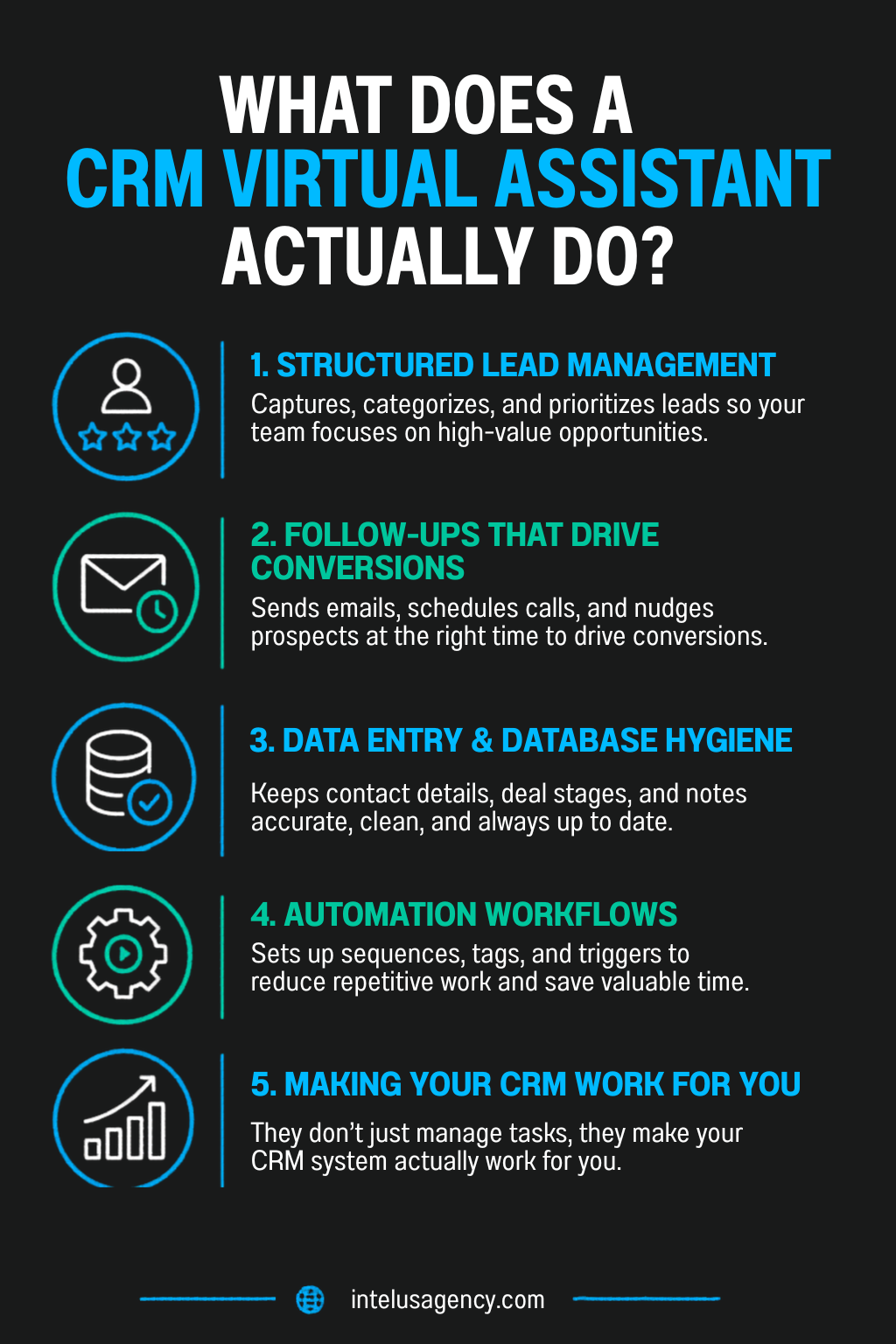
A CRM virtual assistant handles the day-to-day execution inside your CRM tools, making sure your sales system runs smoothly without constant manual input. Instead of juggling spreadsheets, reminders, and scattered notes, they centralize everything into one organized workflow.
At the core, their role revolves around structured lead management, ensuring prospects move through your pipeline efficiently. They also take over follow-ups, one of the most critical yet commonly missed parts of sales.
Another key responsibility is data entry and database hygiene. Clean, updated data means better decision-making. Finally, they support automation workflows, setting up sequences, tagging systems, and triggers that reduce repetitive work. This transforms your CRM from a static database into an active sales engine.
In short, they don’t just manage tasks, they make your CRM system actually work for you.
Key Benefits for Sales Teams
A CRM virtual assistant doesn’t just take tasks off your plate, it transforms how your entire sales team operates. By removing repetitive work and improving consistency, it creates a system where every action is intentional and every lead is handled properly.
First, it saves time at scale. Sales reps no longer need to spend hours updating records, chasing follow-ups, or organizing contacts. Instead, they can focus on what actually drives revenue, closing deals and building relationships.
Second, it improves organization across the board. With every lead properly tagged, tracked, and updated, your pipeline becomes clear and predictable. No more missed opportunities or confusion about deal stages.
Third, it directly boosts conversions. Consistent follow-ups and structured nurturing increase the chances of turning prospects into paying customers. According to sales productivity statistics, teams that optimize their workflows consistently outperform those that rely on manual processes.
Finally, it reduces costly manual errors. Mistakes in data entry, missed emails, or forgotten tasks can cost deals. A CRM virtual assistant ensures accuracy and consistency, which leads to better decision-making and stronger results.

Get a CRM Virtual Assistant for Your Sales Team Today
Book a Free Consultation today.https://www.intelusagency.com/outsourcing-consultation
CRM Virtual Assistant Use Cases by Industry
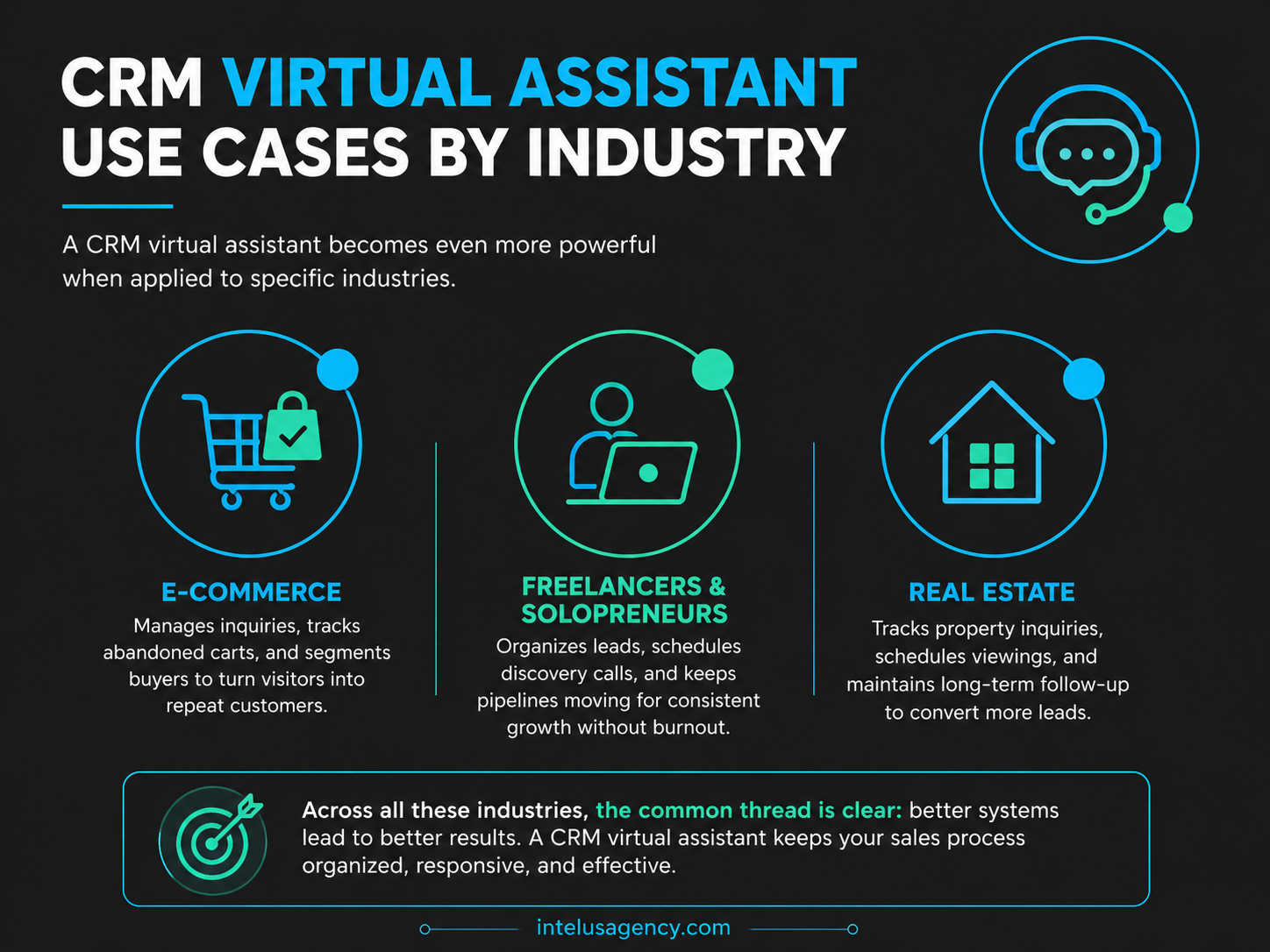
A CRM virtual assistant becomes even more powerful when applied to specific industries. While the core functions remain the same, the way they support workflows varies depending on how leads are generated, nurtured, and converted.
In e-commerce, speed is everything. With multiple touchpoints across email, chat, and ads, having someone maintain order in your CRM ensures no potential sale is lost.
For freelancers and solopreneurs, the challenge is juggling delivery and client acquisition. Instead of relying on memory or scattered notes, freelancers get a structured system that supports consistent growth without burnout.
In real estate, timing and persistence are critical. Leads often require multiple touchpoints before converting. Leveraging insights from real estate CRM trends, they help agents stay top-of-mind with prospects over weeks or even months.
How CRM Virtual Assistants Improve Sales Workflows
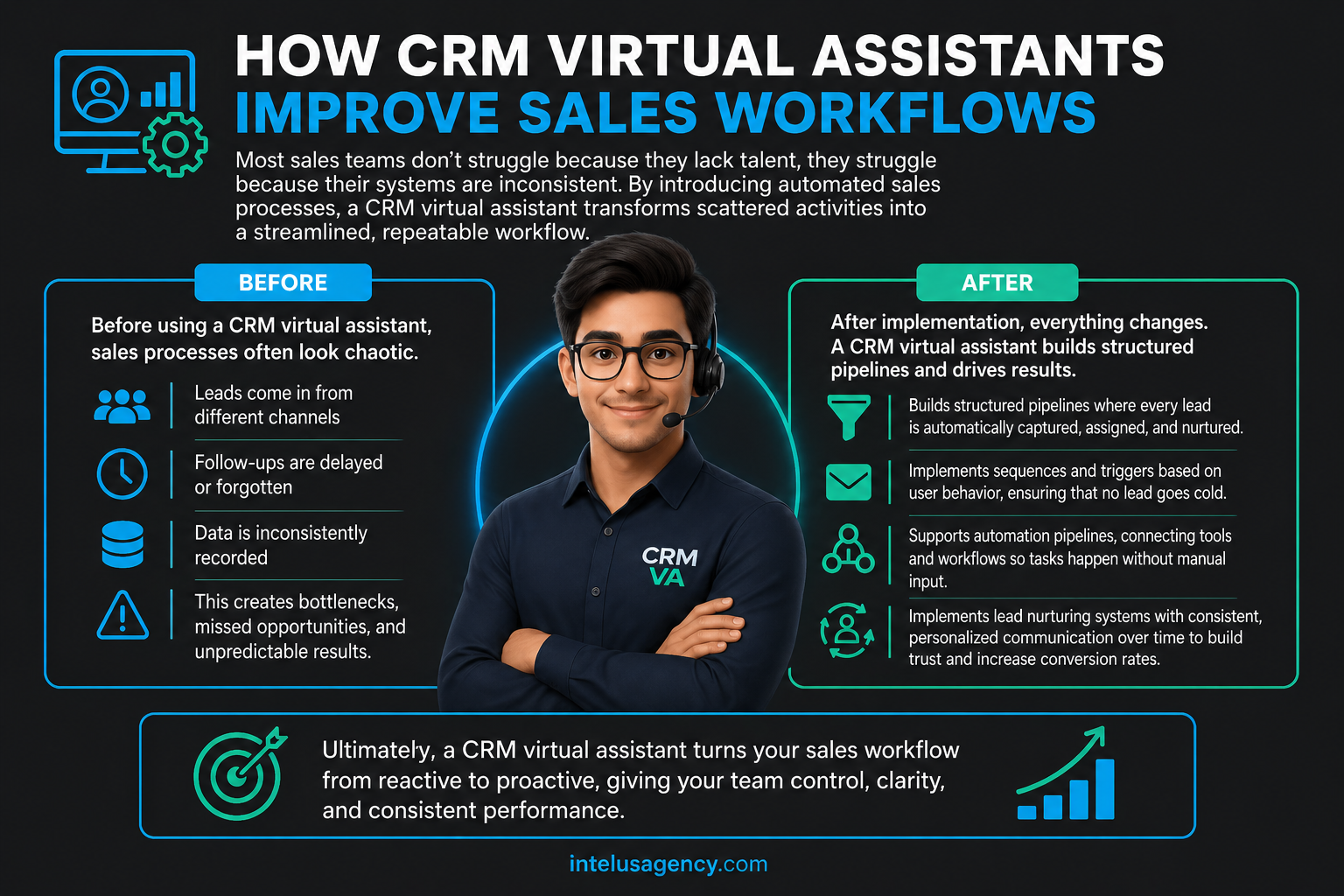
Most sales teams don’t struggle because they lack talent, they struggle because their systems are inconsistent. By introducing automated sales processes, a CRM virtual assistant transforms scattered activities into a streamlined, repeatable workflow.
Before using a CRM virtual assistant, sales processes often look chaotic. Leads come in from different channels, follow-ups are delayed or forgotten, and data is inconsistently recorded. This creates bottlenecks, missed opportunities, and unpredictable results.
After implementation, everything changes. A CRM virtual assistant builds structured pipelines where every lead is automatically captured, assigned, and nurtured. They implement sequences and triggers based on user behavior, ensuring that no lead goes cold.
They also support automation pipelines, connecting tools and workflows so tasks happen without manual input. For example, when a new lead enters the system, it can trigger an email sequence, assign a sales rep, and schedule a follow-up, all instantly. Resources like this sales automation guide highlight how powerful these systems can be when properly executed.
Another major improvement comes from lead nurturing systems. Instead of random outreach, prospects receive consistent, personalized communication over time. This builds trust and significantly increases conversion rates.
CRM Virtual Assistant vs Hiring In-House Staff
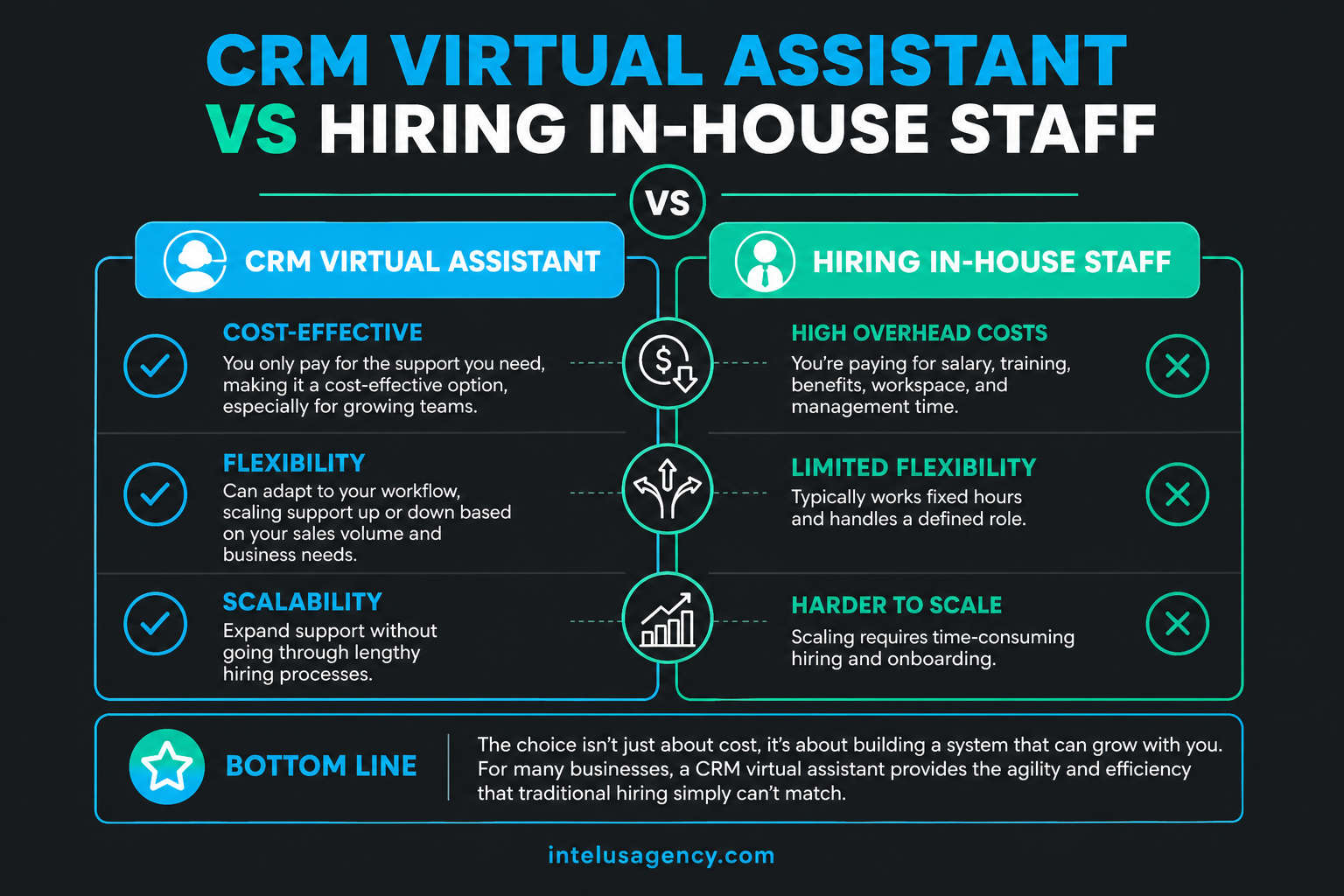
When deciding between a CRM virtual assistant and an in-house hire, the difference comes down to efficiency, flexibility, and long-term scalability.
How to Choose the Right CRM Virtual Assistant
Choosing the right CRM virtual assistant isn’t just about finding someone who can follow instructions, it’s about finding someone who can strengthen your entire sales system.
Start by looking for CRM expertise. Your assistant should be familiar with popular platforms and understand how pipelines, automation, and lead tracking work. This ensures they can contribute immediately without extensive training.
Next, evaluate their technical skill set. A strong CRM virtual assistant should know how to set up workflows, manage integrations, and maintain clean data. These are the foundations of a high-performing sales system.
Communication is equally critical. Since they’ll be handling follow-ups and customer interactions, they must be clear, professional, and consistent. Strong communication ensures your brand voice remains intact across every touchpoint.
You should also consider their problem-solving ability. The best CRM virtual assistants don’t just execute tasks, they identify gaps, suggest improvements, and help optimize your processes over time.
Finally, look for reliability and adaptability. Sales environments change quickly, and your assistant should be able to keep up without constant supervision.
The right choice isn’t just support, it’s a strategic advantage that strengthens your entire sales operation.
Conclusion
Sales is no longer just about skill, it’s about systems. In a world where speed, consistency, and personalization define success, relying on manual processes puts you at a serious disadvantage.
A CRM virtual assistant gives you that competitive edge. It ensures every lead is tracked, every follow-up is executed, and every opportunity is maximized. Instead of reacting to missed chances, your team operates with structure, clarity, and confidence.
Looking ahead, sales will only become more automated and data-driven. Businesses that invest in systems now will outperform those that rely on outdated workflows. A CRM virtual assistant isn’t just a support role, it’s a critical part of future-ready sales operations.
Get a CRM Virtual Assistant for Your Sales Team Today
Book a Free Consultation today.
https://www.intelusagency.com/outsourcing-consultation


.png)

.png)
.png)
.png)
