



Oops! Something went wrong while submitting the form.
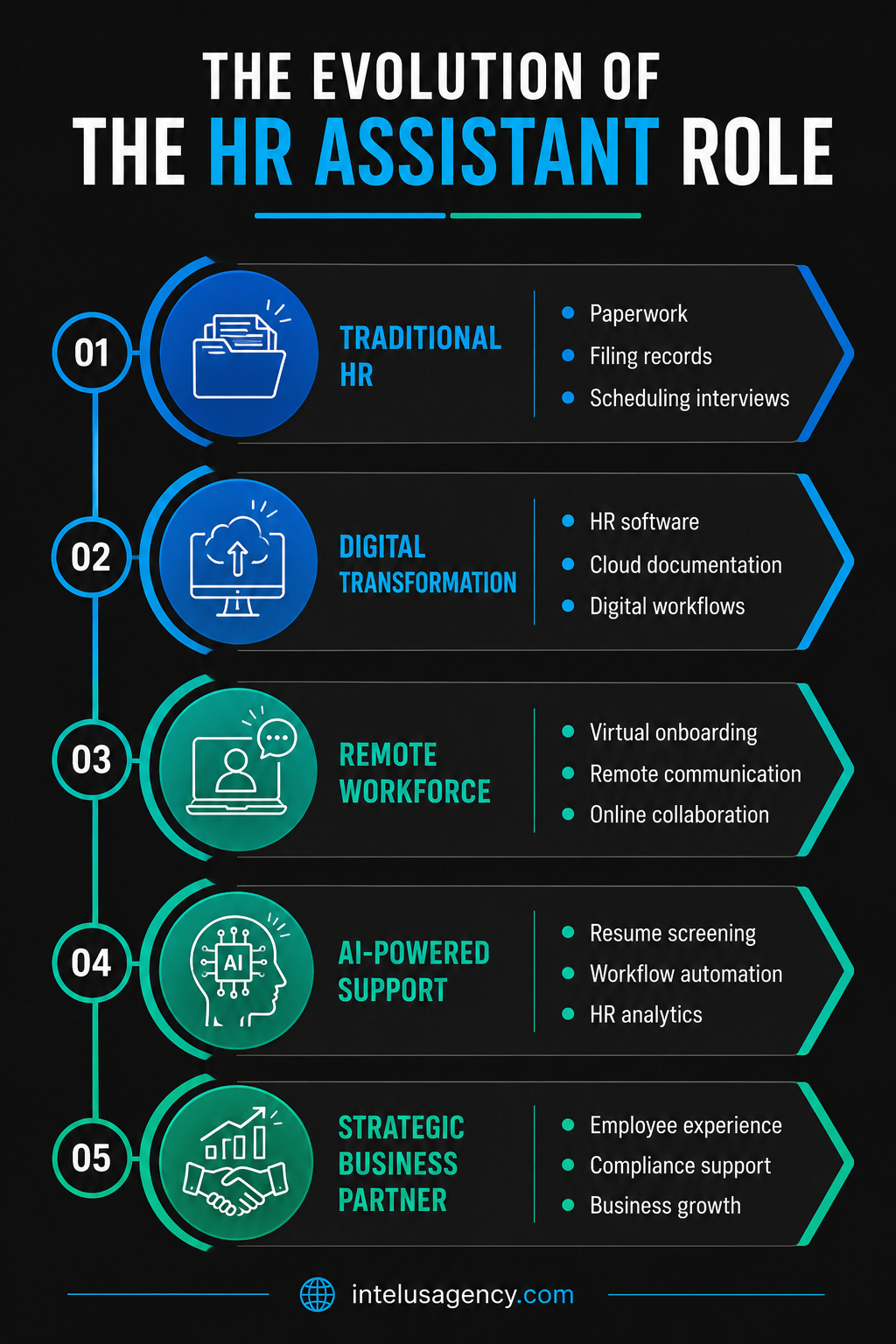
The role of the HR assistant has come a long way from handling paperwork, filing employee records, and scheduling interviews. While these administrative responsibilities remain important, today's workplaces expect HR professionals to contribute far beyond routine tasks. As businesses embrace digital transformation, flexible work arrangements, and employee-centered strategies, HR assistants are becoming valuable partners who help organizations operate more efficiently and build stronger teams.
Driven by evolving future of work trends, companies now seek HR assistants who can support recruitment, improve employee experiences, navigate compliance, and leverage modern HR technologies. Rather than simply managing processes, they play an active role in helping businesses adapt to change and sustain growth. In the sections ahead, we'll explore how the HR assistant role has evolved, the skills that matter most for the future, and why investing in capable HR support is becoming a competitive advantage for organizations of every size.
How the HR Assistant Role Has Changed
Modern workplaces have transformed the expectations placed on HR professionals. As organizations expand across multiple locations, adopt hybrid work models, and embrace digital operations, HR assistants are expected to contribute beyond administrative support. Many growing businesses now seek outsourcing consultation services to build scalable HR processes while maintaining efficiency and compliance.
Today's HR assistant plays a more strategic role by supporting recruitment, coordinating onboarding, maintaining employee engagement, and helping managers navigate workplace policies. Digital HR platforms have streamlined many repetitive tasks, allowing HR assistants to spend more time improving employee experiences and supporting business objectives. The growing adoption of AI in human resources has also introduced intelligent tools that assist with hiring, document management, reporting, and workforce planning.
Remote and hybrid work have further reshaped the role. HR assistants now coordinate virtual onboarding, facilitate digital communication, manage remote documentation, and help maintain company culture across distributed teams. At the same time, changing labor regulations and increased focus on employee well-being require stronger organizational and compliance skills.
As businesses continue to grow and adapt, HR assistants are becoming trusted contributors who connect people, technology, and business strategy. Their ability to balance operational efficiency with human interaction makes them an essential part of building resilient, productive, and future-ready organizations.
The Skills That Matter More Than Ever
The responsibilities of today's HR assistant extend well beyond administrative support. Organizations increasingly value professionals who can combine technical expertise with strong interpersonal abilities to help create productive, compliant, and employee-focused workplaces. Whether working in-house or as a recruiting HR assistant, developing the right mix of skills enables HR professionals to make a meaningful impact on business success. Frameworks such as the HR competency model highlight the growing importance of balancing people skills with business and technology knowledge.
Communication
Clear communication remains one of the most valuable HR skills. HR assistants regularly explain company policies, answer employee questions, coordinate interviews, and communicate with hiring managers. Strong verbal and written communication helps reduce misunderstandings, builds trust, and creates a positive employee experience throughout the hiring and employment lifecycle.
Emotional Intelligence
Every workplace involves people with different personalities, expectations, and concerns. HR assistants who demonstrate empathy, active listening, and professionalism are better equipped to resolve conflicts, support employees during challenging situations, and contribute to a respectful workplace culture.
HR Technology Proficiency
Modern HR departments rely on applicant tracking systems (ATS), human resource information systems (HRIS), payroll platforms, and digital collaboration tools. HR assistants who confidently use these technologies can improve efficiency, maintain accurate employee records, and support data-driven HR processes.
Recruitment and Talent Support
Hiring remains one of HR's most important responsibilities. From posting job openings and screening candidates to coordinating interviews and assisting with onboarding, HR assistants play a critical role in helping organizations attract and retain top talent. A well-organized recruitment process also creates a stronger first impression for prospective employees.
Compliance Knowledge
Employment laws and workplace regulations continue to evolve. HR assistants should understand documentation requirements, confidentiality standards, labor regulations, and company policies to help minimize compliance risks and support fair employment practices.
Organization and Time Management
HR teams often manage multiple priorities simultaneously, including recruitment, onboarding, payroll support, employee records, and training activities. Exceptional organizational skills enable HR assistants to meet deadlines, maintain accuracy, and keep HR operations running smoothly.
Data Literacy
HR decisions are increasingly supported by data. HR assistants who can interpret hiring metrics, turnover trends, training participation, and employee feedback provide valuable insights that help leaders make informed workforce decisions. Even a basic understanding of HR analytics adds significant value to the role.
Problem-Solving and Adaptability
Business priorities change quickly, and HR assistants must adapt just as fast. Whether responding to new compliance requirements, supporting organizational changes, or improving HR processes, strong problem-solving skills allow HR professionals to identify practical solutions while maintaining a positive employee experience.
As the workplace continues to evolve, businesses benefit most from HR assistants who combine technical expertise with human-centered skills. Organizations looking to strengthen their HR capabilities can also benefit from an outsourcing consultation to identify scalable HR solutions that support long-term growth while allowing internal teams to focus on strategic priorities.

How AI Is Supporting HR Assistants
Artificial intelligence is reshaping HR operations, but its greatest value lies in supporting HR assistants rather than replacing them. By automating repetitive administrative tasks, AI allows HR professionals to dedicate more time to activities that require critical thinking, empathy, and relationship building. Resources such as AI guidance for employers emphasize that successful AI adoption depends on balancing automation with responsible human oversight.
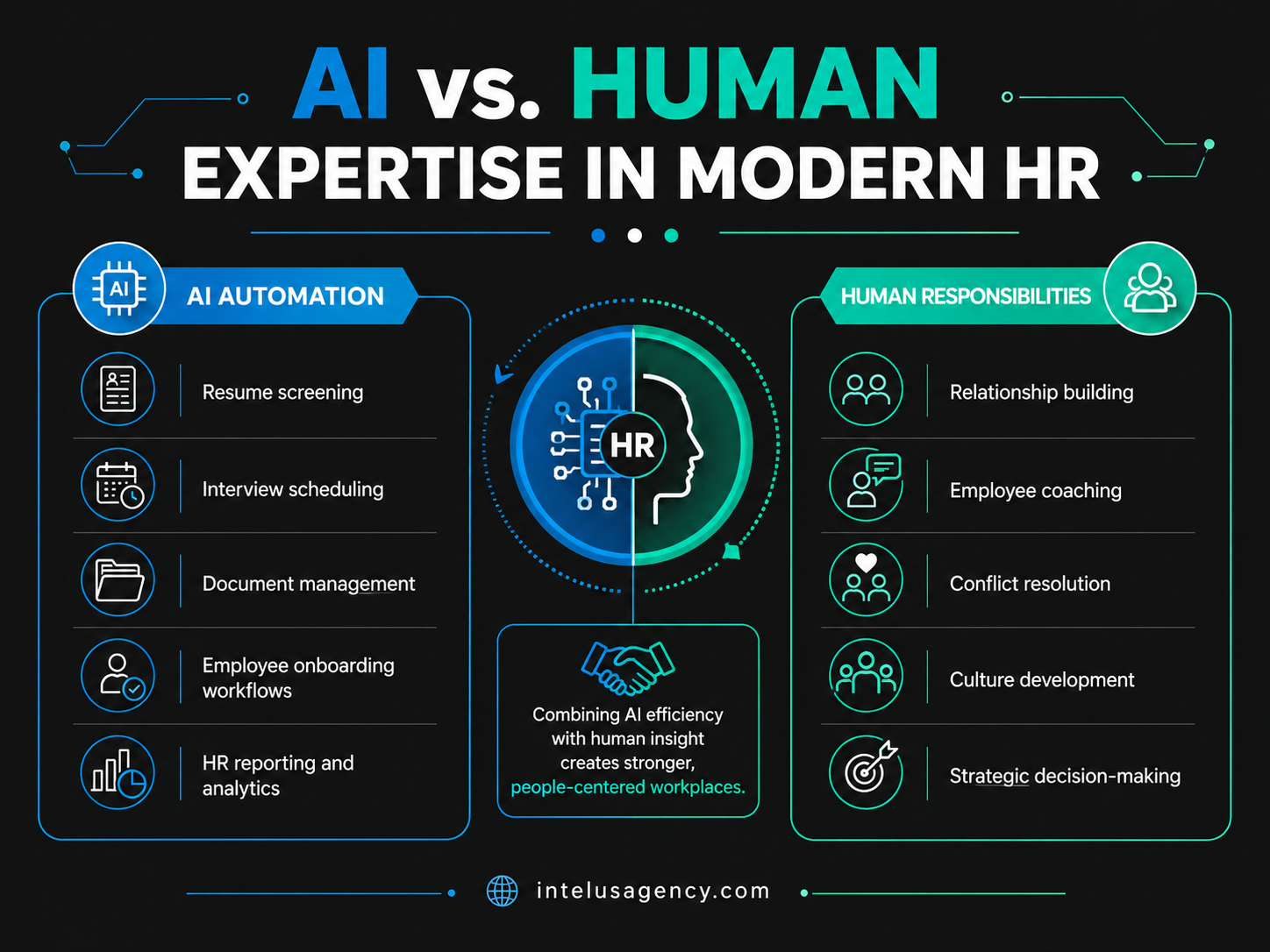
One of the most common applications of AI is resume screening. AI-powered tools can quickly identify candidates whose qualifications match job requirements, helping HR assistants reduce manual review time and focus on engaging with the most promising applicants. AI also simplifies interview scheduling by coordinating calendars, sending reminders, and reducing administrative back-and-forth.
Employee onboarding has become more efficient with AI-driven workflows that automate document collection, policy acknowledgments, training assignments, and routine employee inquiries. These tools help create a consistent onboarding experience while ensuring new hires receive the information they need from day one.
HR automation also improves everyday processes such as leave management, payroll support, employee record updates, and reporting. By handling repetitive tasks with greater speed and accuracy, AI enables HR assistants to concentrate on strategic initiatives that improve employee engagement and organizational performance.
Despite these advances, human judgment remains irreplaceable. HR assistants provide empathy during sensitive conversations, navigate complex workplace situations, interpret company culture, and make nuanced decisions that technology cannot replicate. The future of HR is not about choosing between people and AI, it is about combining the strengths of both to build more responsive, efficient, and people-centered workplaces.
Why Businesses Need Skilled HR Assistants
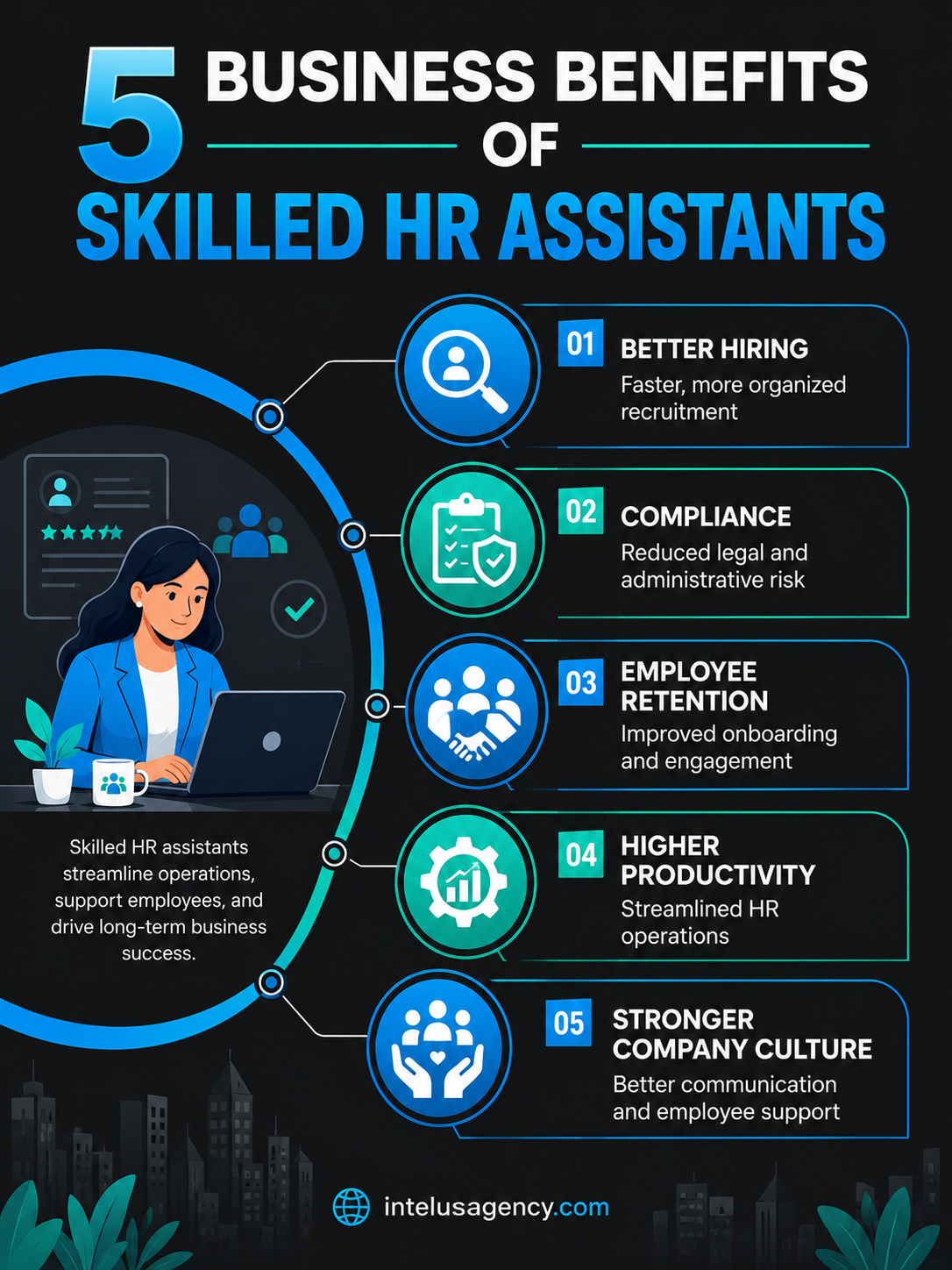
As organizations grow, effective HR support becomes essential for maintaining productivity, attracting top talent, and ensuring compliance. Many businesses turn to outsourcing consultation services to strengthen their HR capabilities without the cost and complexity of building large in-house teams. Skilled HR assistants help streamline daily operations while creating a positive employee experience that supports long-term business success. Research on employee engagement consistently shows that engaged employees are more productive, committed, and likely to remain with their organizations.
From coordinating recruitment and onboarding to maintaining accurate employee records and supporting workplace policies, HR assistants reduce administrative burdens that can distract business leaders from strategic priorities. They also play an important role in ensuring compliance with labor regulations, minimizing risks, and helping organizations maintain consistent HR practices.
Beyond operational efficiency, skilled HR assistants contribute to stronger company culture by supporting communication, employee engagement initiatives, and professional development. Their ability to balance organizational processes with people-focused support helps create workplaces where employees can thrive.
For businesses seeking scalable growth, investing in professional HR assistant solutions provides the flexibility, expertise, and operational support needed to build resilient teams while allowing leaders to focus on expanding the business.
Conclusion
The future of the HR assistant role is defined not by job titles but by the ability to combine technology, business knowledge, and strong interpersonal skills. As organizations continue to embrace digital transformation, remote work, and AI-powered tools, HR assistants will play an increasingly strategic role in supporting recruitment, employee engagement, compliance, and organizational growth.
Continuous learning and adaptability will remain essential as workplace expectations evolve. Businesses that invest in skilled HR professionals today will be better prepared to navigate change, strengthen company culture, and build high-performing teams for the future.
Whether you're looking to expand your HR capabilities or improve operational efficiency, Intelus Agency provides scalable HR support tailored to growing businesses. Schedule an outsourcing consultation at https://www.intelusagency.com/outsourcing-consultation to discover how experienced HR professionals can help your organization thrive. Explore Intelus Agency's HR assistant solutions to build a future-ready workforce with confidence.


.png)
.png)
.png)
.png)
