



Oops! Something went wrong while submitting the form.
Account Managers are no longer just the bridge between a company and its clients, they are critical drivers of retention, growth, and long-term revenue. As businesses become more competitive and customer expectations rise, the role has evolved from simple communication to strategic partnership. Today’s Account Managers are expected to understand client goals, anticipate challenges, and deliver consistent value that keeps relationships strong.
This shift is directly tied to the growing emphasis on the importance of client retention. Retaining clients is far more cost-effective than acquiring new ones, making skilled Account Managers essential to sustainable growth.
Modern Account Managers act as revenue protectors. They identify risks before they escalate, uncover upsell opportunities, and ensure that clients feel heard and supported. In many ways, they are the front line of business success where trust is built, value is proven, and loyalty is secured.
.png)
Communication Skills That Build Trust
Strong communication is the foundation of every successful client relationship. Whether you're guiding onboarding, resolving issues, or presenting results, how you communicate directly shapes how clients perceive your value. For teams exploring scalable support, an effective outsourcing consultation often begins with evaluating communication standards and consistency.
At its core, communication is about clarity. Account Managers must translate complex ideas into simple, actionable insights that clients can easily understand. This includes setting expectations early, aligning on deliverables, and ensuring there are no gaps between what is promised and what is delivered.
Equally important is listening. Mastering active listening techniques allows Account Managers to uncover real client concerns not just surface-level requests. When clients feel genuinely heard, trust deepens, and conversations become more productive.
The best account managers don’t just respond, they anticipate. They proactively share updates, flag potential issues, and communicate progress before clients even ask. This level of transparency builds confidence and reduces uncertainty.
Ultimately, communication isn’t just about exchanging information, it’s about building trust at every interaction. And in account management, trust is the currency that drives retention.
.png)
Relationship Management vs Transactional Thinking
The difference between average and exceptional Account Managers often comes down to mindset. Transactional thinking focuses on short-term tasks responding to emails, delivering outputs, and closing tickets. Relationship management, on the other hand, is about building long-term trust, loyalty, and strategic alignment with clients.
At the heart of relationship management is understanding people, not just processes. This is where emotional intelligence in business becomes essential. Great Account Managers recognize client emotions, adapt their communication style, and navigate conversations with empathy and awareness.
Consistency is another key factor. Clients value reliability knowing that their Account Manager will follow through, communicate regularly, and maintain a high standard of service. Over time, this consistency builds credibility and strengthens the partnership.
Personalization takes things even further. Instead of treating every client the same, top Account Managers tailor their approach based on individual goals, preferences, and challenges. They remember details, anticipate needs, and create experiences that feel customized rather than generic.
Transactional interactions may complete tasks, but relationship management builds loyalty. And in a world where clients have endless options, loyalty is what keeps them coming back.
.png)
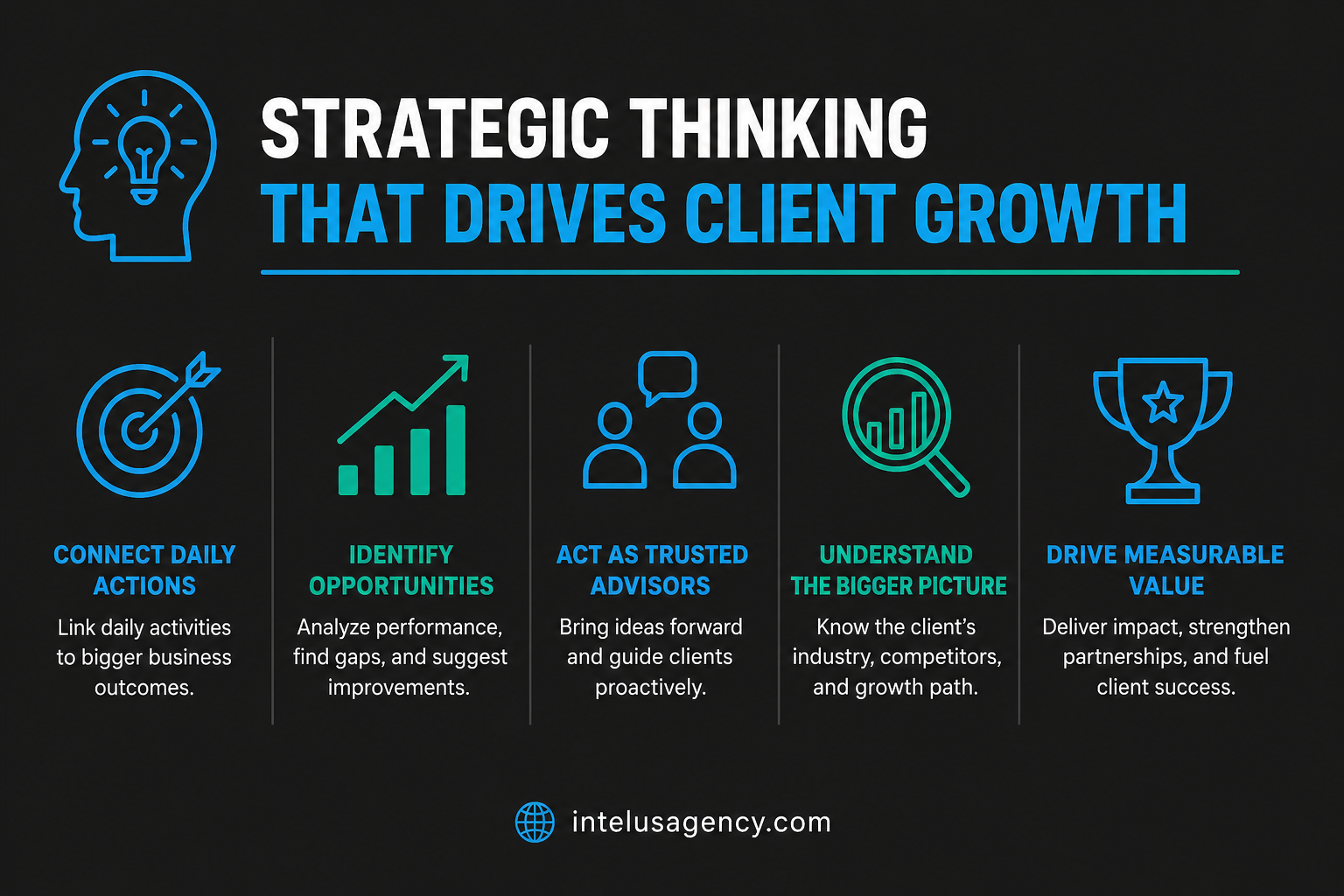
Strategic Thinking That Drives Client Growth
High-performing Account Managers don’t just execute tasks they think ahead. Strategic thinking allows them to connect daily activities to bigger business outcomes, ensuring that every interaction contributes to client growth. For companies scaling their teams, an early outsourcing consultation often reveals how strategic capability separates average support from high-impact account management.
Strategic Account Managers constantly look for opportunities. They analyze client performance, identify gaps, and suggest improvements that align with long-term objectives. This proactive approach transforms them from service providers into trusted advisors. The best account managers don’t wait for direction, they bring ideas to the table.
Developing strong strategic thinking skills also means understanding the client’s industry, competitors, and growth trajectory. With this context, Account Managers can recommend solutions that are not only relevant but impactful.
Ultimately, strategic thinking shifts the role from reactive execution to proactive leadership. It enables Account Managers to drive measurable value, strengthen partnerships, and position themselves as essential contributors to client success.
Problem-Solving and Crisis Management Skills
No matter how strong a client relationship is, challenges are inevitable. What separates great Account Managers is how they respond under pressure. Instead of reacting emotionally, they rely on structured thinking and proven crisis management strategies to navigate difficult situations with confidence.
A strong foundation in account management expertise helps professionals stay calm and focused when issues arise. Whether it’s a missed deadline, a performance dip, or a frustrated client, the goal is always the same: move quickly from problem to solution.
Top Account Managers adopt a solution-first mindset. They acknowledge the issue, take ownership, and present actionable next steps instead of excuses. This approach reassures clients and reinforces trust, even in high-pressure situations. Teams that invest in account management services often prioritize this mindset because it directly impacts retention.
Handling difficult clients is another critical skill. This requires patience, empathy, and the ability to de-escalate tension while still driving toward resolution. The ability to turn a negative experience into a positive outcome is what defines long-term client loyalty.
In the end, problem-solving isn’t just about fixing issues, it’s about strengthening relationships through reliability and professionalism when it matters most.
.png)
Time Management and Organization
Managing multiple clients, deadlines, and expectations requires more than just effort, it demands structure. Account Managers who excel in organization can handle complex workloads without sacrificing quality or responsiveness. Applying proven time management techniques helps ensure that no task, client, or opportunity falls through the cracks.
Prioritization is key. Not all tasks carry the same level of urgency or impact, and great Account Managers know how to focus on what matters most. They balance reactive tasks, like client requests, with proactive work that drives long-term value.
Equally important is the ability to manage multiple clients efficiently. This often involves using tools, systems, and workflows to track communication, deadlines, and deliverables. Organized Account Managers create consistency not just for themselves, but for their clients as well.
In a role where responsiveness and reliability are critical, strong time management isn’t optional, it’s a core performance driver.
Data Literacy and Performance Tracking
In today’s data-driven environment, Account Managers must go beyond intuition, they need to understand and use data to guide decisions. Strong data skills allow them to interpret performance, identify trends, and communicate value clearly to clients. Embracing data-driven decision making ensures that recommendations are backed by evidence, not assumptions.
At a practical level, this starts with reading reports. Account Managers should be comfortable analyzing metrics such as campaign performance, engagement rates, or revenue impact. These insights help them evaluate what’s working and where improvements are needed.
Measuring success is equally important. Clear KPIs aligned with client goals provide a benchmark for performance and accountability. Instead of vague updates, Account Managers can present measurable outcomes that reinforce their impact.
Finally, communicating insights is what brings everything together. Data alone isn’t enough, it must be translated into clear, actionable narratives that clients understand and trust.
Adaptability in a Fast-Changing Environment
The business landscape is constantly evolving, and Account Managers must be able to keep up. Whether it’s shifting client expectations, new technologies, or industry disruptions, adaptability is what allows professionals to remain effective and valuable. Understanding the importance of adaptability at work highlights why flexibility is now a critical skill not a bonus.
Client needs can change quickly. Priorities shift, strategies evolve, and new challenges emerge. Account Managers who adapt seamlessly can maintain stability and confidence even during uncertainty.
Staying informed about industry trends also plays a major role. By continuously learning and updating their knowledge, Account Managers can provide relevant insights and proactive recommendations that keep clients ahead.
Ultimately, adaptability is about mindset. Those who embrace change, stay curious, and remain solution-focused are the ones who thrive in dynamic environments.
Conclusion
Businesses investing in account management services recognize that this skill stack directly influences client retention and revenue growth.
.png)
The most effective Account Managers are not reactive, they are proactive, strategic, and deeply aligned with their clients’ success. They don’t just manage accounts; they protect revenue, uncover opportunities, and strengthen long-term partnerships.
For individuals, developing these skills creates a clear path to career growth. For companies, building strong Account Management capabilities means stronger client relationships and more predictable business outcomes.
If you’re looking to scale your team or elevate your client experience, consider exploring professional support through an outsourcing partner:
If you’re looking to scale your team or elevate your client experience, consider exploring professional support through an outsourcing partner:
https://www.intelusagency.com/outsourcing-consultation


.png)
.png)
.png)
