



Oops! Something went wrong while submitting the form.
Introduction: Why Businesses Need More Than Just Ad Campaigns
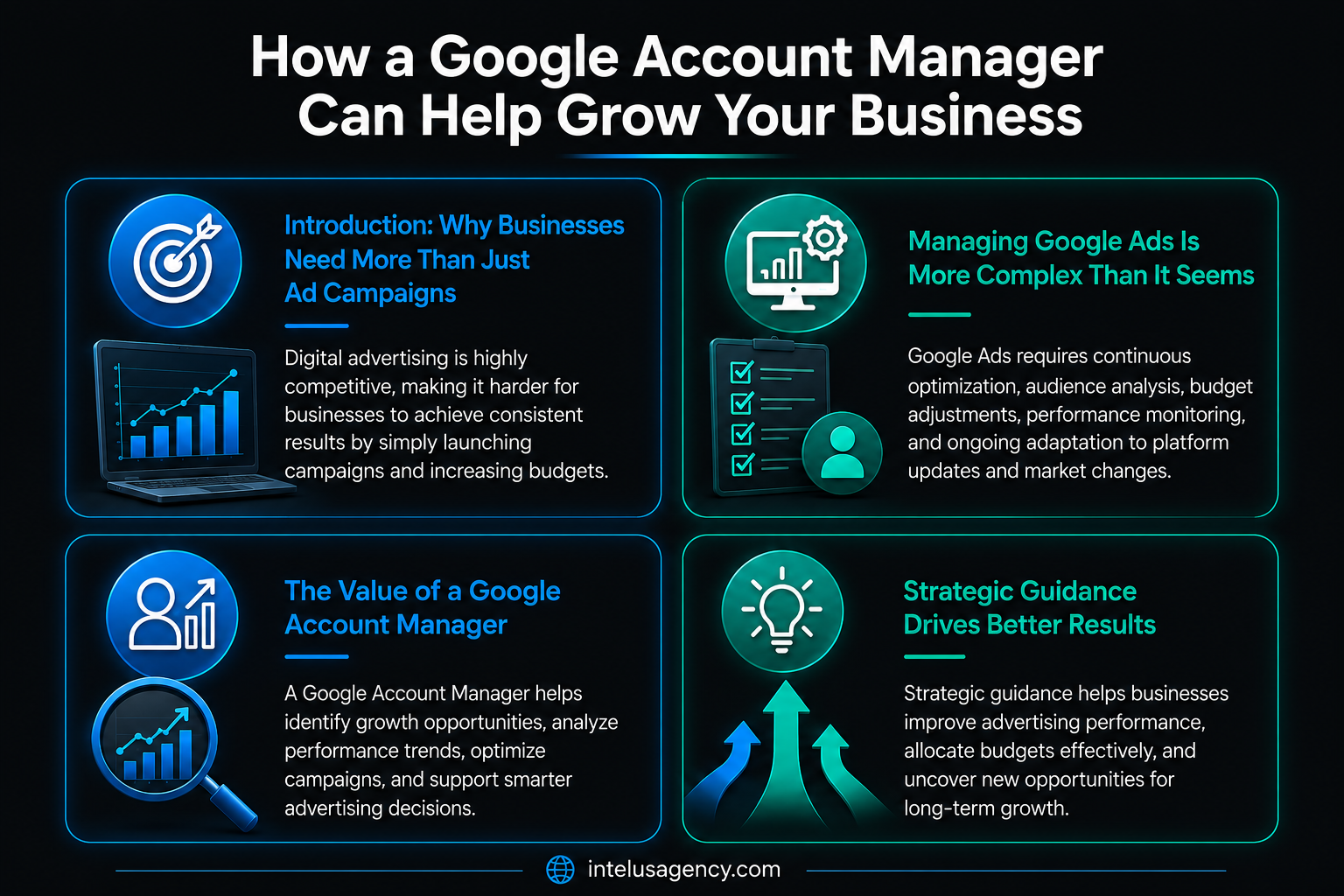
Digital advertising has become increasingly competitive, making it harder for businesses to achieve consistent results by simply launching campaigns and increasing budgets. As more advertisers compete for the same audiences, even well-designed campaigns can struggle to maintain efficiency and profitability.
Many businesses attempt to manage Google Ads internally, but campaign management requires ongoing optimization, audience analysis, budget adjustments, performance monitoring, and adaptation to platform changes. Without a clear strategy, businesses may miss valuable opportunities to improve results and maximize return on investment.
This is where a Google Account Manager can provide significant value. Rather than focusing solely on day-to-day campaign management, a Google Account Manager helps businesses identify growth opportunities, understand performance trends, and make more informed advertising decisions. Their insights can help organizations optimize existing campaigns, allocate budgets more effectively, and uncover new ways to scale.
In today's advertising landscape, strategic guidance is often just as important as the campaigns themselves.
What Is a Google Account Manager?
A Google Account Manager is a dedicated advertising specialist who works with eligible advertisers to help improve campaign performance, identify growth opportunities, and align advertising efforts with business objectives. Unlike basic customer support, which typically addresses technical issues and troubleshooting requests, a Google Account Manager provides more strategic guidance focused on long-term advertising success. Businesses that value professional account management often benefit from this higher level of support because it helps connect campaign performance with broader growth goals.
Their role is to help advertisers better understand platform capabilities, leverage available tools, and implement recommendations that can improve efficiency and results. Depending on the business and advertising spend, Google Account Managers may provide account reviews, performance analyses, product updates, and strategic recommendations tailored to specific objectives. They often work alongside internal marketing teams to ensure campaigns are positioned for sustainable growth while complementing existing marketing support solutions.
Businesses can also gain access to valuable resources through Google Ads account support, which offers guidance on campaign management and platform best practices.
Typical responsibilities of a Google Account Manager include:
- Reviewing campaign performance
- Identifying optimization opportunities
- Recommending budget allocation strategies
- Sharing new Google Ads features and updates
- Providing audience targeting recommendations
- Helping businesses scale successful campaigns
While they do not replace a marketing team or agency, they serve as strategic advisors who help advertisers make better use of Google's advertising ecosystem.
.png)
How a Google Account Manager Supports Business Growth
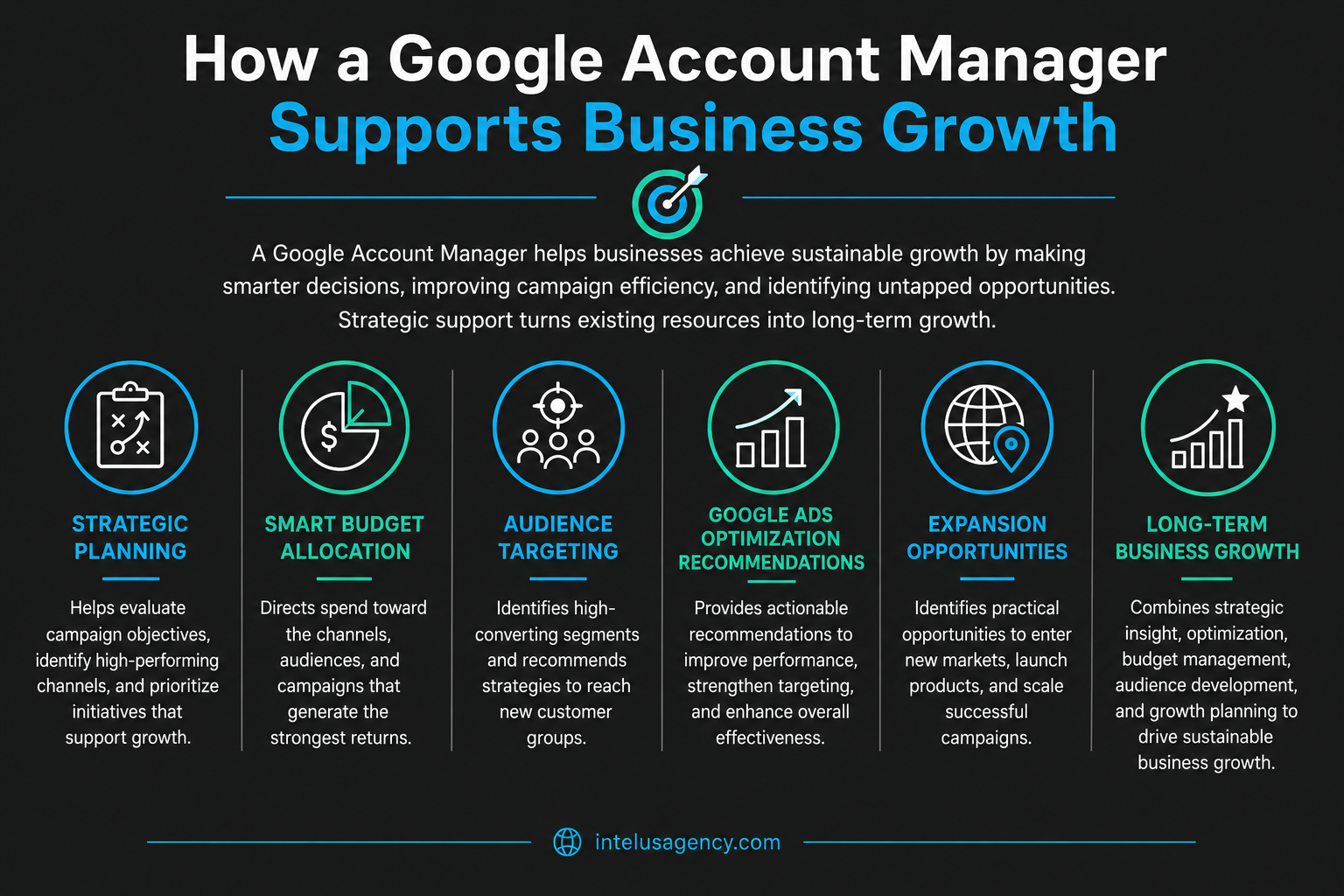
Sustainable growth rarely comes from increasing advertising spend alone. More often, it comes from making smarter decisions with existing resources, improving campaign efficiency, and identifying untapped opportunities. A Google Account Manager helps businesses achieve these outcomes by providing strategic guidance that aligns advertising efforts with broader business goals. Companies focused on long-term business growth planning can benefit from having a dedicated resource that continuously evaluates performance and recommends improvements.
One of the most valuable contributions a Google Account Manager provides is strategic planning. They help advertisers evaluate campaign objectives, identify high-performing channels, and prioritize initiatives that support growth. By reviewing performance data and market trends, they can recommend adjustments that improve results while maintaining budget efficiency.
Budget allocation is another critical area of support. Rather than spreading resources evenly across campaigns, a Google Account Manager helps businesses invest more effectively by directing spend toward the channels, audiences, and campaigns that generate the strongest returns. Businesses considering an outsourcing consultation often discover that improved budget management alone can unlock significant performance gains.
Audience targeting also plays a major role in growth. Through detailed analysis, Google Account Managers can identify audience segments that are most likely to convert and recommend strategies for reaching new customer groups. This helps businesses expand market reach while maintaining relevance and efficiency.
In addition, they provide access to valuable Google Ads optimization recommendations that help advertisers improve campaign performance, strengthen targeting, and enhance overall effectiveness.
As businesses grow, expansion opportunities become increasingly important. Whether entering new markets, launching additional products, or scaling successful campaigns, a Google Account Manager can help identify practical opportunities for growth while minimizing unnecessary risk.
By combining strategic insight, campaign optimization, budget management, audience development, and growth planning, Google Account Managers help businesses uncover opportunities that may otherwise remain hidden within existing advertising efforts.
Key Benefits of Working With a Google Account Manager
Businesses that invest in digital advertising often face challenges related to campaign performance, platform complexity, and evolving market conditions. A Google Account Manager helps address these challenges by providing strategic guidance, performance insights, and ongoing recommendations designed to improve advertising outcomes. Organizations that utilize account management services frequently gain a stronger understanding of how to maximize the value of their advertising investments.
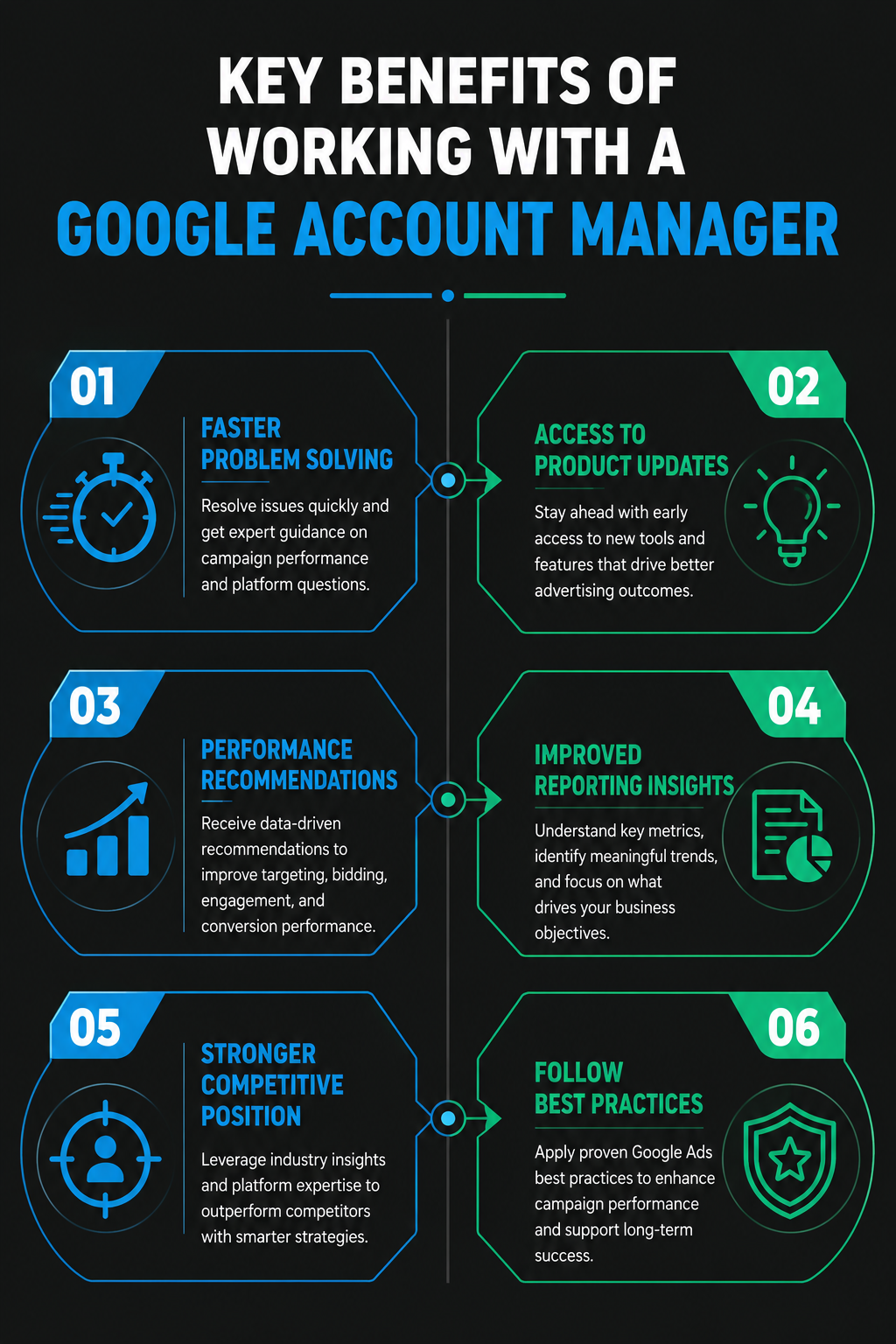
One of the most immediate benefits is faster problem solving. Instead of spending valuable time navigating issues independently, businesses can receive guidance on campaign performance concerns, optimization opportunities, and platform-related questions. This can reduce downtime and help teams make decisions more confidently.
Google Account Managers also provide access to product updates and emerging features that may not be widely adopted yet. Early awareness of new tools and capabilities can help businesses remain competitive and take advantage of opportunities before they become standard practice across the market.
Another significant advantage is access to performance recommendations based on account data and platform insights. Businesses seeking marketing consulting support often find these recommendations valuable because they reveal opportunities to improve targeting, bidding strategies, audience engagement, and conversion performance.
Improved reporting insights represent another important benefit. Google Account Managers can help advertisers better understand campaign metrics, identify meaningful trends, and focus on the performance indicators that directly support business objectives. This creates greater clarity around what is working and where adjustments should be made.
Businesses can also strengthen their competitive position by leveraging strategic guidance informed by broader industry knowledge and platform expertise. While competitors may focus solely on increasing budgets, organizations that optimize campaigns strategically often achieve stronger results with more efficient spending.
Following established Google Ads best practices can further enhance campaign performance and support long-term success.
Ultimately, the combination of strategic recommendations, faster issue resolution, deeper reporting insights, product knowledge, and competitive advantages makes a Google Account Manager a valuable resource for businesses focused on sustainable growth.
Use AI-Powered Campaign Optimization to Drive Business Growth
Artificial intelligence has become one of the most impactful tools available to advertisers looking to improve performance and scale more efficiently. AI-powered campaign optimization uses machine learning to analyze large volumes of data, identify patterns, and make recommendations that help businesses achieve better results with less manual effort.
One of the primary benefits of AI-powered optimization is audience targeting. AI systems can evaluate user behavior, interests, search intent, and engagement patterns to identify audiences that are more likely to convert. This allows advertisers to focus their efforts on high-value prospects while reducing wasted ad spend.
Smart bidding and automated budget management also play a major role in improving campaign efficiency. AI can adjust bids in real time based on conversion likelihood, competition, device usage, location, and other factors. These adjustments help businesses maximize results while maintaining greater control over advertising costs.
Automation can also improve ad performance by continuously testing variables such as headlines, creatives, audience segments, and placements. As performance data accumulates, AI identifies the combinations most likely to generate conversions and revenue.
Beyond optimization, AI-powered insights help businesses uncover opportunities that may not be obvious through manual analysis alone. These insights can support better decision-making, stronger campaign performance, and improved return on investment.
However, the most effective approach combines AI capabilities with human expertise. While automation excels at processing data and identifying trends, strategic oversight remains essential for aligning campaigns with business goals, brand positioning, and long-term growth objectives.
When used together, AI-driven optimization and strategic guidance create a powerful framework for increasing conversions, improving efficiency, and supporting sustainable business growth.
When Should a Business Work With a Google Account Manager?
Not every business requires a dedicated Google Account Manager, but for organizations focused on growth, performance improvement, and advertising efficiency, the relationship can provide substantial value. Understanding when to seek this level of support can help businesses maximize the impact of their advertising investments.
Business size is often one consideration. Companies with larger marketing operations, multiple campaigns, or complex advertising objectives may benefit more from strategic guidance than smaller organizations running limited campaigns. However, size alone is not the determining factor.
Advertising spend levels can also influence eligibility and potential value. Businesses investing significant budgets into Google Ads often have more opportunities to improve efficiency, optimize performance, and identify growth opportunities through expert recommendations.
Growth-stage businesses are particularly well positioned to benefit from working with a Google Account Manager. As campaigns expand, managing audience segmentation, budget allocation, conversion tracking, and performance analysis becomes increasingly complex. Strategic guidance can help businesses scale more effectively while avoiding common mistakes.
Organizations looking to expand into new markets, launch additional products, or increase advertising investment can also benefit from external expertise. Access to Google Ads performance insights can help decision-makers identify opportunities and make more informed strategic choices.
Ultimately, businesses that view advertising as a long-term growth engine rather than a short-term marketing tactic are often the best candidates for working with a Google Account Manager.
Google Account Manager vs Marketing Agency
A Google Account Manager and a marketing agency can both contribute to advertising success, but they serve different roles within a business's marketing strategy. Understanding these differences helps organizations determine how each resource can support growth objectives and campaign performance.
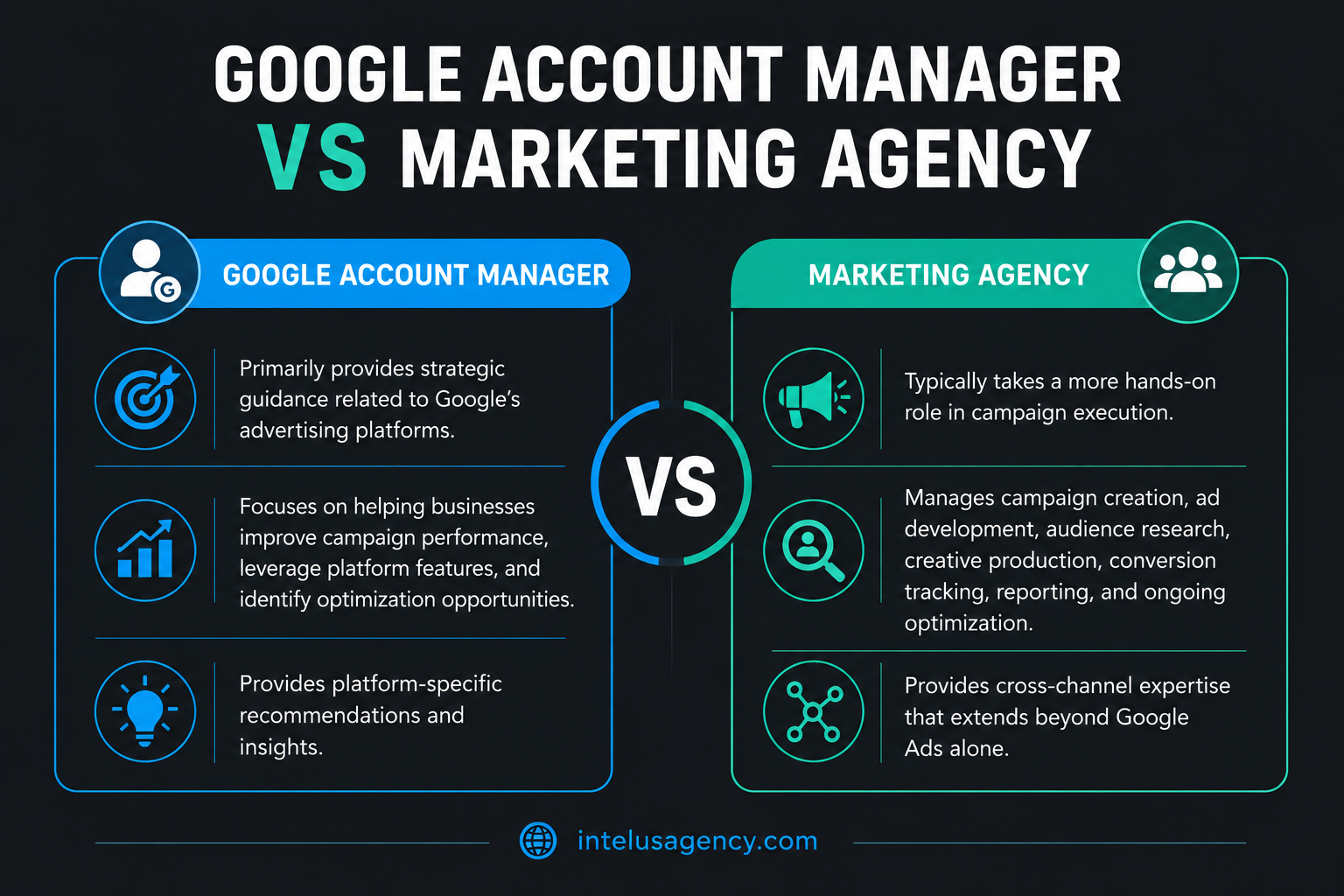
A Google Account Manager primarily provides strategic guidance related to Google's advertising platforms. Their focus is on helping businesses improve campaign performance, leverage platform features, and identify optimization opportunities. Businesses that work with account management specialists often gain additional value by combining platform expertise with broader business strategy and execution support.
A marketing agency, on the other hand, typically takes a more hands-on role in campaign execution. Agencies may manage campaign creation, ad development, audience research, creative production, conversion tracking, reporting, and ongoing optimization. They often provide cross-channel expertise that extends beyond Google Ads alone.
Rather than viewing the two as competing options, many businesses achieve the best results when they work together. A Google Account Manager can provide platform-specific recommendations and insights, while an agency implements strategies and manages day-to-day execution. Companies exploring outsourcing consultation services often find that combining both resources creates a stronger foundation for growth.
The most effective approach depends on business goals, internal capabilities, campaign complexity, and available resources. In many cases, a Google Account Manager and marketing agency can function as complementary partners that help businesses maximize advertising performance.
How to Maximize the Relationship With a Google Account Manager
Getting the most value from a Google Account Manager requires active collaboration and clear communication. Businesses that approach the relationship strategically often see stronger results and faster improvements.
Start by establishing clear business objectives and campaign goals. Sharing performance targets helps your Google Account Manager provide more relevant recommendations and prioritize opportunities that align with your growth strategy. Companies that embrace strategic account management typically achieve better outcomes because decisions are guided by measurable objectives.
It's also important to provide accurate performance data, ask strategic questions during account reviews, and track the impact of recommendations over time. Leveraging available Google Ads measurement tools can help validate results and identify additional optimization opportunities.
The strongest partnerships are built on transparency, accountability, and a shared commitment to continuous improvement.
Conclusion
Many businesses assume that stronger advertising performance requires larger budgets. In reality, growth often comes from making smarter decisions, improving efficiency, and uncovering opportunities that already exist within current campaigns.
A Google Account Manager provides strategic value by helping businesses optimize advertising performance, allocate budgets more effectively, identify new growth opportunities, and stay informed about evolving platform capabilities. Their expertise can help organizations make more confident marketing decisions while supporting sustainable, long-term growth.
The greatest results often come from combining Google's platform expertise with effective marketing execution. Whether working with an internal team, a marketing agency, or external specialists, businesses that leverage strategic guidance are typically better positioned to maximize return on investment and scale successfully.
Need help turning Google recommendations into measurable growth?
Visit Intelus Outsourcing Consultation to build a scalable marketing strategy backed by expert account management and execution support.


.png)
.png)
.png)
.png)
.png)
