



Oops! Something went wrong while submitting the form.
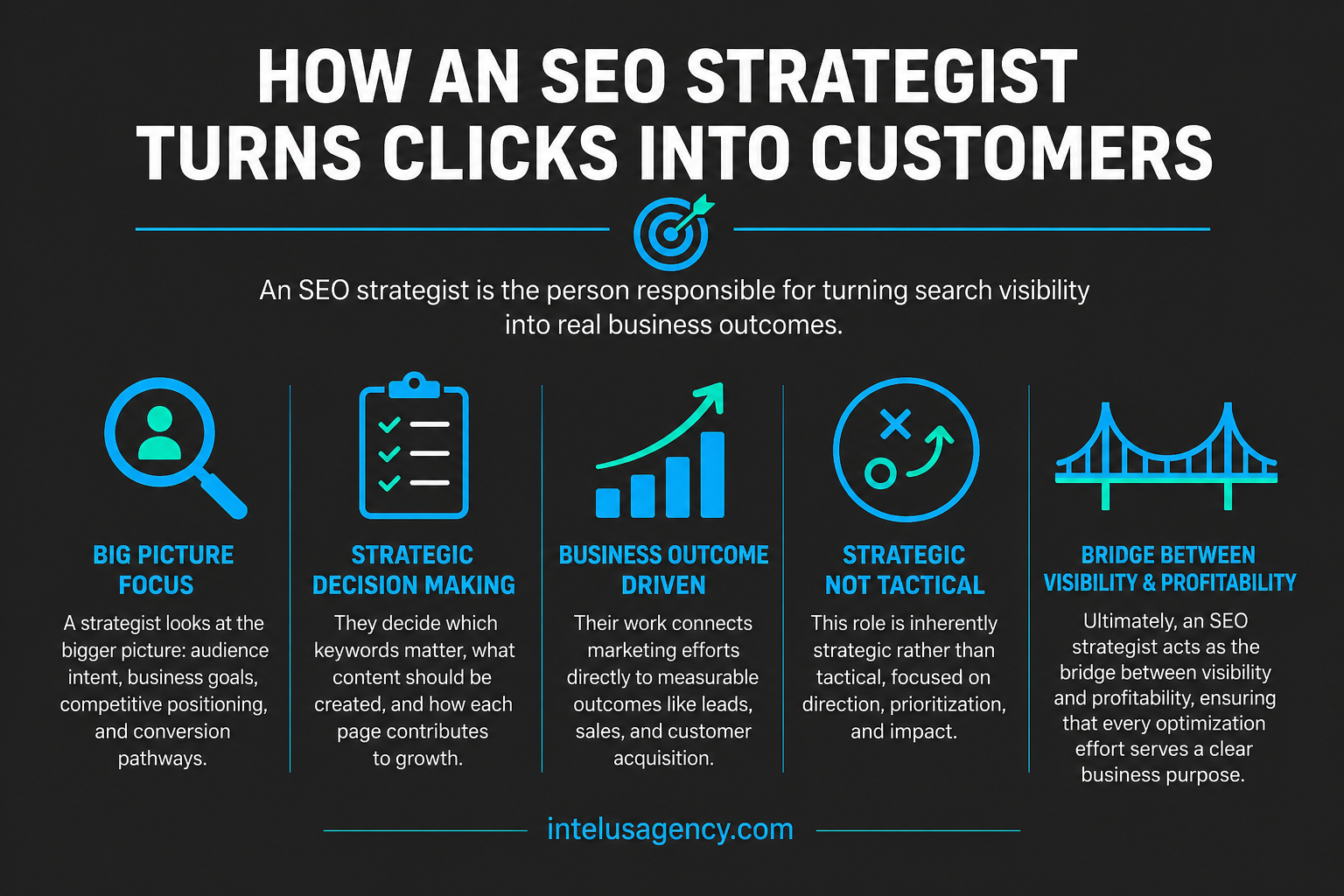
An SEO strategist is the person responsible for turning search visibility into real business outcomes. While many people confuse the role with an SEO specialist, the difference is significant. A specialist typically focuses on execution, optimizing pages, fixing technical issues, or building backlinks. A strategist, on the other hand, focuses on direction, prioritization, and impact.
Instead of asking, “How do we rank higher?”, an SEO strategist asks, “How do we generate revenue from search?” That shift changes everything.
Why Traffic Alone Doesn’t Grow Your Business
Most businesses start their SEO journey believing that more traffic automatically leads to more revenue. It sounds logical, but it’s one of the biggest misconceptions in digital marketing. Understanding the difference between traffic and results is a core part of mastering SEO strategy fundamentals.
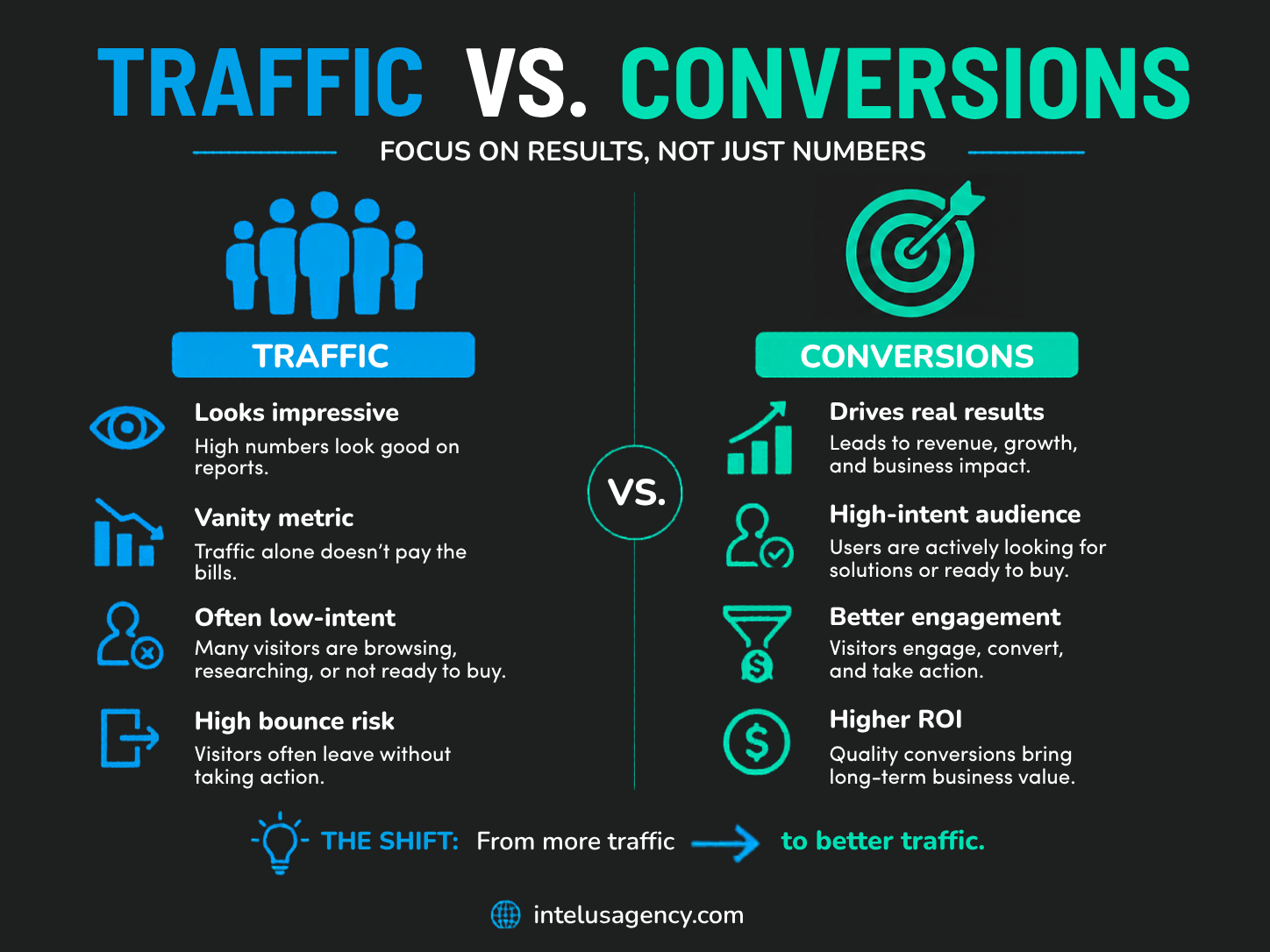
Traffic, by itself, is a vanity metric. It looks impressive on reports, but it doesn’t pay the bills. What actually matters is what those visitors do once they land on your site. Are they engaging? Are they converting? Or are they leaving without taking action?
Many brands invest heavily in digital growth strategies that prioritize volume over quality. This leads to a flood of low-intent visitors—people who are browsing, researching casually, or not ready to buy. As explained in why traffic doesn't equal revenue, attracting the wrong audience can inflate numbers while delivering zero business impact.
The real difference lies in intent. High-intent traffic, users actively searching for solutions, comparisons, or purchases, is far more valuable than thousands of passive visitors. Yet many businesses fail to distinguish between the two.
Common mistakes include targeting broad keywords, ignoring user intent, and focusing purely on rankings instead of outcomes. These approaches may increase visibility, but they rarely translate into meaningful growth.
An SEO strategist shifts the focus from “more traffic” to “better traffic.” That’s where the real opportunity lies, not in how many people visit your site, but in how many of them become customers.
How an SEO Strategist Thinks About Customers
An SEO strategist doesn’t start with keywords, they start with people. The goal isn’t just to rank for search terms, but to understand why someone is searching in the first place. This is where intent-driven SEO becomes the foundation of real growth.
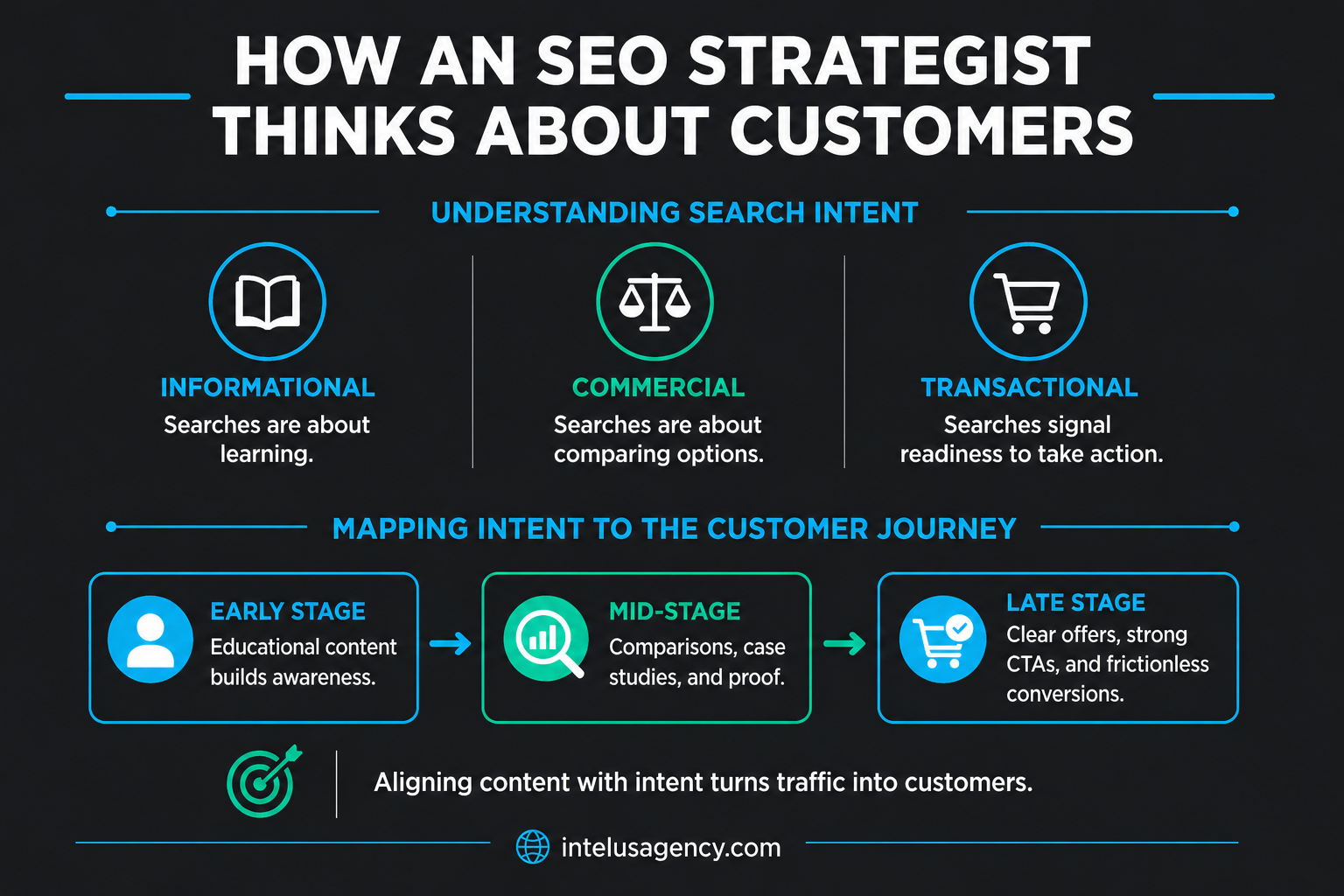
This alignment is what turns content into a system rather than a collection of random blog posts. Each page serves a purpose, guiding users from curiosity to decision.
Instead of chasing traffic blindly, an SEO strategist asks: What does this user need right now and how do we move them closer to becoming a customer? That question shapes everything from keyword selection to content structure.
When done right, SEO becomes less about algorithms and more about psychology. It’s about meeting users exactly where they are and guiding them toward the next step.
The 5-Step Process to Turn Clicks into Customers
Turning traffic into revenue isn’t accidental, it’s a structured process. A skilled SEO strategist follows a repeatable system designed to attract the right audience and guide them toward action. This is where a true SEO execution framework comes into play, combining strategy with measurable outcomes.
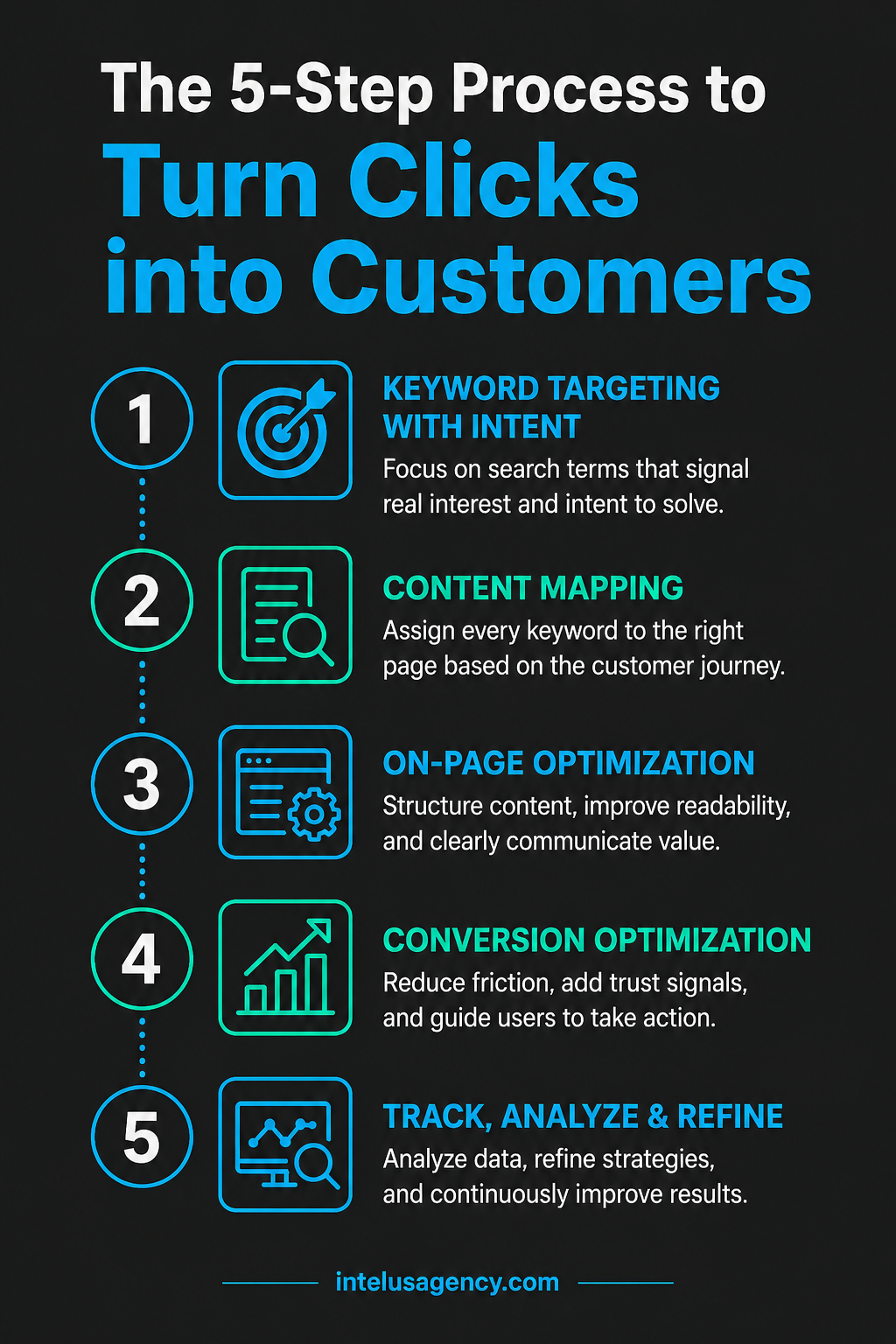
This five-step system transforms SEO from a traffic-generating activity into a revenue-driving engine, one that consistently turns clicks into customers.
Content That Actually Converts
Not all content is created equal. Some pages attract visitors but fail to generate action, while others consistently turn readers into leads and customers. The difference lies in how the content is structured, positioned, and optimized for conversion. If you want to understand what makes content convert, it starts with intentional design, not just good writing.
Great content doesn’t just inform, it directs, persuades, and converts. It’s the difference between passive traffic and active business growth.
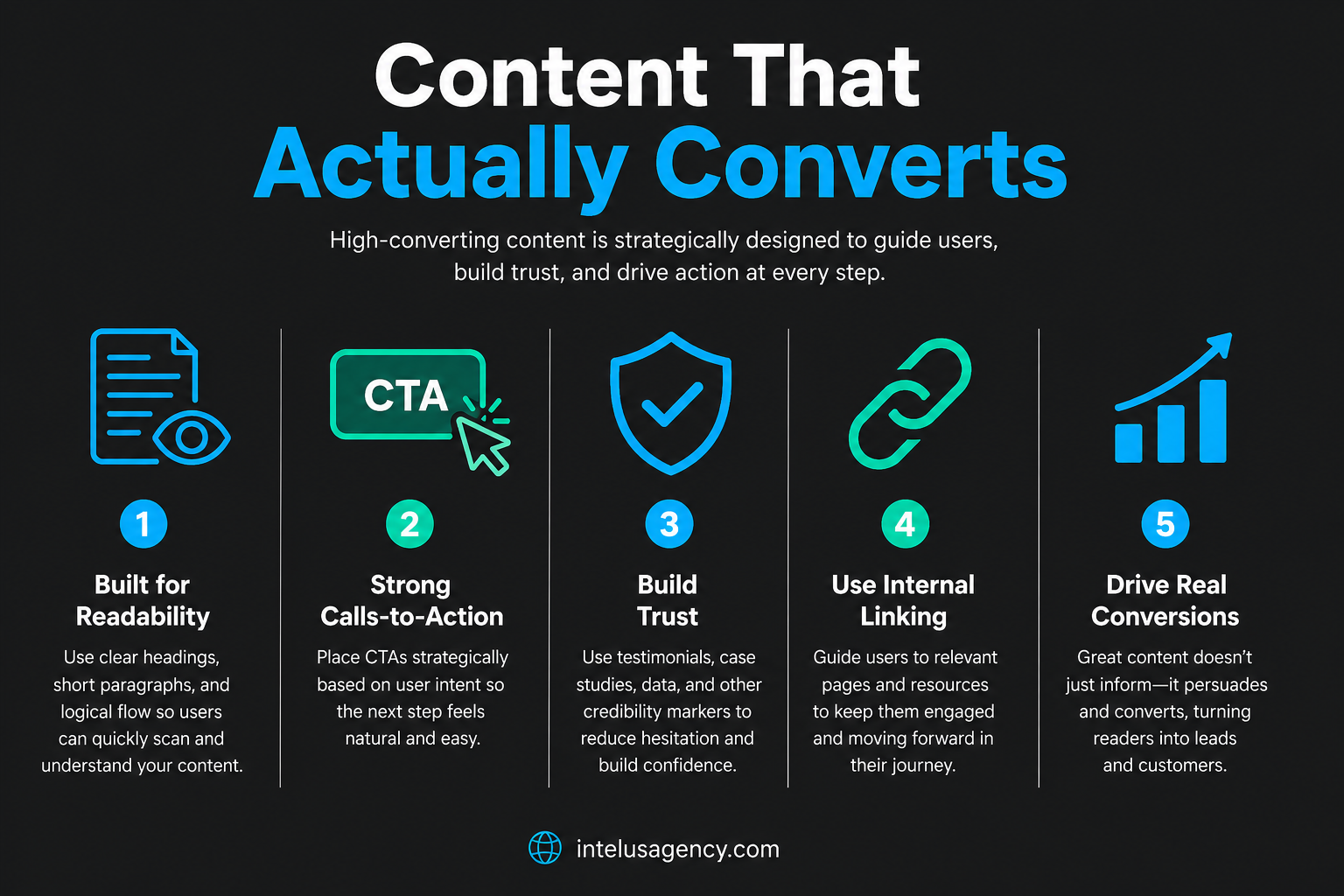
Great content doesn’t just inform, it directs, persuades, and converts. It’s the difference between passive traffic and active business growth.
The Role of Data in SEO Strategy
SEO without data is guesswork. An SEO strategist relies on performance metrics to guide every decision, ensuring that efforts are aligned with real-world results, not assumptions.
The most important metrics go beyond traffic. Click-through rate (CTR) reveals how compelling your titles and descriptions are. Bounce rate shows whether users find your content relevant after clicking. Most importantly, conversion rate tells you whether your traffic is actually turning into leads or customers.
These insights come from tools like Google Analytics, Google Search Console, and other SEO platforms. But tools alone don’t create value, it’s how the data is interpreted that matters. A strategist looks for patterns: Which pages attract high-intent users? Where do users drop off? What content drives the most conversions?
This creates a continuous improvement loop. Pages are tested, refined, and optimized based on performance. Underperforming content is updated, high-performing pages are scaled, and new opportunities are identified through data trends.
Instead of relying on one-time optimizations, SEO becomes an ongoing process of learning and iteration. Every metric tells a story, and an SEO strategist uses that story to make smarter, more profitable decisions over time.
When Should You Hire an SEO Strategist?
At some point, every growing business hits a ceiling with SEO. Traffic may be coming in, but results aren’t following, or worse, there’s little traction at all. That’s usually the moment when SEO consulting services become not just helpful, but necessary.
One clear sign is when your website attracts visitors but fails to convert them. This often points to a strategy problem, not a traffic problem. Another indicator is inconsistent growth, periods of spikes followed by long plateaus, suggesting a lack of direction and long-term planning.
Many businesses try to manage SEO internally, but without a clear framework, efforts become scattered. Choosing whether to DIY or work with an SEO agency depends on your goals, resources, and the level of expertise required. As highlighted in benefits of hiring SEO experts, experienced strategists bring clarity, efficiency, and measurable ROI.
Ultimately, hiring an SEO strategist is an investment decision. It’s not just about improving rankings, it’s about unlocking revenue opportunities that would otherwise be missed.
If your current SEO efforts feel disconnected from actual business results, that’s your signal. Not sure if your traffic is converting? It might be your strategy.
Turn your traffic into real customers with a proven SEO strategy.Book a Free Consultation today.
https://www.intelusagency.com/outsourcing-consultation


.png)
.png)
.png)
.png)