



Oops! Something went wrong while submitting the form.
Email doesn’t feel dangerous. It feels small. A quick reply here. A notification there. But email has a sneaky way of turning into a hidden operational tax that compounds every single day. Each message demands attention. Each notification pulls you out of focus. Over time, your inbox quietly takes control of your schedule.
This is why an Email Management Virtual Assistant isn’t about being organized. It’s about survival. Inbox chaos amplifies decision fatigue. Every unread message forces a choice. Reply now or later. Ignore or delegate. Open or archive. Those tiny decisions drain mental energy fast.
Email is also invisible labor. It doesn’t feel like work, but it steals deep work time. You might spend hours in your inbox and still feel like you accomplished nothing. Most productivity tools promise relief, but they fail without delegation. Filters don’t decide priorities. Apps don’t protect focus. Only ownership does.
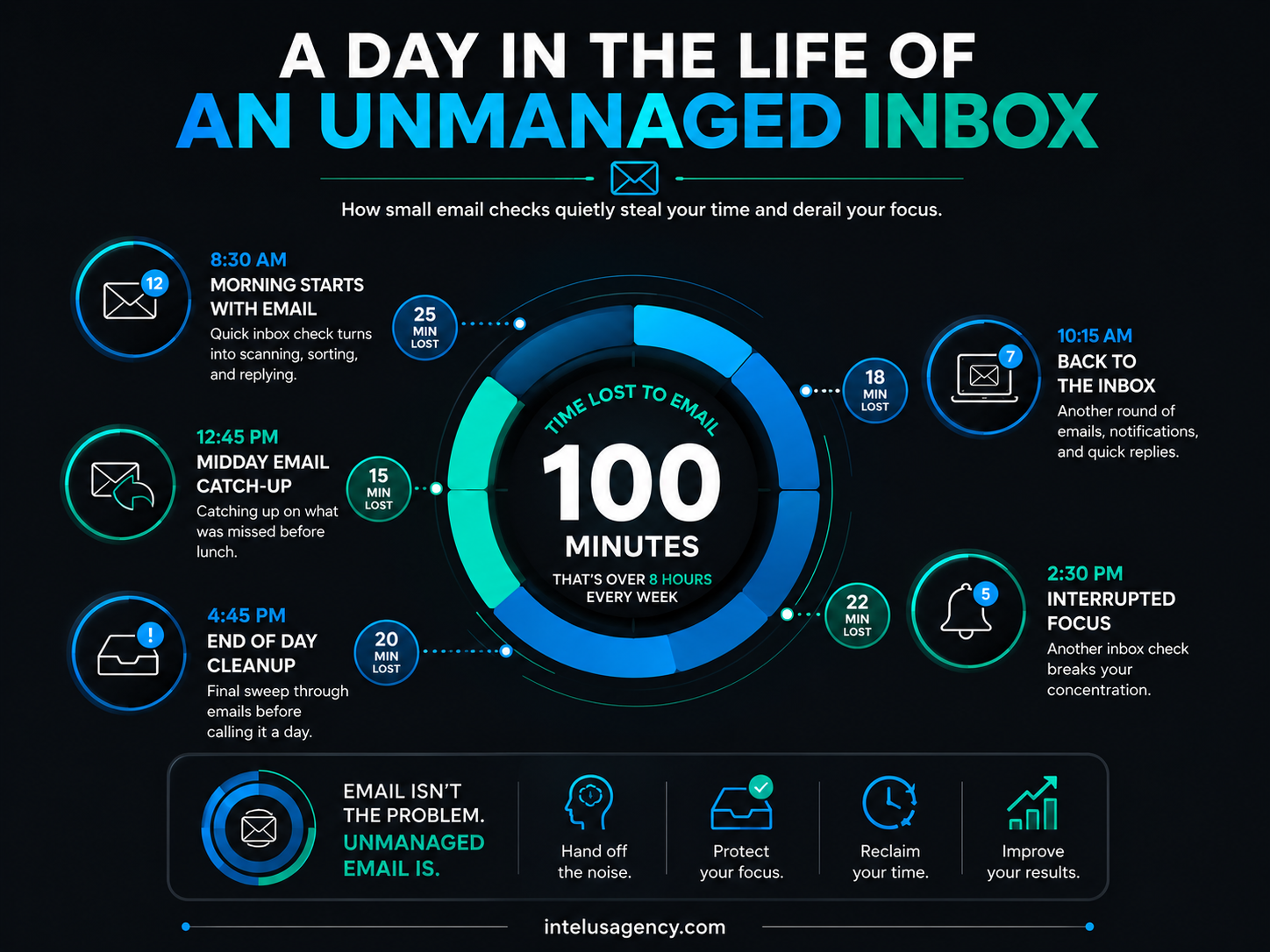
That’s why businesses turn to a virtual assistant staffing agency that builds inbox systems instead of temporary cleanups. When email is treated like infrastructure, not clutter, everything changes. A simple infographic like “A Day in the Life of an Unmanaged Inbox” shows how five-minute email checks quietly eat entire mornings.
What Is an Email Management Virtual Assistant?
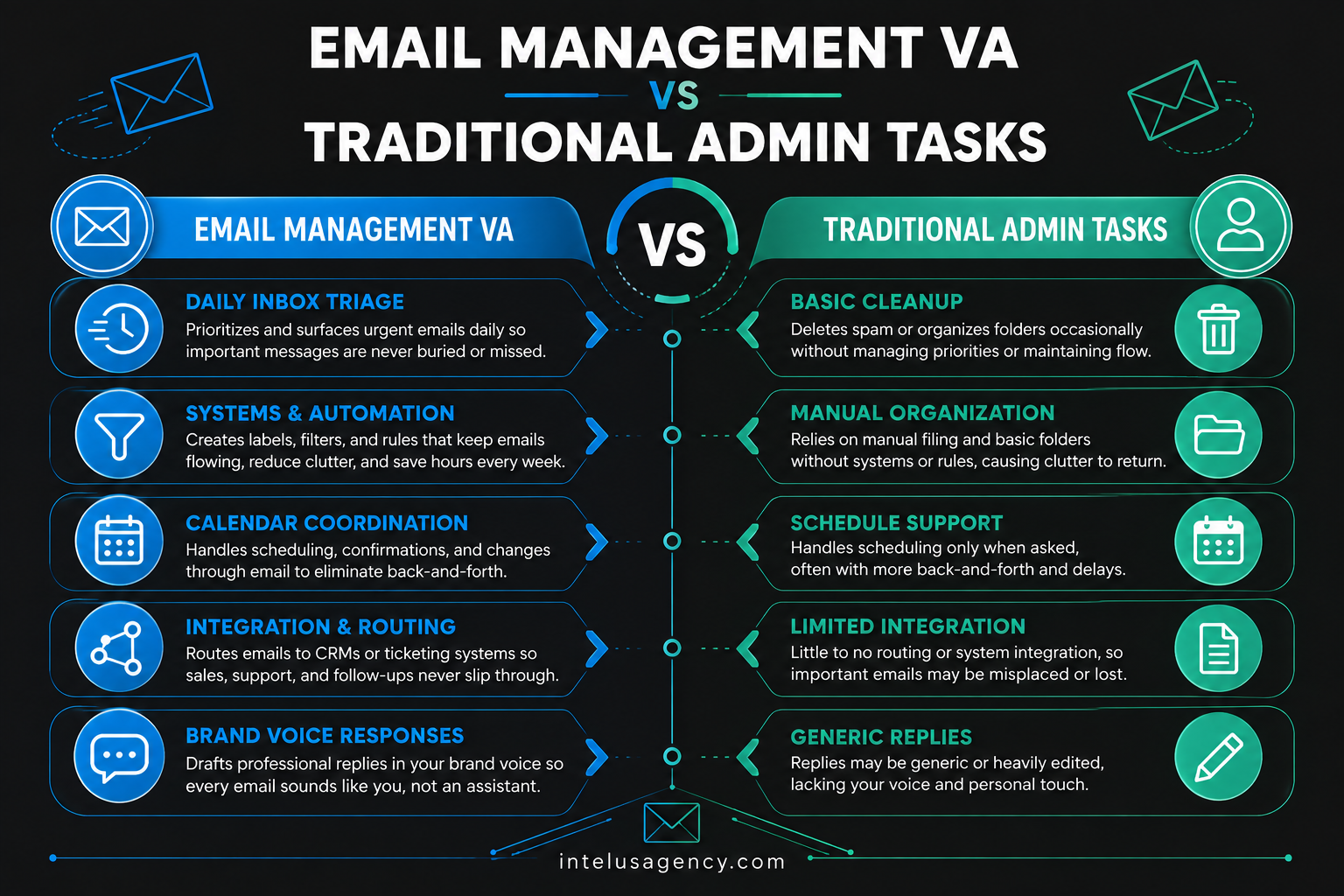
An Email Management Virtual Assistant is not someone who just deletes spam or organizes folders once and disappears. This role is about ongoing control and accountability. Unlike generic admin help, an Email Management Virtual Assistant manages communication as a living system.
They perform daily inbox triage, making sure urgent messages surface immediately while low-priority emails are filtered or scheduled. They build labeling, filtering, routing, and escalation rules so emails flow instead of pile up. Calendar coordination happens through email without endless back-and-forth.
When messages connect to sales, support, or follow-ups, they are routed into CRMs or ticketing systems. Responses are drafted using your brand voice so replies sound like you. This role often overlaps with an executive virtual assistant or experienced administrative assistants, but the difference is focus. Email management is the primary responsibility, not an afterthought.
Research around email overload research shows how communication volume reduces productivity and collaboration. When email is unmanaged, it quietly taxes every part of the business. A visual like “Email Management VA vs Traditional Admin Tasks” makes this distinction clear at a glance.
The Real Cost of Poor Email Management
The real damage of a messy inbox isn’t just lost time. It’s lost focus. Every email interruption breaks concentration, and rebuilding focus takes far longer than the interruption itself. That’s why people feel busy but unproductive.
Slow response times quietly cost revenue. Leads cool off. Clients feel ignored. Opportunities disappear without warning. Missed follow-ups don’t announce themselves. They just fade away. Inbox anxiety builds in the background, creating stress and burnout that most people don’t connect to email at first.
Many companies pair inbox ownership with broader systems support from an operations virtual assistant so communication flows cleanly into execution. A visual like “Hidden Revenue Leaks Caused by Inbox Chaos” shows how small delays add up to real financial loss.
Tasks an Email Management Virtual Assistant Can Fully Own
The biggest mindset shift is moving from help to ownership. An Email Management Virtual Assistant doesn’t assist with email. They own it. Inbox zero systems are maintained daily so messages don’t pile up. Priority labeling separates VIP messages, urgent requests, and informational emails.
Emails are converted into tasks so nothing important lives only in the inbox. Follow-ups are tracked instead of remembered. Spam and subscriptions are controlled before they become noise. Drafting, replying, and templating are handled consistently so responses are fast and on-brand.
This ownership pairs naturally with a virtual admin assistant and structured CRM management support, ensuring email feeds cleanly into business systems. Many Email Management Virtual Assistants also apply proven frameworks like the inbox zero methodology, but the real difference is consistency. A visual like “Inbox Ownership Map: Before vs After a VA” helps show that shift clearly.
Who Benefits Most from an Email Management Virtual Assistant?
Some roles feel email pressure more than others.
Founders and CEOs managing high volumes of time-sensitive communication can rely on a virtual executive assistant for inbox and priority coordination to organise messages, protect their schedules, and keep critical follow-ups moving. Agency owners juggle clients, teams, and sales conversations all at once. Sales leaders rely on speed to keep deals alive.
Real estate professionals deal with high volumes of time-sensitive messages, which is why many already work with a real estate virtual assistant to stay responsive. Healthcare and legal executives manage strict communication requirements where delays create risk. High-volume support inboxes also benefit because response time directly affects customer satisfaction.
Studies on executive time allocation studies show how much time leaders lose to fragmented communication. A visual like “Inbox Load by Role” helps readers quickly recognize themselves.
Tools Your Email Management Virtual Assistant Can Work Inside
Delegating your inbox doesn’t mean changing your tools. Email Management Virtual Assistants work comfortably inside Gmail and Google Workspace, Outlook and Microsoft 365, helpdesk platforms, CRMs, and project management tools. Email doesn’t disappear. It gets routed.
Messages land where action happens instead of living in the inbox forever. A visual like “Email Ecosystem: Where Messages Go After the Inbox” shows how communication flows once systems are in place.
The Big Idea: Your Inbox Is an Airport Control Tower
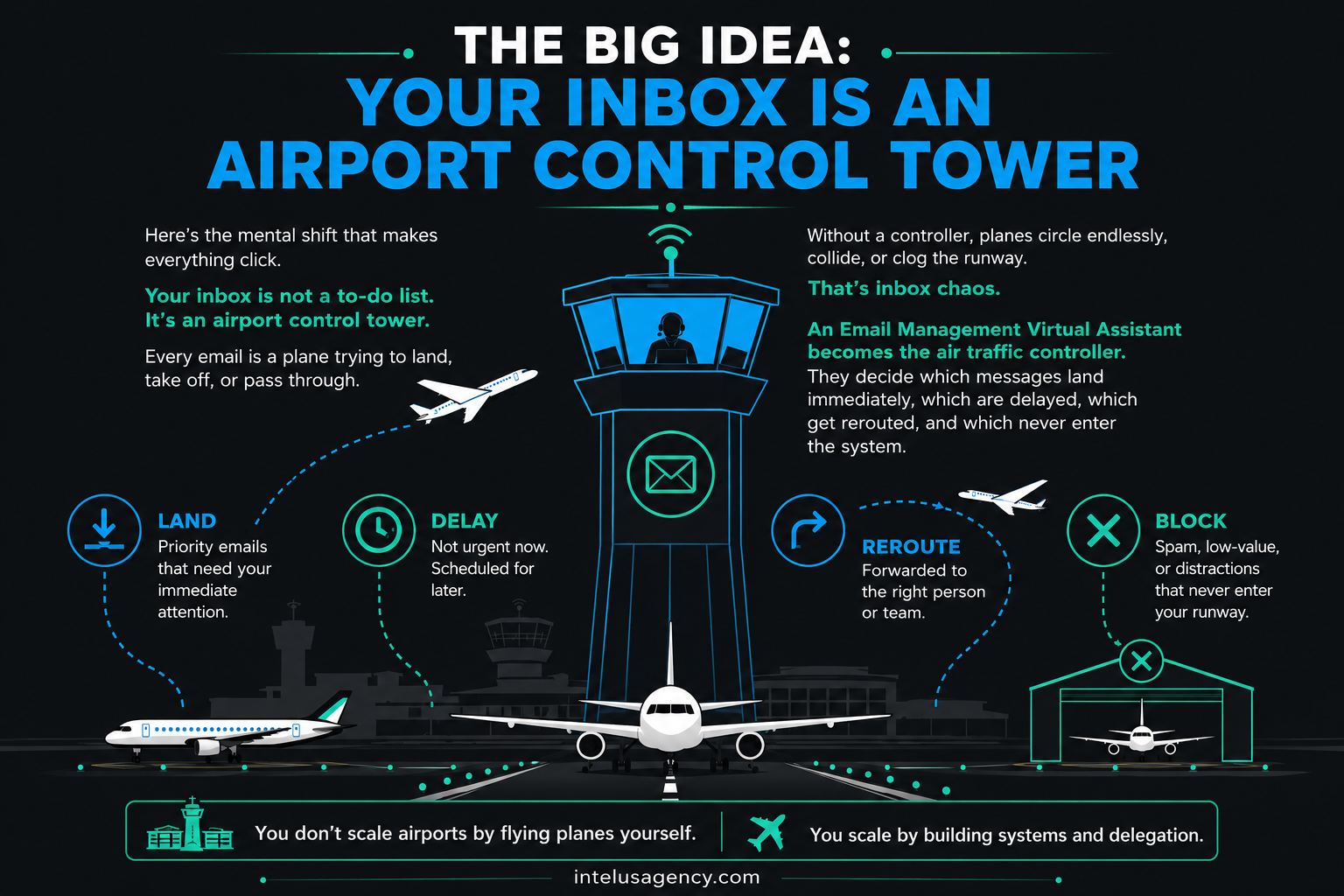
Here’s the mental shift that makes everything click. Your inbox is not a to-do list. It’s an airport control tower. Every email is a plane trying to land, take off, or pass through.
Without a controller, planes circle endlessly, collide, or clog the runway. That’s inbox chaos. An Email Management Virtual Assistant becomes the air traffic controller. They decide which messages land immediately, which are delayed, which get rerouted, and which never enter the system.
You don’t scale airports by flying planes yourself. You scale by building systems and delegation. That’s the same principle behind scaling with remote talent. A visual like “Inbox Control Tower Metaphor” makes this idea memorable and easy to understand.
How to Successfully Delegate Your Inbox Without Losing Control
Delegating your inbox doesn’t mean losing control. It means gaining clarity. The process starts with permission-based access and clear response rules. Your Email Management Virtual Assistant knows what they can reply to, what needs approval, and what must be escalated.
Templates and brand voice documents keep communication consistent. Delegation often happens in phases, starting with filtering and drafts before moving into full responses. Instead of checking email all day, leaders switch to daily summaries that keep them informed without constant interruption.
Resources on how to train a virtual assistant help teams roll this out smoothly. Security matters too, which is why following secure inbox delegation best practices ensures access stays safe. A visual like “Inbox Delegation Ramp-Up Timeline” helps reduce fear and friction.
Why a Role-Trained Email Management Virtual Assistant Matters
Not all virtual assistants are equal. Generic marketplaces often provide reactive help. A role-trained Email Management Virtual Assistant understands business context, priorities, and consequences. They don’t just respond. They anticipate.
They build systems, not shortcuts. They stay longer, earn trust, and become part of how your business operates. That’s the difference between generic help and role-trained virtual assistants. Industry comparisons like virtual assistant quality benchmarks show why training and specialization matter. A visual like “Generic VA vs Role-Trained Email VA” makes this contrast obvious.
Your Inbox Should Serve You, Not the Other Way Around
Email will always exist. But it doesn’t have to own your attention. With the right Email Management Virtual Assistant, your inbox becomes predictable, calm, and controlled. You get hours back each week. Focus returns. Stress drops.
If you’re ready to stop living inside your inbox, you can schedule a consultation, explore email management virtual assistant support, or start with a simple inbox delegation checklist. When your inbox works for you instead of against you, everything else gets easier.


.png)
.png)

.png)
.png)
