



Oops! Something went wrong while submitting the form.
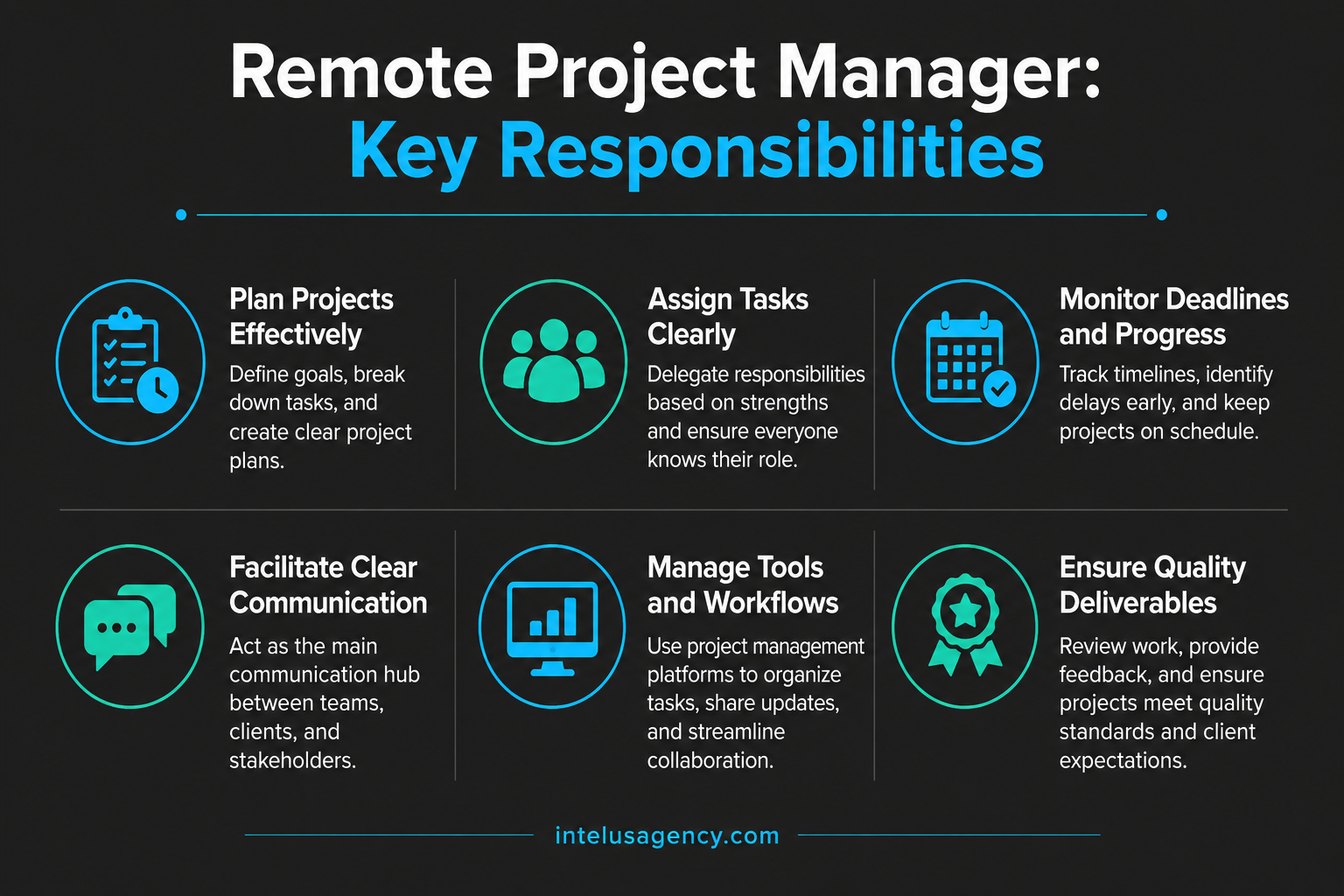
A remote project manager oversees workflows, deadlines, and communication to ensure projects move forward smoothly across distributed teams. Strong project management skills help managers organize priorities, reduce confusion, and keep everyone aligned even when team members work in different locations or time zones.
Their responsibilities typically include planning tasks, assigning responsibilities, monitoring deadlines, and making sure deliverables are completed on time. Remote managers also act as communication hubs between clients, leadership teams, freelancers, and internal staff. According to what project managers actually do, effective project management combines planning, execution, and team coordination to achieve business goals efficiently.
Most remote managers rely heavily on project management platforms to track progress, manage workloads, and centralize communication. These systems reduce the need for constant check-ins by creating visibility across tasks, timelines, and responsibilities.
Instead of micromanaging people, successful remote project managers build workflows where updates, approvals, and collaboration happen naturally through organized systems and clear processes.
Key Skills Every Remote Project Manager Needs
Strong remote project managers succeed because they combine communication, organization, leadership, and technical knowledge into repeatable systems. While tools and workflows matter, the ability to guide people clearly in a remote environment is what separates average managers from highly effective ones. Developing strong project management skills helps remote leaders improve coordination, reduce delays, and create smoother collaboration across distributed teams.
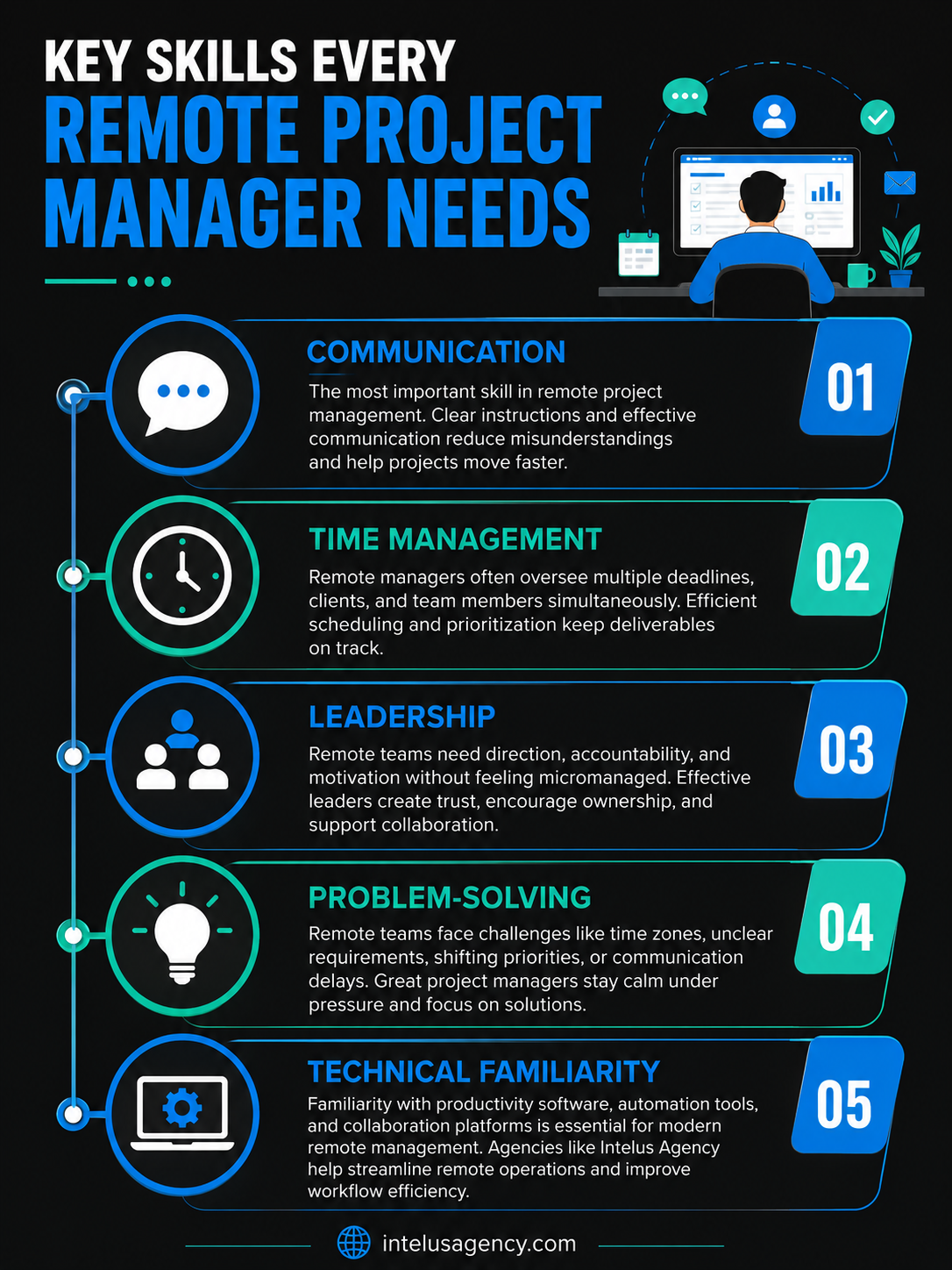
Communication is the most important skill in remote project management. Since teams are not working in the same physical space, managers must write clear instructions, explain priorities effectively, and avoid ambiguity. Good communication reduces misunderstandings and helps projects move faster without constant meetings.
Time management is equally critical. Remote managers often oversee multiple deadlines, clients, and team members simultaneously. Prioritizing tasks, tracking progress, and managing schedules efficiently prevents bottlenecks and keeps deliverables on track.
Leadership also plays a major role. Remote teams need direction, accountability, and motivation without feeling micromanaged. Effective leaders create trust, encourage ownership, and support collaboration even when employees work independently. Resources like top project management skills explained emphasize how communication and leadership directly influence project success.
Problem-solving is another essential skill because remote teams frequently face challenges involving time zones, unclear requirements, shifting priorities, or communication delays. Great project managers stay calm under pressure and focus on solutions rather than reacting emotionally to setbacks.
Finally, technical familiarity with productivity software, automation tools, and collaboration platforms is essential for modern remote management. Many businesses rely on agencies like Intelus Agency to help streamline remote operations and improve workflow efficiency through better systems and talent support.
Best Tools for Remote Project Management
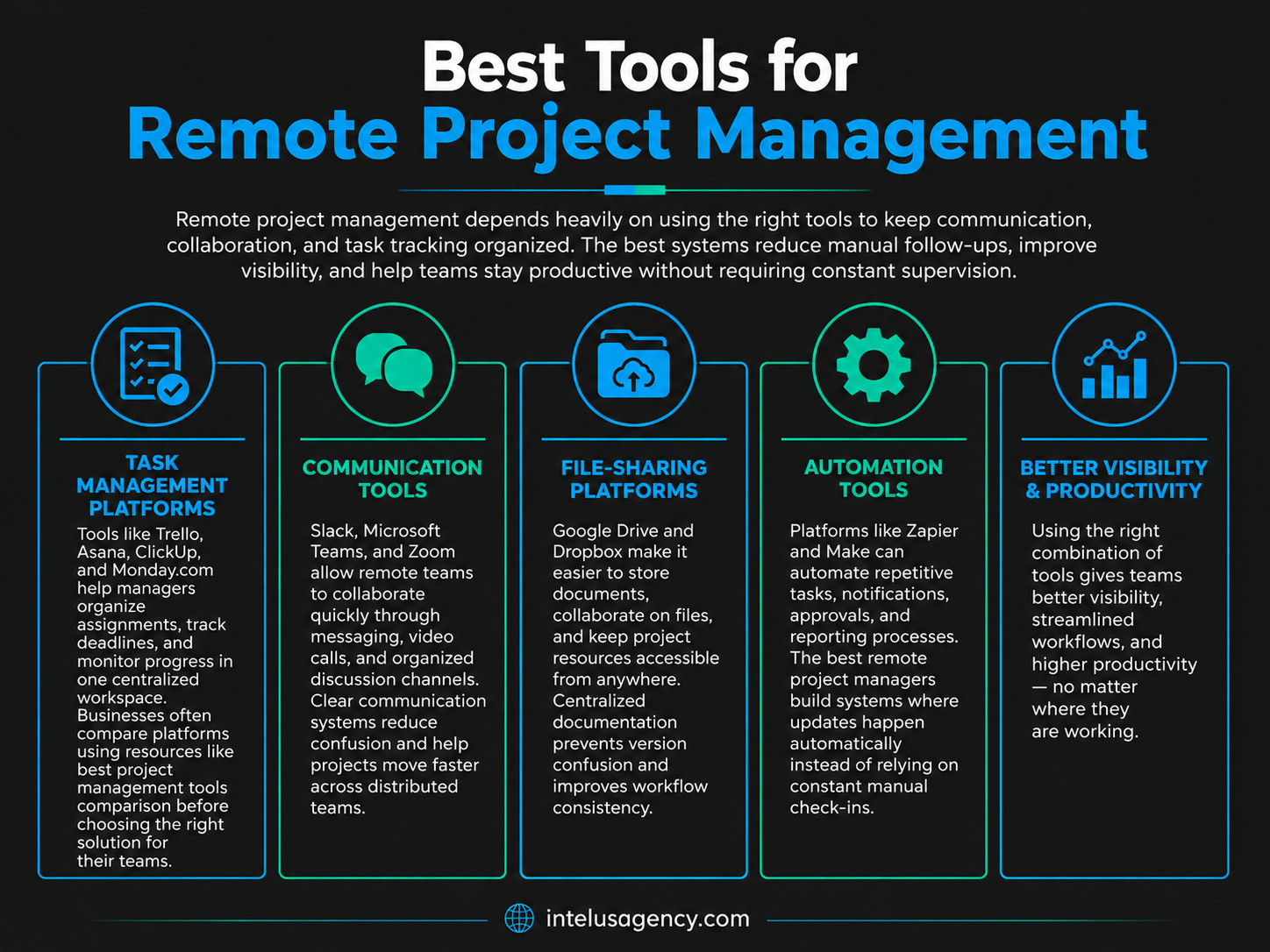
Remote project management depends heavily on using the right tools to keep communication, collaboration, and task tracking organized. The best systems reduce manual follow-ups, improve visibility, and help teams stay productive without requiring constant supervision.
Task management platforms are usually the foundation of a remote workflow. Tools like Trello, Asana, ClickUp, and Monday.com help managers organize assignments, track deadlines, and monitor progress in one centralized workspace. Businesses often compare platforms using resources like best project management tools comparison before choosing the right solution for their teams.
Communication tools are equally important. Slack, Microsoft Teams, and Zoom allow remote teams to collaborate quickly through messaging, video calls, and organized discussion channels. Clear communication systems reduce confusion and help projects move faster across distributed teams.
File-sharing platforms such as Google Drive and Dropbox make it easier to store documents, collaborate on files, and keep project resources accessible from anywhere. Centralized documentation prevents version confusion and improves workflow consistency.
Automation tools also play a major role in modern remote management. Platforms like Zapier and Make can automate repetitive tasks, notifications, approvals, and reporting processes. The best remote project managers build systems where updates happen automatically instead of relying on constant manual check-ins.
How to Manage a Remote Team Effectively
Managing a remote team successfully starts with building clear systems instead of relying on constant supervision. Strong project management skills help leaders create workflows where communication, accountability, and progress tracking happen consistently across distributed teams.
The first step is setting clear expectations. Every team member should understand their responsibilities, deadlines, priorities, and communication standards. Unclear instructions often create delays, duplicated work, and unnecessary confusion in remote environments. Effective project managers document processes carefully so team members can work independently without needing constant clarification.
Consistent check-ins also improve alignment and accountability. Daily standups, weekly progress reviews, and milestone updates help teams stay connected while reducing project risks. However, successful remote leadership is not about scheduling endless meetings. The goal is to create efficient communication rhythms that support productivity without overwhelming the team.
Async communication is especially important for distributed teams working across different time zones. Instead of expecting immediate responses, remote managers should encourage organized updates through project boards, shared documents, and recorded feedback. Resources like how to manage remote teams effectively emphasize the importance of trust, clarity, and flexible communication systems.
Accountability should also be built directly into workflows. The best remote project managers create systems where deadlines, ownership, and progress are visible to everyone. This reduces micromanagement while increasing transparency across projects.
As teams grow, some businesses choose to seek an outsourcing consultation to improve operational efficiency, delegate specialized work, and reduce management bottlenecks. Outsourcing certain tasks can help remote managers focus on strategy, leadership, and high-priority execution instead of trying to oversee every operational detail manually.
Remote project management is not about controlling people every hour of the day. The strongest managers design workflows where updates happen naturally, communication stays organized, and teams can execute confidently from anywhere.
Common Challenges (And How to Solve Them)
Remote project management offers flexibility and scalability, but it also comes with challenges that can slow down productivity if systems are not properly structured. Successful remote managers anticipate these problems early and create workflows designed to reduce operational friction.
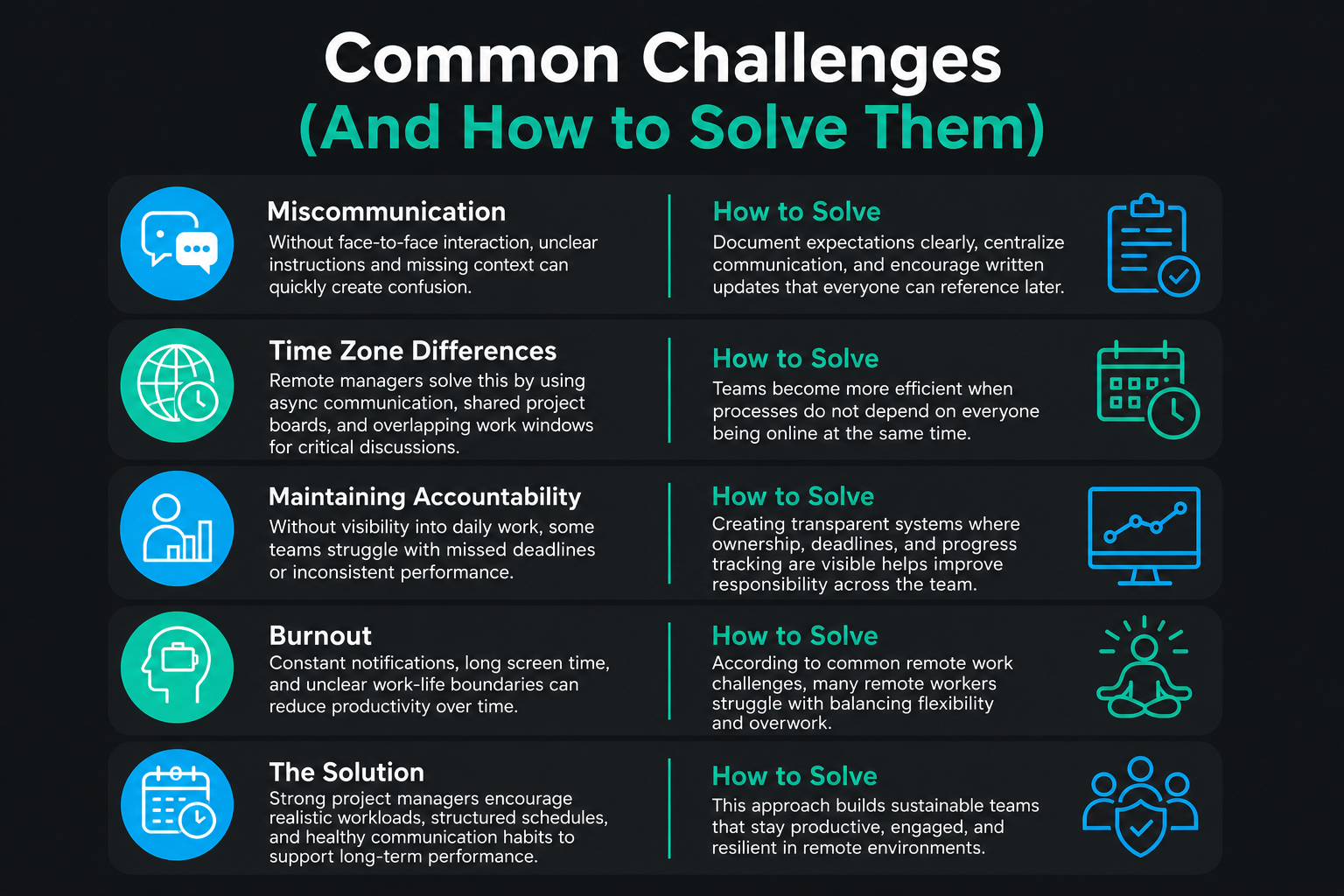
Miscommunication is one of the most common issues in remote teams. Without face-to-face interaction, unclear instructions and missing context can quickly create confusion. The best solution is to document expectations clearly, centralize communication, and encourage written updates that everyone can reference later.
Time zone differences can also delay collaboration and decision-making. Remote managers solve this by using async communication, shared project boards, and overlapping work windows for critical discussions. Teams become more efficient when processes do not depend on everyone being online at the same time.
Another challenge is maintaining accountability. Without visibility into daily work, some teams struggle with missed deadlines or inconsistent performance. Creating transparent systems where ownership, deadlines, and progress tracking are visible helps improve responsibility across the team.
Burnout is also a growing concern in remote environments. Constant notifications, long screen time, and unclear work-life boundaries can reduce productivity over time. According to common remote work challenges, many remote workers struggle with balancing flexibility and overwork. Strong project managers encourage realistic workloads, structured schedules, and healthy communication habits to support long-term performance.
When to Outsource vs Manage In-House
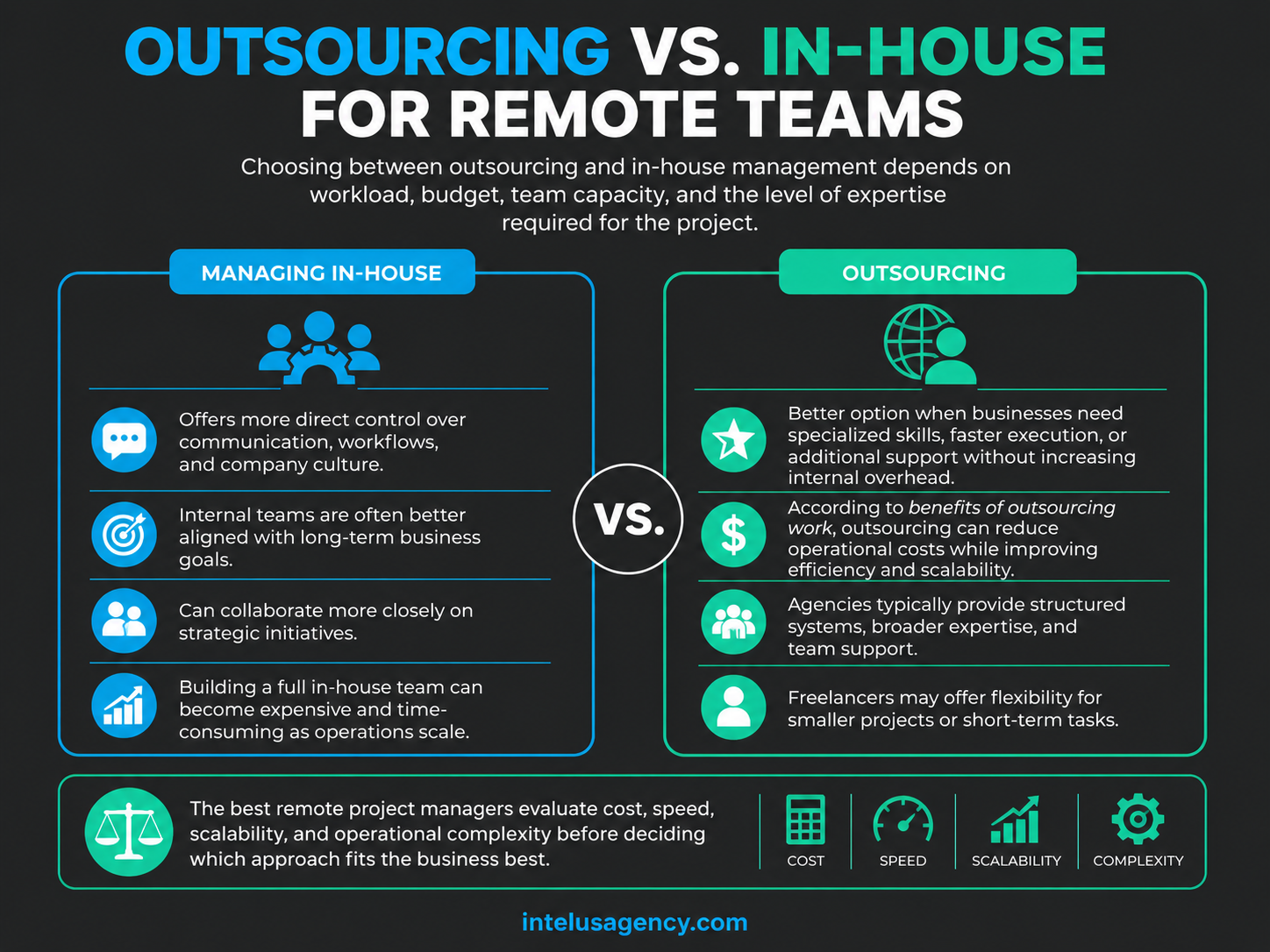
One of the biggest decisions remote project managers face is whether to manage work internally or outsource specific tasks. The right choice usually depends on workload, budget, team capacity, and the level of expertise required for the project.
Managing projects in-house offers more direct control over communication, workflows, and company culture. Internal teams are often better aligned with long-term business goals and can collaborate more closely on strategic initiatives. However, building a full in-house team can become expensive and time-consuming as operations scale.
Outsourcing is often the better option when businesses need specialized skills, faster execution, or additional support without increasing internal overhead. According to benefits of outsourcing work, outsourcing can reduce operational costs while improving efficiency and scalability.
Agencies typically provide structured systems, broader expertise, and team support, while freelancers may offer flexibility for smaller projects or short-term tasks. The best remote project managers evaluate cost, speed, scalability, and operational complexity before deciding which approach fits the business best.
Conclusion
Becoming a successful remote project manager starts with building simple systems that improve communication, accountability, and workflow visibility. The best managers are not constantly chasing updates or micromanaging people. Instead, they create processes that allow teams to collaborate efficiently from anywhere.
Strong remote leadership combines clear communication, smart delegation, organized tools, and continuous improvement. Managers who focus on refining workflows over time can reduce operational friction while helping teams stay productive and aligned. Resources covering continuous improvement strategies can help remote leaders strengthen long-term project performance.
Need help managing your remote team? Get expert support through an outsourcing consultation and improve your remote operations with better systems and scalable support.


.png)
.png)

.png)
.png)
