


Oops! Something went wrong while submitting the form.
A construction company can finish multiple projects, keep crews busy, and generate steady revenue—yet still struggle to make a profit. The problem often isn't a lack of work. It's poor financial visibility.
Between labor costs, material purchases, subcontractor payments, and unexpected expenses, construction businesses manage countless transactions across different jobs. Without accurate construction bookkeeping, small financial mistakes can quickly turn into significant profit losses.
Construction industry statistics from the U.S. Census Bureau provide valuable context on industry activity, but contractors also need reliable financial records to understand how their own projects perform.
Effective bookkeeping helps contractors track job costs, monitor cash flow, identify budget overruns, and understand which projects actually make money.
In this guide, we'll explore the construction bookkeeping practices that help contractors prevent costly mistakes, protect profit margins, and maintain better financial control over every job.
Why Construction Companies Lose Money Without Proper Bookkeeping
Construction companies can generate substantial revenue while struggling to maintain healthy profit margins. Without accurate financial records, contractors may overlook expenses, underestimate project costs, and make decisions based on incomplete information. Common construction industry financial challenges become even harder to manage when multiple projects are running simultaneously.
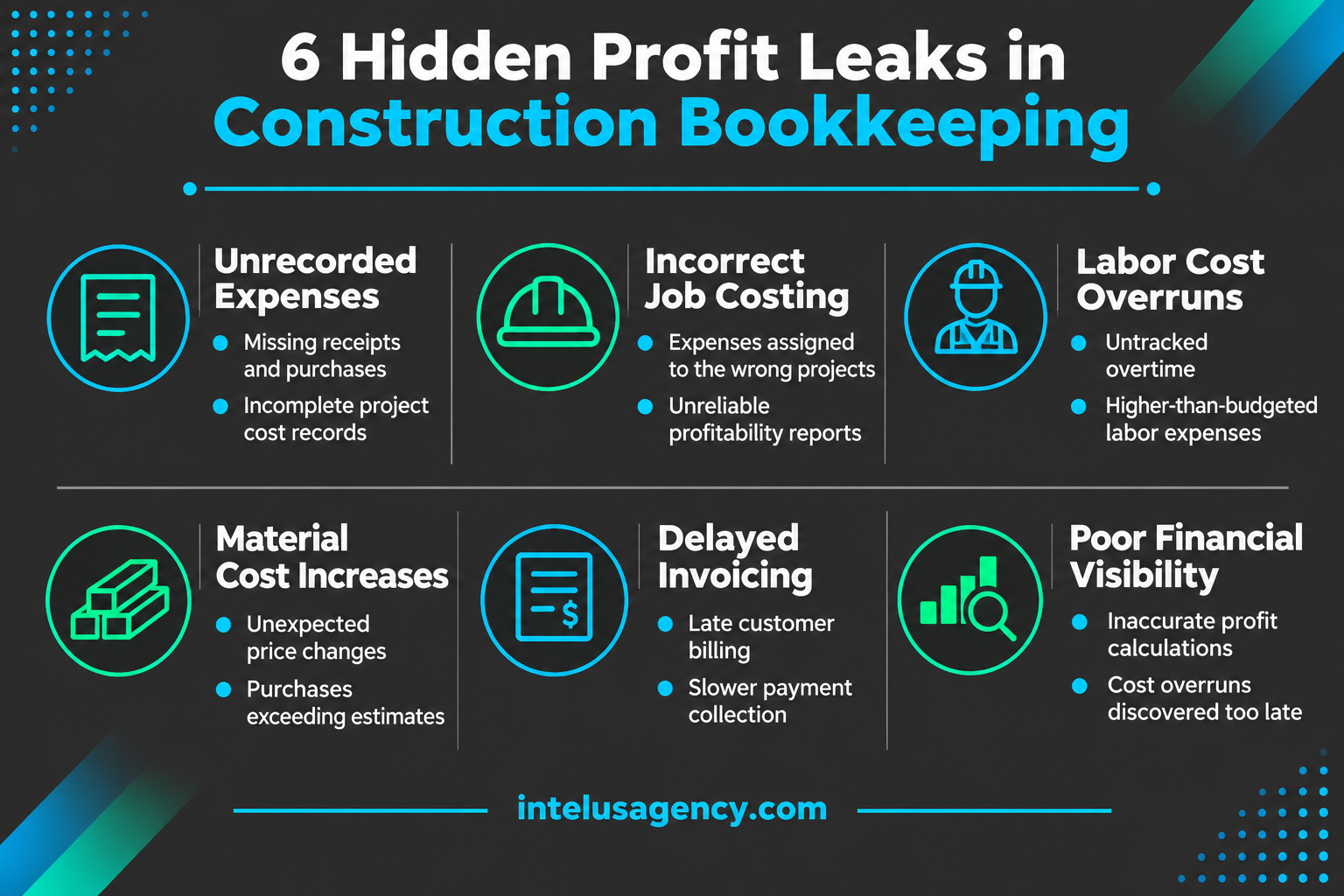
Unrecorded Expenses and Incorrect Job Cost Allocation
Every construction project involves labor, materials, equipment, and subcontractor expenses. When these costs aren't recorded promptly or assigned to the correct job, financial reports become unreliable.
For example, materials purchased for one project might accidentally be charged to another. These errors make it difficult to determine which jobs are profitable and which are losing money.
Labor and Material Cost Overruns
Unexpected overtime, material price increases, and additional equipment rentals can quickly reduce project margins.
Without consistent expense tracking, contractors may discover these overruns only after completing a job. Accurate construction bookkeeping helps identify rising costs early, giving project managers time to adjust spending and protect profitability.
Delayed Invoicing and Missed Payments
Late invoices and poorly organized payment records create unnecessary cash flow problems. Contractors may struggle to cover payroll, purchase materials, or pay subcontractors while waiting for customer payments.
Maintaining accurate billing records helps construction businesses track outstanding invoices and manage upcoming financial obligations.
Revenue Doesn't Always Equal Profit
A project can generate significant revenue while delivering little profit after expenses. Contractors need to understand the difference between total contract value, actual project costs, and remaining earnings.
Intelus Agency's construction virtual assistant services can help contractors organize expense records, track invoices, and maintain consistent bookkeeping workflows, giving business owners greater visibility into project finances.
Ultimately, proper bookkeeping gives construction owners a clearer picture of financial performance, helping them identify profit leaks before they become expensive problems.
Construction Job Costing: Know Exactly What Every Project Costs
Construction job costing helps contractors understand how much money each project actually costs and whether the work generates a profit. Unlike general expense tracking, construction job costing assigns labor, materials, equipment, subcontractor payments, and other expenses to specific projects. This gives business owners a clearer picture of financial performance throughout construction.
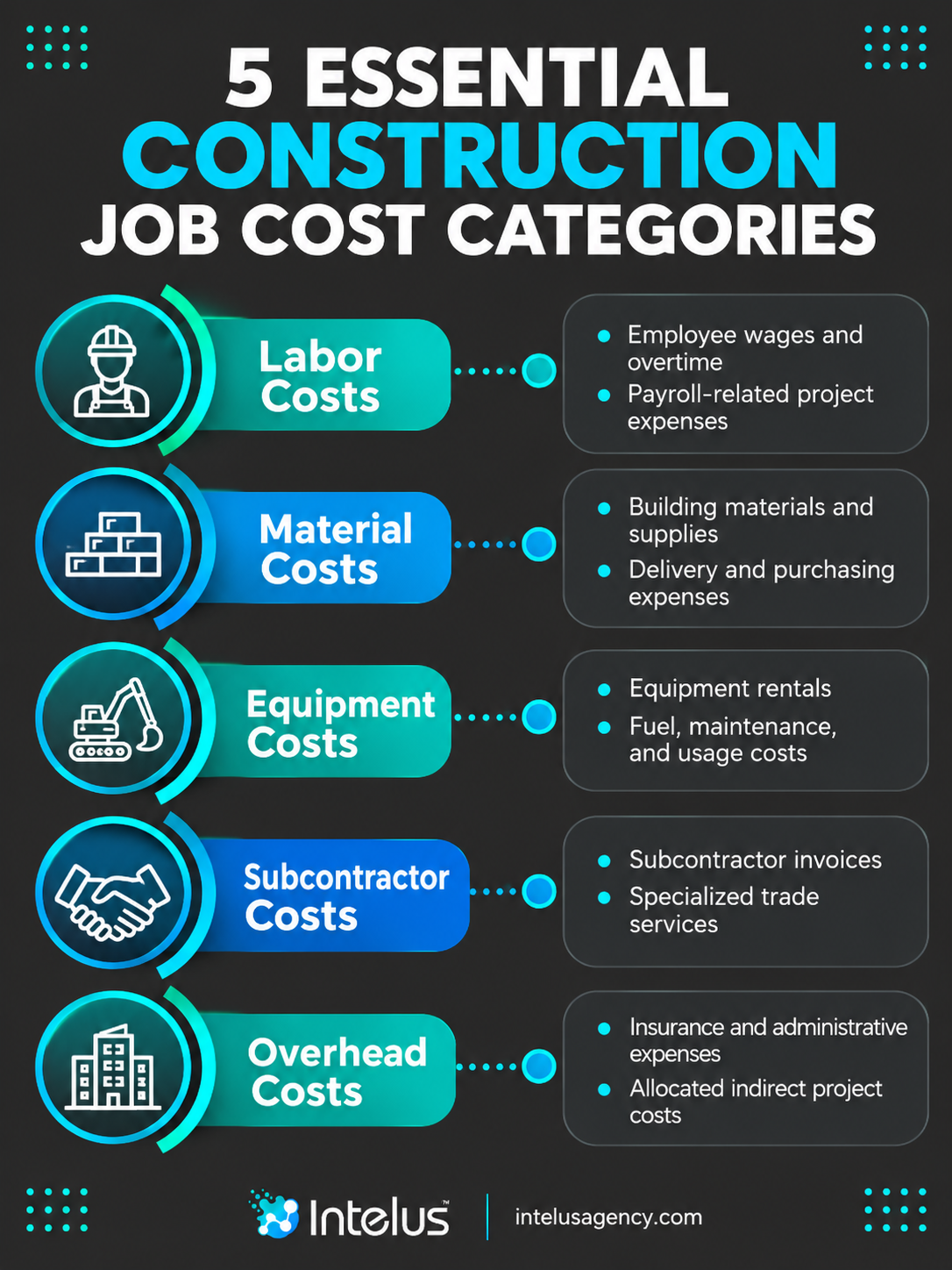
Track Labor, Materials, Equipment, and Subcontractor Costs
Every construction project includes direct and indirect expenses. Direct costs include employee wages, building materials, equipment rentals, and subcontractor fees. Indirect costs may include insurance, administrative expenses, and shared equipment costs.
Accurate construction bookkeeping ensures these expenses are categorized correctly and assigned to the appropriate jobs. Following established construction accounting practices can also help businesses develop more consistent financial management procedures.
Without consistent cost allocation, contractors may underestimate project expenses and overestimate profitability.
Compare Estimated Costs Against Actual Expenses
Before starting a project, contractors typically prepare budgets based on estimated labor, materials, equipment, and subcontractor costs.
As work progresses, comparing actual expenses against these estimates helps identify budget overruns.
For example, a contractor may estimate $80,000 in total project costs for a $100,000 contract. If actual expenses increase to $92,000, the expected $20,000 profit drops to just $8,000, before any additional unaccounted costs.
Regular budget comparisons help contractors identify these changes before they significantly affect profitability.
Review Job Costs Before the Project Ends
Waiting until project completion to review expenses can leave contractors with limited opportunities to control costs.
Weekly job cost reviews help construction managers monitor labor spending, material purchases, and outstanding subcontractor invoices. They also reveal discrepancies between planned and actual expenses.
Construction businesses can streamline project-level cost tracking and financial reporting with Foundation Software Virtual Assistant services from Intelus Agency.
Similarly, Sage 100 Contractor Virtual Assistant services can help contractors maintain organized job cost records, update financial information, and support consistent construction accounting workflows.
Ultimately, consistent job costing allows contractors to understand which projects generate profits, identify financial problems earlier, and make better decisions about future bids and project budgets.
Common Construction Bookkeeping Mistakes That Drain Profits
Even profitable construction companies can lose money because of preventable bookkeeping mistakes. Inaccurate records, overlooked expenses, and inconsistent financial tracking make it difficult to understand actual project costs. Following proper business recordkeeping guidelines helps contractors maintain reliable financial information and avoid costly errors.
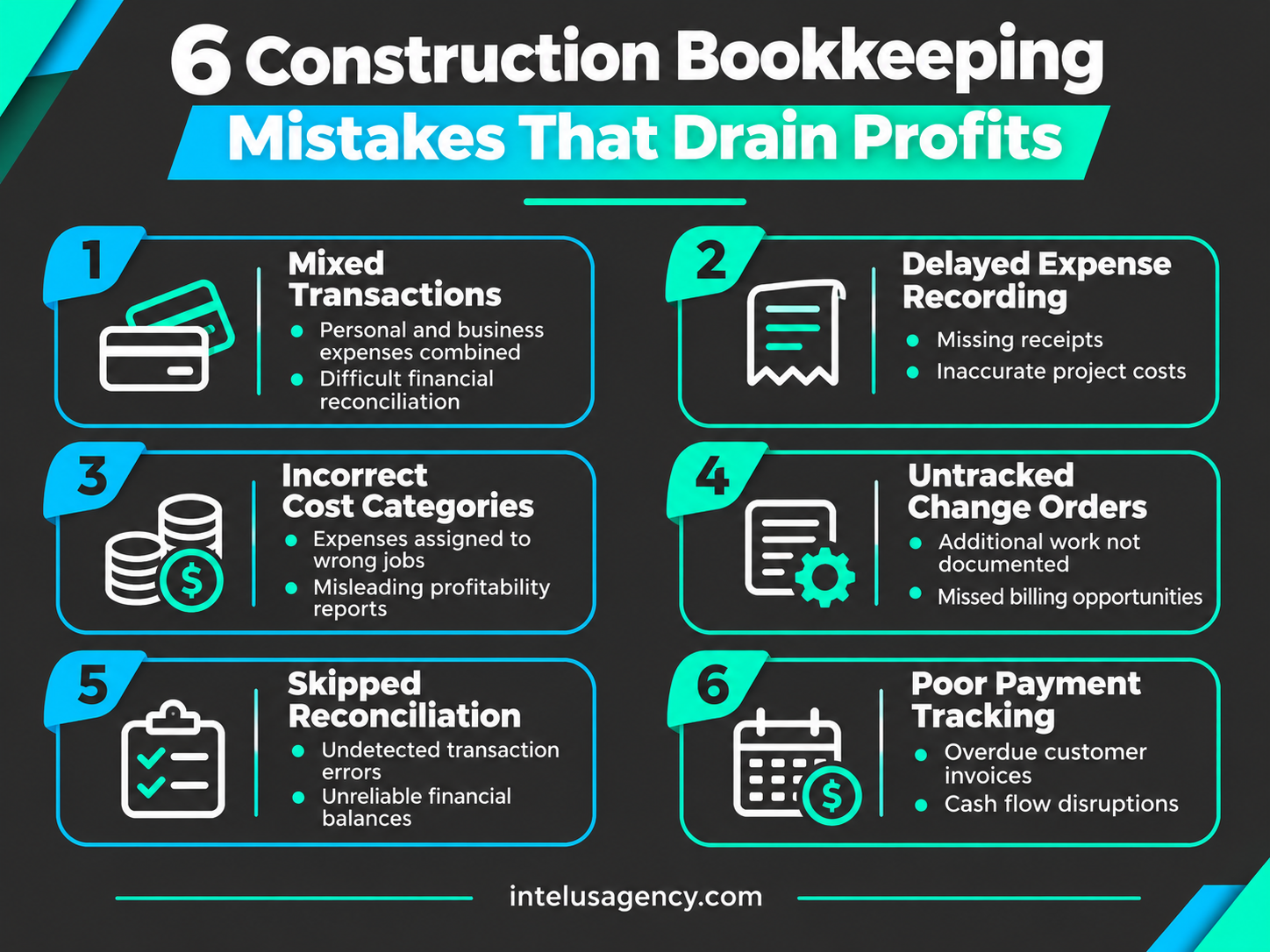
Mixing Personal and Business Transactions
Using the same bank account for personal and construction expenses creates confusion when reviewing financial records. It becomes harder to identify legitimate business costs, reconcile transactions, and prepare accurate financial reports.
Maintaining separate accounts helps contractors organize expenses and simplify bookkeeping.
Failing to Record Project Expenses Promptly
Construction businesses handle frequent purchases, including materials, equipment rentals, fuel, and supplies. When receipts are misplaced or expenses are recorded weeks later, project costs become inaccurate.
Recording transactions promptly ensures expenses are assigned to the correct jobs and reflected in financial reports.
Incorrectly Categorizing Labor and Material Costs
Assigning labor hours or material purchases to the wrong project can distort job profitability.
For example, recording subcontractor expenses under an unrelated project may make one job appear more profitable while another shows unnecessary losses.
Accurate expense categorization supports reliable construction job costing.
Overlooking Change Orders and Additional Expenses
Project changes often require additional labor, materials, or equipment. When approved change orders aren't documented and billed properly, contractors may absorb expenses that should have been charged to customers.
Tracking changes helps maintain accurate project budgets and billing records.
Neglecting Reconciliation and Payment Follow-Ups
Skipping bank reconciliations can leave duplicate transactions, missing payments, and recording errors unnoticed. Delayed invoice follow-ups can also create cash flow problems.
Regular reconciliation and consistent payment monitoring help maintain financial accuracy.
Construction companies can reduce these recurring issues by leveraging professional bookkeeping virtual assistant services to maintain organized financial records, track project expenses, and support routine account reconciliation.
Ultimately, avoiding these mistakes helps contractors maintain accurate records, protect profit margins, and make more informed financial decisions.
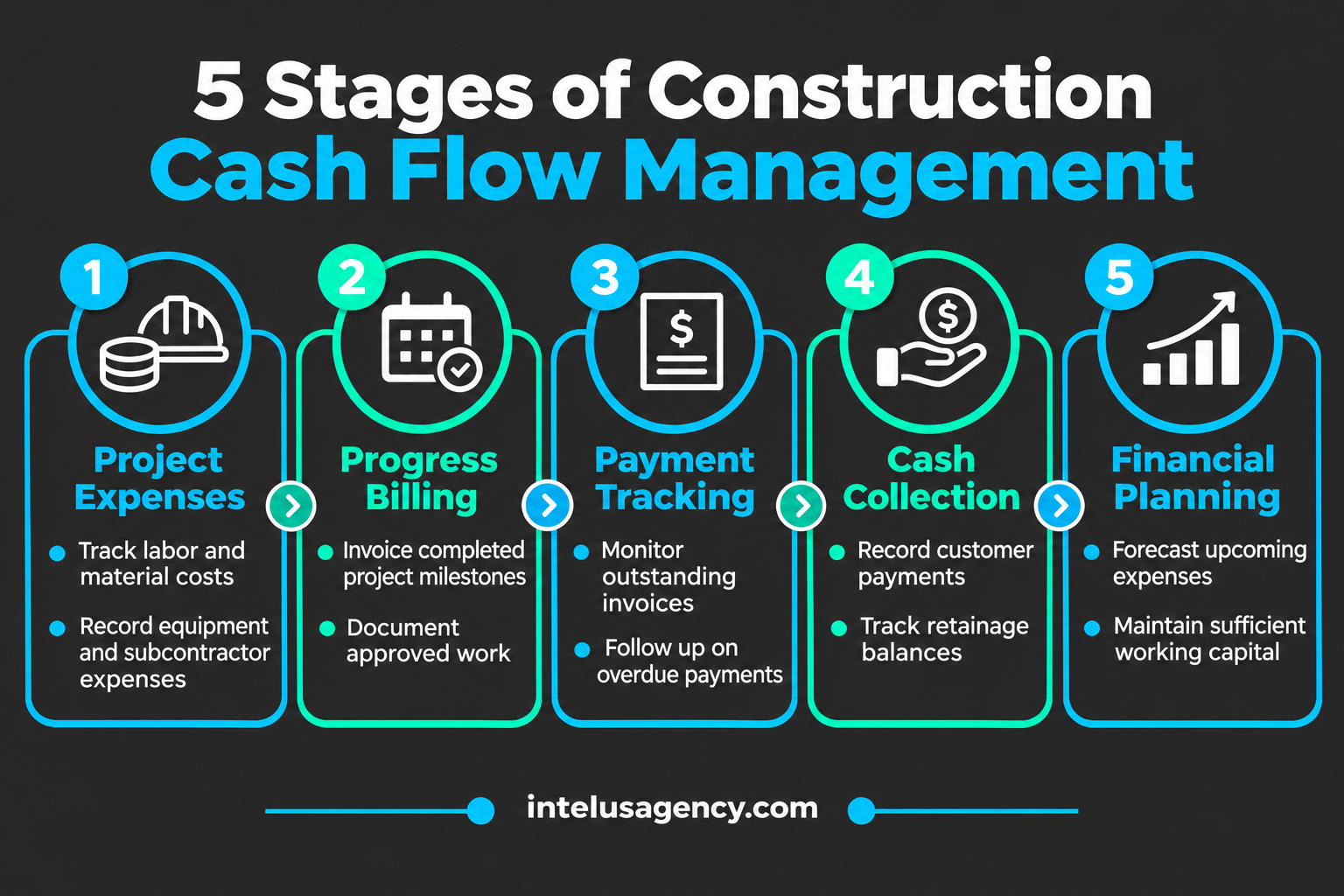
How Better Bookkeeping Improves Construction Cash Flow
Construction companies often pay for labor, materials, and equipment before receiving customer payments. Even profitable projects can create financial pressure when expenses come due before invoices are collected. Accurate construction bookkeeping helps contractors monitor incoming and outgoing funds, anticipate payment obligations, and maintain sufficient working capital.
Following sound small business financial management practices also supports better cash flow planning.
Manage Progress Billing and Milestone Payments
Many construction contracts use progress billing, where customers make payments as specific project milestones are completed.
Accurate bookkeeping helps contractors track completed work, prepare timely invoices, and monitor outstanding balances. Consistent billing reduces unnecessary payment delays and helps maintain predictable cash flow.
Track Accounts Receivable and Overdue Invoices
Unpaid invoices can quickly affect a contractor's ability to cover operating expenses.
Regularly reviewing accounts receivable helps identify overdue payments and prioritize customer follow-ups. Intelus Agency's accounts payable and receivable virtual assistant services can help contractors maintain organized payment records, monitor outstanding balances, and support consistent billing workflows.
Monitor Vendor and Subcontractor Payments
Construction businesses must balance customer collections with payments owed to suppliers, subcontractors, and employees.
Maintaining accurate accounts payable records helps contractors understand upcoming obligations, avoid duplicate payments, and schedule expenses according to available cash.
Account for Retainage and Upcoming Project Expenses
Retainage represents a portion of contract payments withheld until specified project requirements are satisfied. Although this amount may be included in expected revenue, it isn't immediately available for operating expenses.
Contractors should track retainage separately and forecast upcoming labor, material, and equipment costs.
Contractors using construction payment platforms can benefit from Levelset and Procore Pay Virtual Assistant services to help manage payment documentation, organize billing records, and support payment tracking workflows.
Ultimately, consistent cash flow tracking helps construction companies prepare for financial obligations, reduce payment disruptions, and keep projects moving without unnecessary financial strain.
Construction Bookkeeping Software That Helps Track Every Dollar
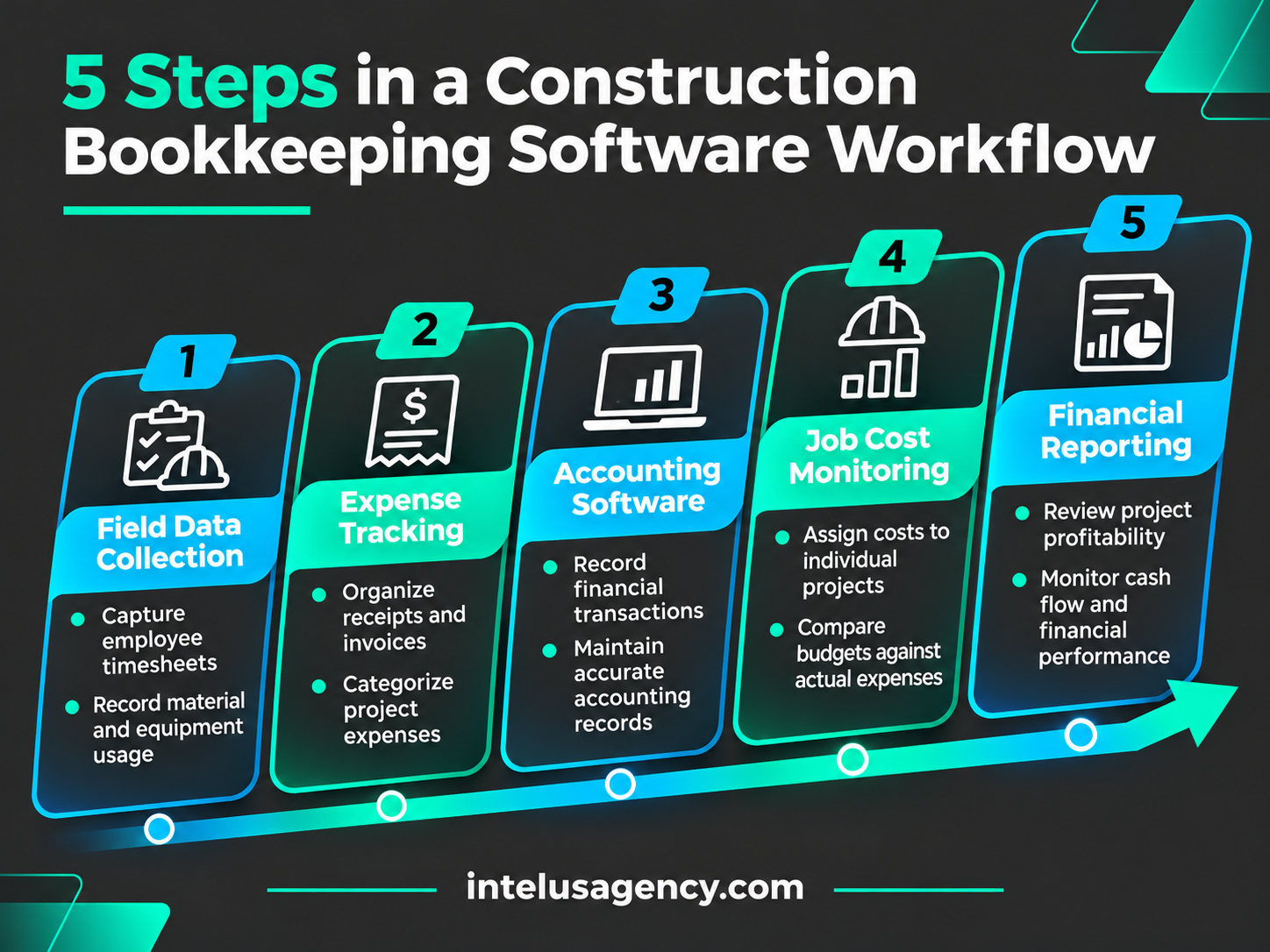
Managing construction finances becomes more complicated as project volumes increase. Contractors need reliable systems to organize expenses, track labor costs, monitor budgets, and prepare accurate financial reports.
The right construction bookkeeping software helps streamline these responsibilities while reducing manual data entry and recording errors. Industry organizations such as the Associated General Contractors of America provide construction technology resources that help businesses explore operational improvements.
QuickBooks for Construction Bookkeeping
QuickBooks helps construction businesses manage financial transactions, categorize expenses, generate invoices, and monitor cash flow.
Through Intelus Agency's QuickBooks Virtual Assistant services, contractors can receive dedicated support with transaction recording, expense categorization, invoice preparation, and project-level financial tracking, depending on their software configuration.
Foundation for Construction Job Costing
Foundation is construction-specific accounting software designed to support job costing, payroll, and project financial management.
Contractors can use it to track expenses across individual jobs, organize cost categories, and review financial performance. These capabilities help identify budget overruns and improve project cost visibility.
Sage for Construction Accounting Workflows
Sage 100 Contractor and Sage Intacct Construction provide accounting capabilities designed for construction businesses.
Contractors can leverage Sage Intacct Construction Virtual Assistant services to help maintain organized financial records, update project expenses, and support construction accounting and reporting workflows.
ClockShark for Labor Time Tracking
Labor expenses represent a significant portion of construction project costs.
Intelus Agency's ClockShark Virtual Assistant services can help contractors organize employee timesheets, monitor recorded labor hours, and maintain accurate job-specific time records.
Accurate time records support payroll preparation and improve labor cost allocation.
Connect Field Records With Accounting Systems
Construction bookkeeping software works best when field information and financial records remain consistent.
Employee timesheets, material purchases, subcontractor invoices, and equipment expenses should be recorded promptly and assigned to the correct projects.
Connecting these workflows reduces duplicate entries, improves reporting accuracy, and gives contractors a clearer understanding of project profitability.
Ultimately, software supports financial organization, but dependable bookkeeping practices ensure the information remains accurate and useful.
Build a Construction Bookkeeping Routine That Protects Profit Margins
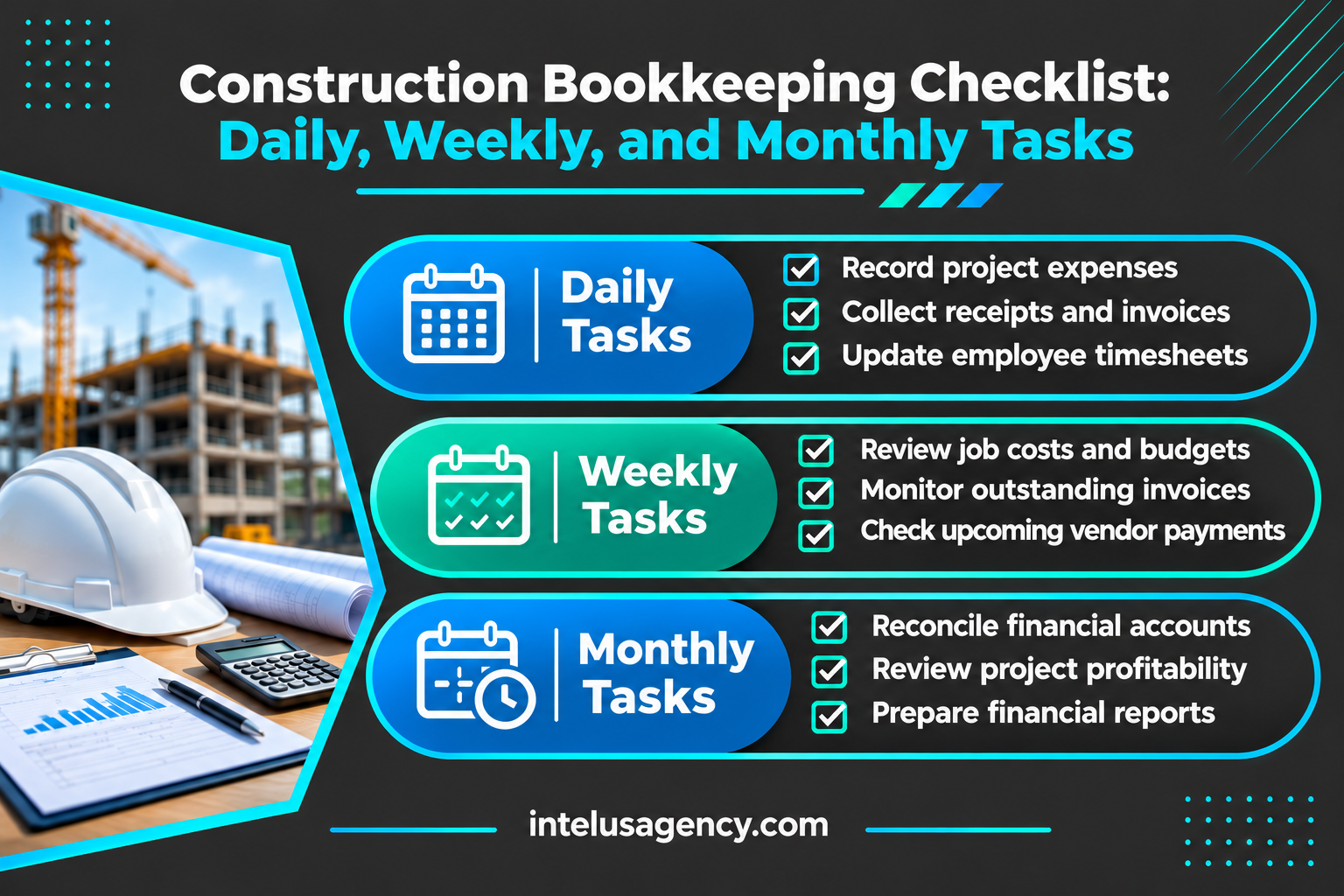
Accurate construction bookkeeping requires more than occasional financial reviews. Contractors need consistent daily, weekly, and monthly routines to maintain organized records and identify potential profit losses.
Following reliable business bookkeeping and recordkeeping practices helps construction companies improve financial visibility and make informed project decisions.
Daily Bookkeeping Tasks
Daily bookkeeping begins with recording project expenses, collecting receipts, and documenting financial transactions.
Contractors should track material purchases, equipment rentals, subcontractor invoices, and employee timesheets. Assigning these expenses to the correct projects helps maintain accurate job cost records and prevents missing transactions.
Weekly Bookkeeping Tasks
Weekly reviews help contractors monitor project spending before minor issues become expensive problems.
Compare actual labor and material costs against project budgets, review outstanding customer invoices, and check upcoming vendor payments.
Professional payroll processing virtual assistant services can help contractors organize employee timesheets, maintain payroll documentation, and prepare accurate information for payroll processing.
Monthly Bookkeeping Tasks
Monthly bookkeeping focuses on reconciliation, financial reporting, and profitability analysis.
Contractors should reconcile bank and credit card accounts, review accounts receivable and payable, and evaluate financial performance across active projects.
Monthly reports help identify unexpected expenses, cash flow concerns, and differences between estimated and actual job costs.
Maintain Consistent Financial Documentation
Organized receipts, invoices, timesheets, and payment records make financial reviews more efficient.
Intelus Agency's financial reporting virtual assistant services can help contractors maintain consistent reporting workflows, organize project financial data, and prepare financial summaries for management review.
Ultimately, a structured bookkeeping routine reduces financial uncertainty, strengthens accountability, and helps construction businesses protect profit margins throughout every project.
When Should Construction Companies Outsource Bookkeeping?
As construction businesses grow, managing financial records becomes increasingly demanding. Contractors must track expenses, monitor job costs, process invoices, and maintain accurate reports while overseeing active projects.
Intelus Agency's construction virtual assistant services provide remote administrative support that helps contractors manage these responsibilities while focusing on project delivery and business growth.
Exploring small business management resources can also help contractors evaluate their operational needs.
Signs Your Construction Business Needs Bookkeeping Support
Frequent bookkeeping delays, missing receipts, inaccurate job cost reports, and overdue invoices may indicate that existing financial processes need improvement.
When business owners spend evenings organizing transactions instead of managing projects, additional bookkeeping support may become necessary.
What a Construction Bookkeeping Virtual Assistant Can Handle
A dedicated bookkeeping virtual assistant from Intelus Agency can help record transactions, categorize project expenses, organize receipts, prepare invoices, and monitor outstanding payments.
They may also assist with account reconciliation, timesheet organization, and routine financial reporting. Tax preparation, accounting judgments, and other regulated responsibilities should remain with appropriately qualified professionals.
In-House Versus Outsourced Bookkeeping
In-house bookkeepers work directly within a construction company's operations, while outsourced professionals provide remote support using established accounting systems and digital workflows.
Both options can be effective depending on project volume, budget, and financial management requirements.
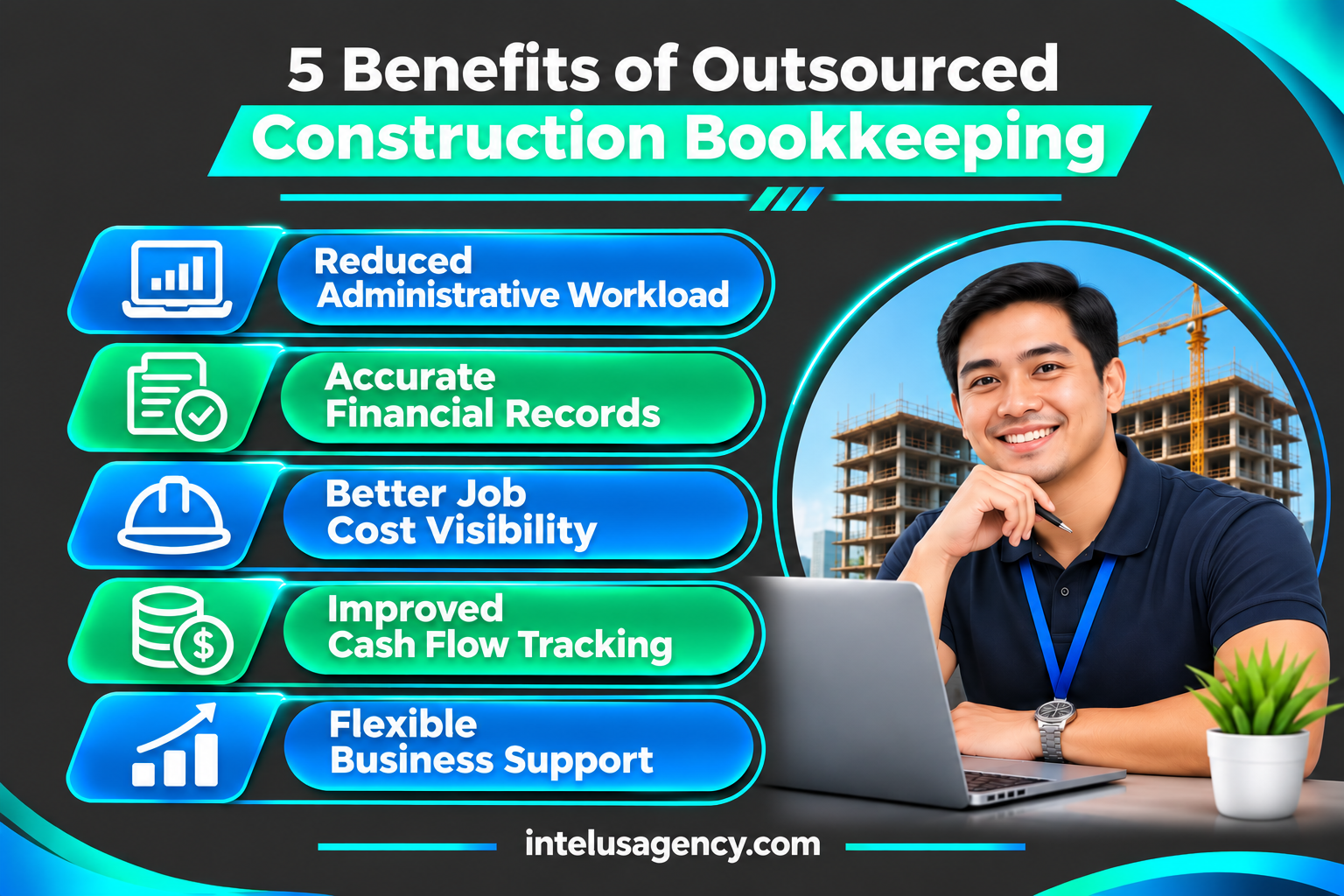
Outsourcing may offer greater staffing flexibility without requiring a full-time, on-site bookkeeping position.
Support Business Growth With Reliable Financial Records
As construction companies take on more projects, accurate bookkeeping becomes essential for maintaining financial visibility.
Dependable remote support helps contractors keep records organized, monitor project expenses, and reduce administrative workloads.
Ultimately, outsourcing construction bookkeeping allows business owners to spend more time managing projects, serving customers, and pursuing growth opportunities while maintaining better control over financial information.
Conclusion
Construction bookkeeping does more than organize receipts and record financial transactions. It helps contractors understand where their money goes, identify costly mistakes, and protect profitability across every project.
Accurate job costing, consistent expense tracking, timely invoicing, and reliable financial reporting give construction businesses greater control over their finances. These practices also help owners recognize budget overruns early, maintain healthier cash flow, and make informed decisions about future projects.
As construction companies grow, maintaining accurate financial records becomes increasingly important. Outsourced bookkeeping support can help reduce administrative workloads while keeping essential financial information organized and accessible.
Intelus Agency provides outsourcing solutions that help construction businesses streamline bookkeeping and administrative workflows, allowing owners to focus on managing projects and growing their operations.
Ready to improve your construction bookkeeping and protect your profit margins? Book an outsourcing consultation to explore reliable remote support tailored to your business needs.