



Oops! Something went wrong while submitting the form.
Why Customer Retention Matters More Than Ever
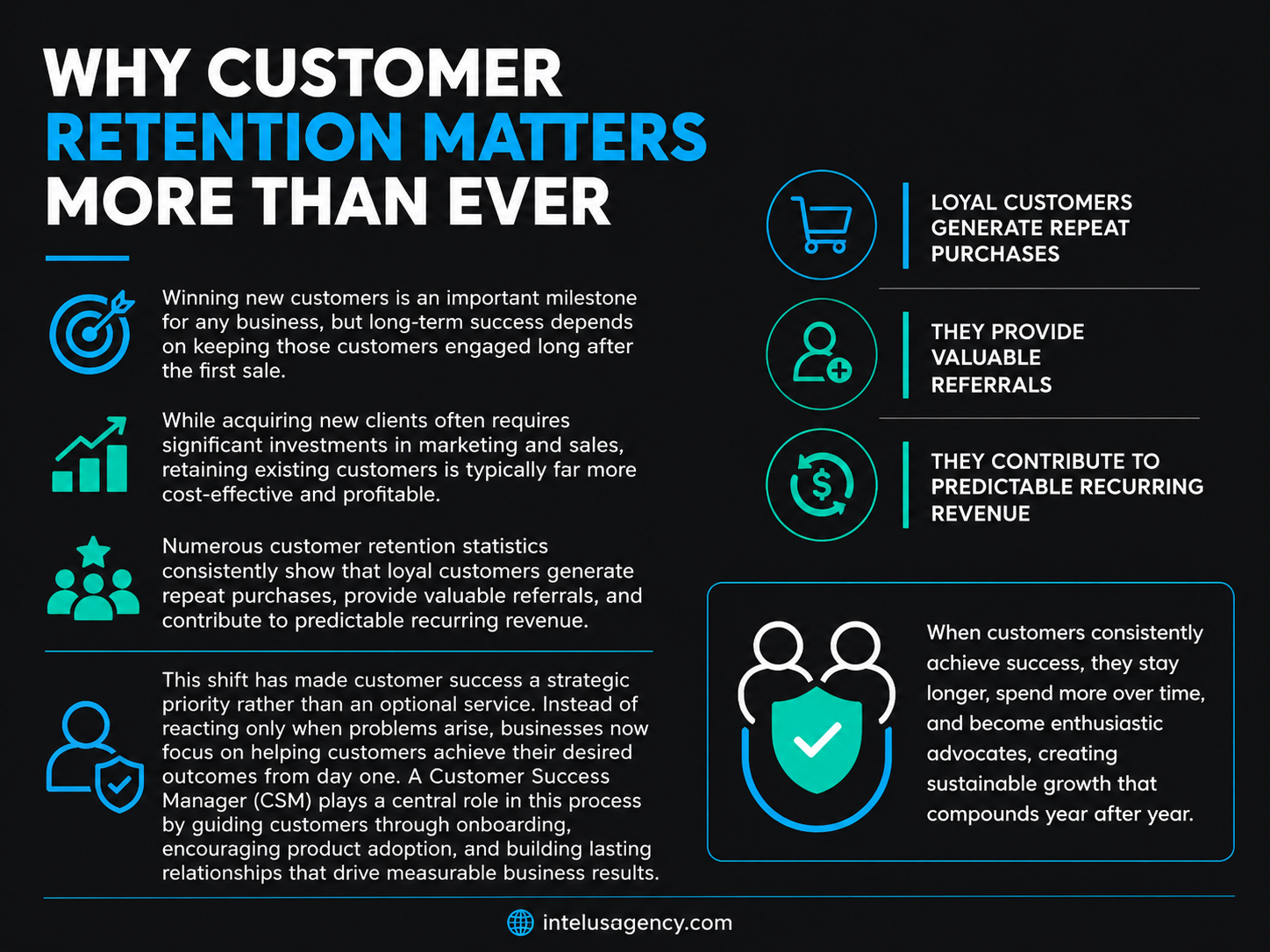
Winning new customers is an important milestone for any business, but long-term success depends on keeping those customers engaged long after the first sale. While acquiring new clients often requires significant investments in marketing and sales, retaining existing customers is typically far more cost-effective and profitable. Numerous customer retention statistics consistently show that loyal customers generate repeat purchases, provide valuable referrals, and contribute to predictable recurring revenue.
This shift has made customer success a strategic priority rather than an optional service. Instead of reacting only when problems arise, businesses now focus on helping customers achieve their desired outcomes from day one. A Customer Success Manager (CSM) plays a central role in this process by guiding customers through onboarding, encouraging product adoption, and building lasting relationships that drive measurable business results.
When customers consistently achieve success, they stay longer, spend more over time, and become enthusiastic advocates, creating sustainable growth that compounds year after year.
What Is a Customer Success Manager?
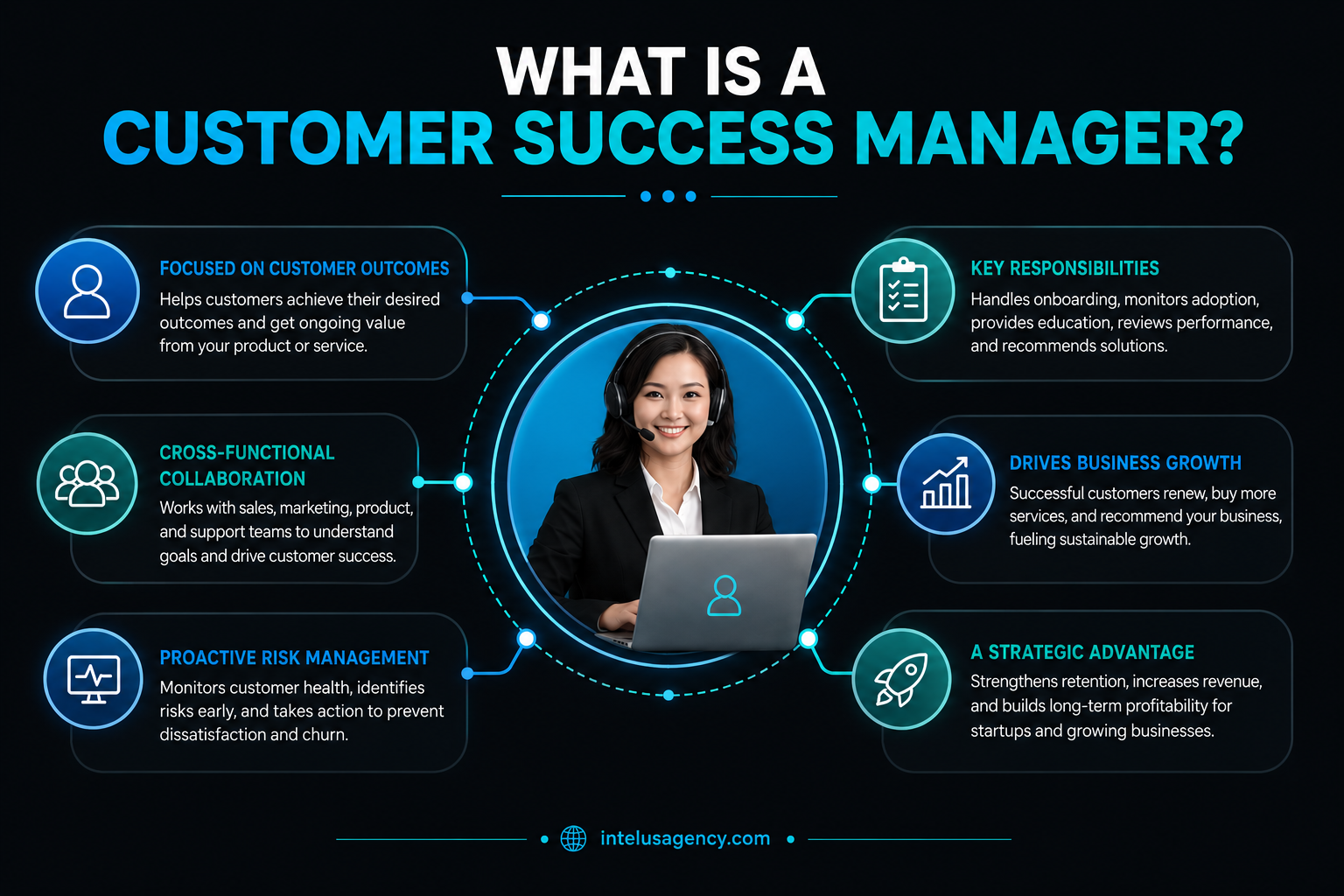
A customer success manager role is focused on helping customers achieve their desired outcomes after they purchase a product or service. Unlike traditional customer support, which primarily responds to issues as they arise, a Customer Success Manager (CSM) works proactively to ensure customers receive ongoing value throughout their entire journey. This proactive approach strengthens relationships, improves customer satisfaction, and helps businesses build predictable recurring revenue. The concept aligns with the broader customer success definition, which emphasizes creating value through long-term customer outcomes rather than simply resolving problems.
Customer success managers collaborate closely with sales, marketing, product, and support teams to understand customer goals and develop strategies that help clients succeed. Their responsibilities often include onboarding new customers, monitoring product adoption, providing education, conducting regular business reviews, identifying opportunities for improvement, and recommending solutions before challenges become obstacles. By maintaining regular communication and tracking customer health, they can identify risks early and take action before dissatisfaction leads to churn.
Beyond improving the customer experience, a Customer Success Manager directly contributes to business growth. Customers who consistently achieve positive results are more likely to renew contracts, purchase additional services, and recommend the business to others. This makes customer success an important driver of retention, expansion revenue, and long-term profitability. For startups, agencies, and growing businesses that want to strengthen client relationships without overextending internal resources, investing in a dedicated customer success function can deliver significant returns. If you're evaluating whether this capability is right for your business, an outsourcing consultation can help determine the most effective approach for your growth stage.
How Customer Success Managers Create Great First Impressions
The customer experience begins long before a client fully adopts your product or service. The first few interactions often determine whether customers feel confident about their decision or begin questioning their investment. A Customer Success Manager ensures that every new client starts with a structured onboarding experience that removes uncertainty and builds momentum from day one.
Effective onboarding starts by understanding the customer's goals, success metrics, and expectations. Rather than overwhelming clients with every feature at once, a Customer Success Manager introduces the most valuable capabilities first, providing a clear roadmap for implementation. This personalized approach helps customers experience meaningful progress quickly while reducing confusion and frustration.
Setting realistic expectations is equally important. Customers should understand timelines, available resources, communication channels, and what success looks like during each stage of the onboarding journey. When everyone shares the same expectations, projects move more smoothly and trust develops naturally.
Delivering early wins is one of the strongest predictors of long-term customer satisfaction. Whether it's successfully launching a campaign, completing system setup, or reaching an initial business milestone, these quick successes demonstrate immediate value. As customers begin seeing tangible results, their confidence grows, product adoption increases, and they become more engaged with the partnership.
A thoughtful onboarding process transforms the first impression into the foundation of a lasting relationship. By helping customers achieve meaningful outcomes early, Customer Success Managers establish trust, encourage long-term engagement, and set the stage for continued growth.
Building Strong Customer Relationships Over Time
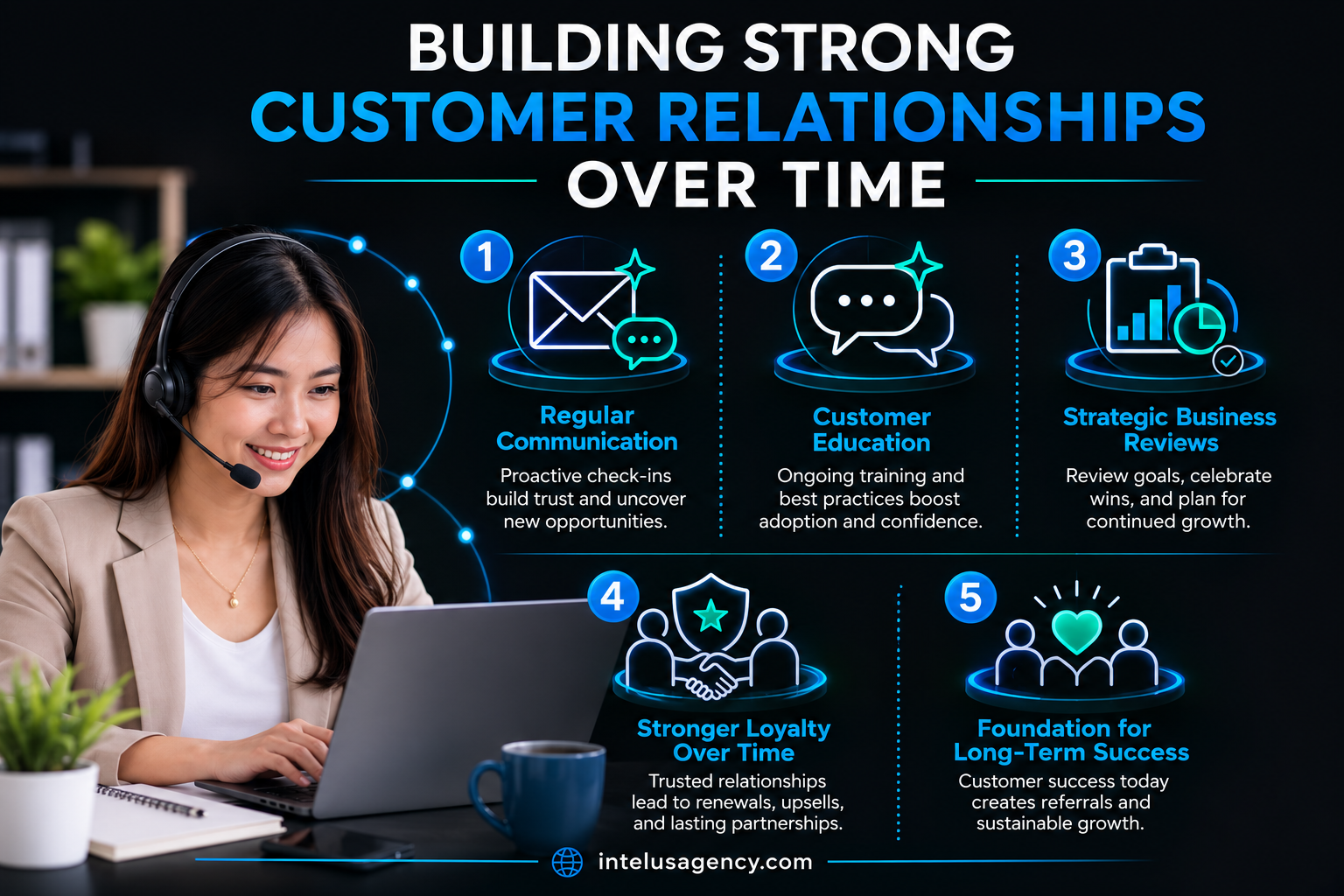
A successful customer relationship doesn't end after onboarding; it grows through consistent engagement, meaningful communication, and a genuine commitment to helping customers achieve their evolving goals. Customer Success Managers (CSMs) nurture these relationships by staying connected, offering guidance, and ensuring customers continue to receive value long after implementation.
Regular communication is one of the most effective ways to strengthen trust. Instead of waiting for customers to report problems, CSMs schedule proactive check-ins to discuss progress, answer questions, and identify new opportunities for improvement. These conversations help customers feel supported while giving businesses valuable insights into changing needs and expectations.
Customer education also plays a vital role in long-term success. As products, services, or business priorities evolve, CSMs provide training, share best practices, and introduce features that customers may not yet be using. Continuous learning increases product adoption, improves confidence, and helps customers maximize their return on investment.
Strategic business reviews further reinforce the partnership. During these sessions, CSMs evaluate performance against agreed-upon goals, celebrate achievements, address potential challenges, and create action plans for continued growth. This consultative approach positions the Customer Success Manager as a trusted advisor rather than simply a service representative.
Over time, these consistent interactions build credibility and deepen customer loyalty. When clients know their success is a priority, they are more likely to remain engaged, renew their contracts, expand their services, and recommend the business to others. Strong relationships ultimately become the foundation for sustainable growth and long-term customer retention.
How AI Helps Customer Success Managers Deliver Better Customer Experiences
Artificial intelligence (AI) is transforming customer success by enabling Customer Success Managers (CSMs) to make faster, smarter, and more proactive decisions. Rather than replacing the human element, AI enhances a CSM's ability to understand customer behavior, identify opportunities, and deliver personalized experiences at scale.
One of AI's greatest strengths is its ability to analyze large volumes of customer data. By examining product usage, engagement patterns, support interactions, and customer feedback, AI-powered analytics uncover trends that may be difficult to detect manually. These insights help CSMs better understand customer needs and tailor their strategies to improve satisfaction and long-term success.
AI also streamlines customer prioritization through automated customer health scores. These scores combine multiple data points such as login frequency, feature adoption, support history, and engagement levels to identify customers who may need immediate attention. This allows Customer Success Managers to focus their outreach where it will have the greatest impact.
In addition, AI chatbots provide instant responses to common questions, helping customers resolve routine issues without waiting for human assistance. This improves response times while allowing CSMs to dedicate more attention to strategic conversations and complex customer challenges.
Predictive analytics further strengthens customer success by identifying early warning signs of potential churn. By recognizing patterns associated with declining engagement or satisfaction, AI enables proactive intervention before problems escalate. Combined with real-time dashboards and actionable insights, AI empowers Customer Success Managers to make informed decisions, improve customer outcomes, and build stronger, longer-lasting relationships that support sustainable business growth.
How Customer Success Managers Reduce Churn
Customer churn rarely happens without warning. In many cases, customers show subtle signs of disengagement long before they decide to cancel a subscription or end a business relationship. A strong customer success manager role focuses on identifying these signals early and taking proactive steps to keep customers engaged and satisfied throughout their journey.
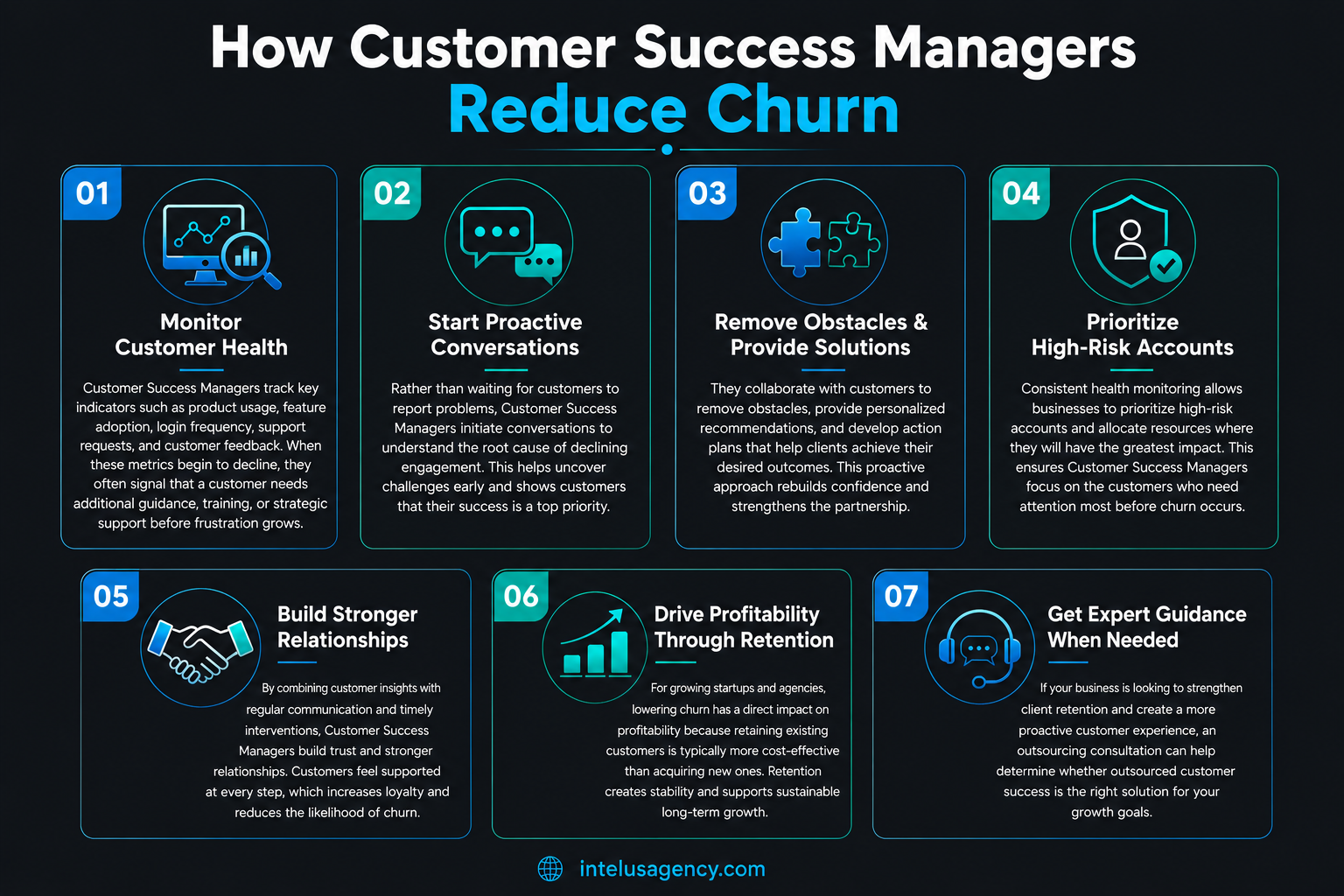
One of the most effective retention strategies is monitoring customer health. Customer Success Managers track key indicators such as product usage, feature adoption, login frequency, support requests, and customer feedback. When these metrics begin to decline, they often signal that a customer needs additional guidance, training, or strategic support before frustration grows.
Rather than waiting for customers to report problems, Customer Success Managers initiate conversations to understand the root cause of declining engagement. They collaborate with customers to remove obstacles, provide personalized recommendations, and develop action plans that help clients achieve their desired outcomes. This proactive approach demonstrates commitment to customer success while rebuilding confidence in the partnership.
Consistent health monitoring also allows businesses to prioritize high-risk accounts and allocate resources where they will have the greatest impact. By combining customer insights with regular communication and timely interventions, Customer Success Managers reduce preventable churn and improve long-term retention.
For growing startups and agencies, lowering churn has a direct impact on profitability because retaining existing customers is typically more cost-effective than acquiring new ones. If your business is looking to strengthen client retention and create a more proactive customer experience, an outsourcing consultation can help determine whether outsourced customer success is the right solution for your growth goals.
Turning Happy Customers Into Growth Opportunities
Satisfied customers do more than renew their contracts; they become powerful drivers of business growth. Customer Success Managers (CSMs) help businesses identify opportunities to expand existing relationships by ensuring customers consistently achieve value and are aware of additional solutions that support their goals.
Upselling and cross-selling are most effective when they solve genuine customer needs rather than simply increasing revenue. Because CSMs maintain ongoing relationships and understand each customer's objectives, they can recommend complementary products or upgraded services at the right time. These recommendations feel helpful instead of promotional because they are based on proven customer success.
Happy customers also become valuable advocates. Customer Success Managers encourage referrals, testimonials, and case studies by engaging customers who have experienced measurable results. Positive word-of-mouth builds credibility, shortens the sales cycle, and helps attract new clients with greater confidence. Well-structured customer advocacy programs further strengthen these relationships by rewarding loyal customers who actively promote the business.
When customers succeed, everyone benefits. Businesses increase recurring revenue, strengthen brand reputation, and create a loyal customer base that fuels sustainable growth. By turning satisfied clients into long-term partners and enthusiastic advocates, Customer Success Managers create a continuous cycle of retention, expansion, and new business opportunities.

When Should a Business Hire a Customer Success Manager?
As your business grows, maintaining a high-quality customer experience becomes increasingly challenging. If you're seeing rising customer numbers, increasing renewal responsibilities, or limited internal capacity to provide proactive engagement, it may be time to invest in a Customer Success Manager. Many startups and agencies begin by outsourcing this function to gain experienced support without the cost of building a full in-house team. Understanding the principles of scaling customer success can help you determine the right time to make this investment and strengthen long-term customer retention.
Conclusion
Customer success transforms the customer journey from a one-time transaction into a long-term partnership. By investing in a dedicated customer success manager, businesses improve retention, increase recurring revenue, and build a sustainable competitive advantage. The long-term customer loyalty benefits make customer success one of the smartest investments for sustainable growth. Ready to improve retention and client experience? Book a Customer Success Consultation today.


.png)
.png)

.png)
.png)
