



Oops! Something went wrong while submitting the form.
Monday morning starts with three new buyer inquiries, two active listings, an upcoming closing, and a calendar packed with appointments. Before you can focus on clients, there are emails to answer, leads to follow up with, and property details to organize.
It's a familiar challenge in real estate. As real estate industry research highlights, agents operate in a demanding, constantly evolving market where managing time effectively matters.
That's why successful agents rely on real estate virtual assistant services to handle repetitive administrative work without losing control of their business.
A skilled virtual real estate assistant can manage CRM updates, coordinate schedules, organize listings, and support daily operations while agents focus on prospecting, building client relationships, and closing deals.
In this guide, we'll explore 40 real estate virtual assistant duties top agents delegate to stay organized, reclaim valuable time, and grow their businesses.
What Does a Real Estate Virtual Assistant Do?
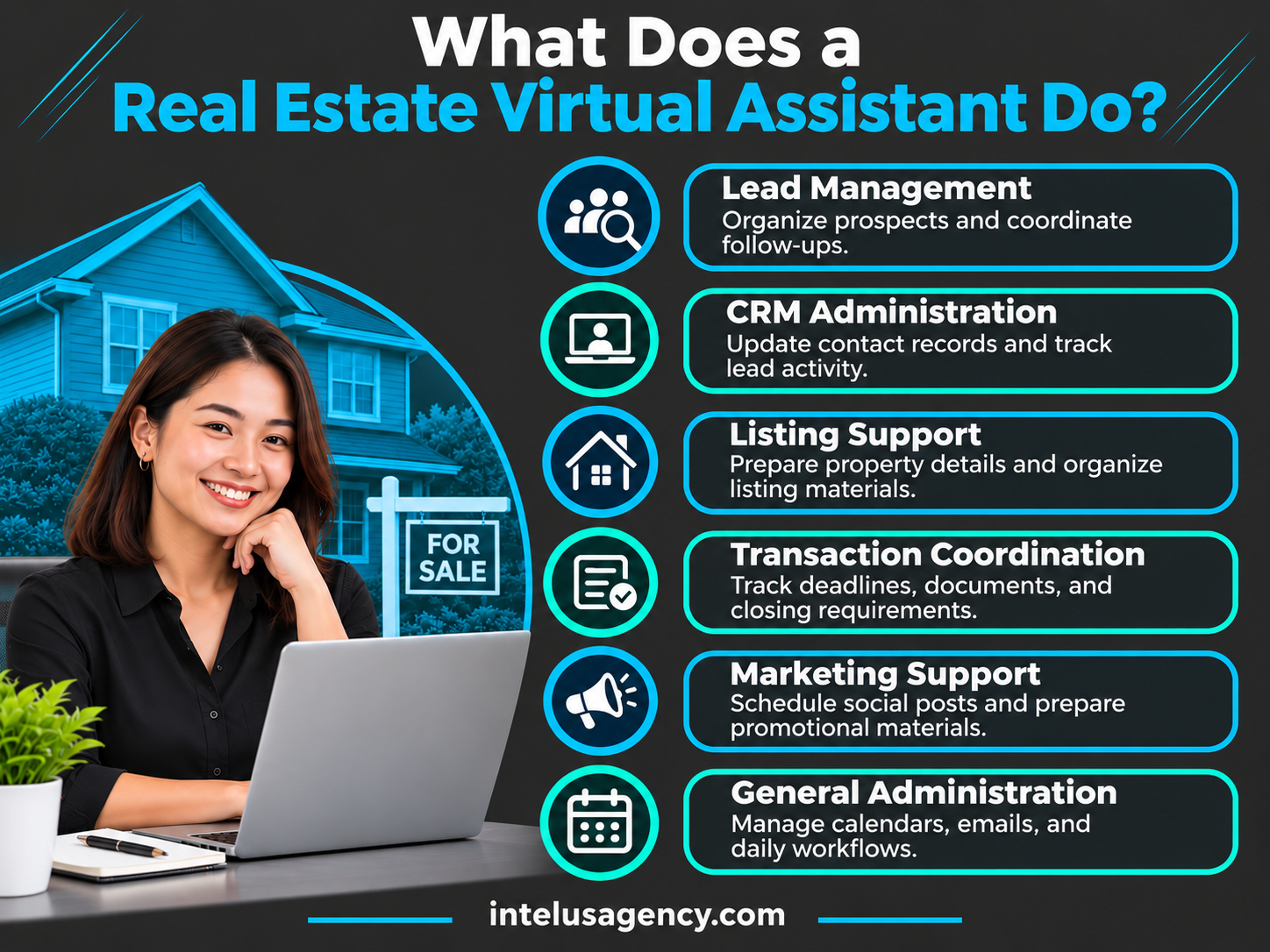
A real estate virtual assistant is a remote professional who helps agents, brokers, and real estate teams manage administrative and operational responsibilities. By handling routine tasks behind the scenes, they allow real estate professionals to focus on serving clients and growing their businesses.
Unlike general virtual assistants, professionals offering specialized real estate support understand industry-specific workflows, from lead management and CRM organization to listing administration, marketing, and transaction coordination.
Their responsibilities often include providing administrative support, updating client databases, scheduling property showings, preparing listing materials, and tracking transaction deadlines. These activities help keep daily operations organized and reduce the risk of overlooked tasks.
However, virtual assistants do not replace licensed agents. Negotiating offers, providing regulated real estate advice, and performing activities restricted under applicable real estate licensing requirements must remain with authorized professionals.
Effective virtual assistants combine strong communication, attention to detail, time management, and familiarity with real estate software. They also follow established workflows and maintain confidentiality when handling client information.
For growing teams, these real estate virtual assistant skills provide reliable operational support without requiring agents to personally manage every administrative detail.
40 Real Estate Virtual Assistant Duties Top Agents Delegate
Successful real estate agents know that growing a business requires more than working longer hours. It requires knowing which responsibilities deserve their personal attention and which can be delegated.
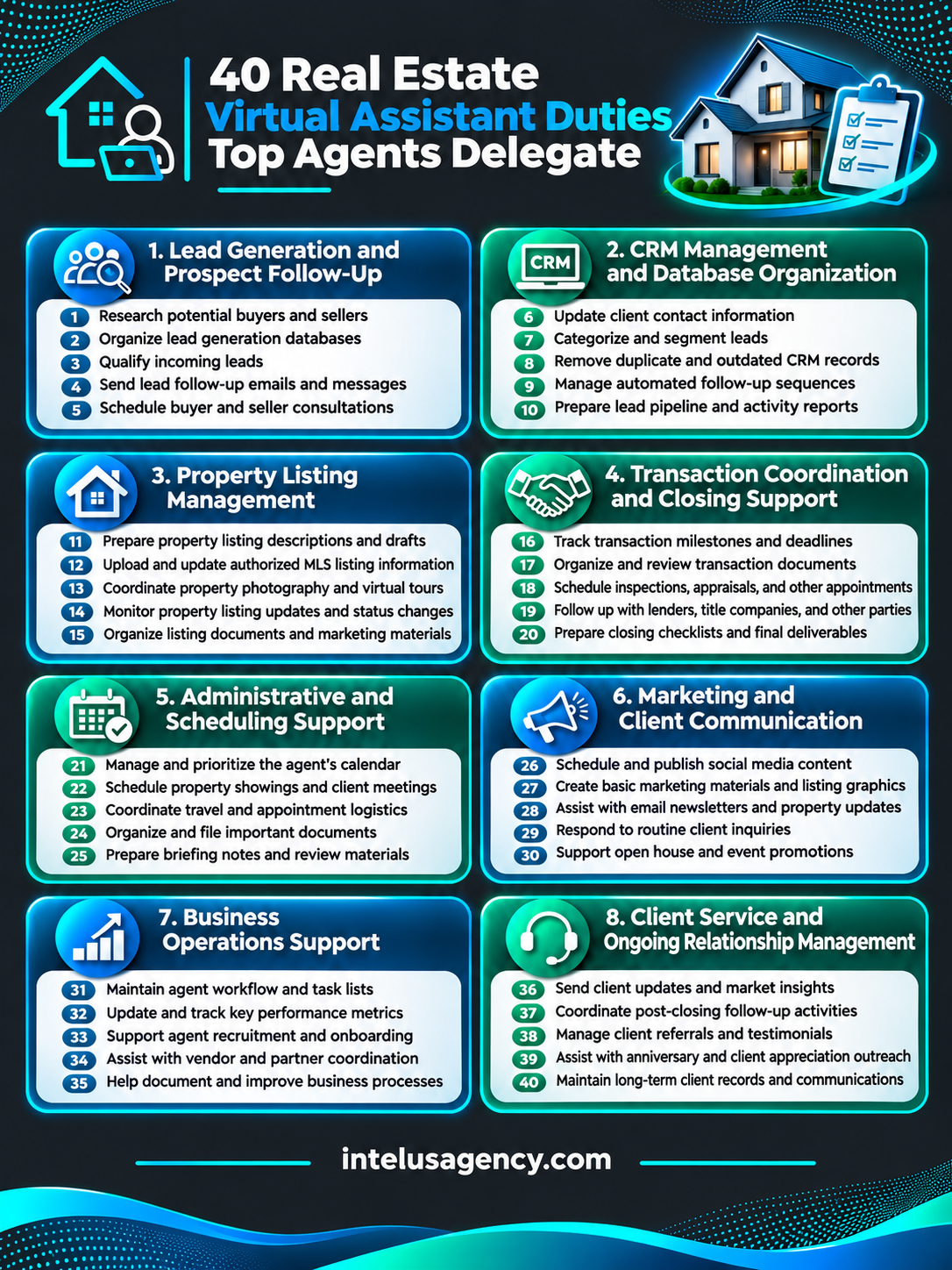
From managing leads to organizing closing documents, real estate virtual assistant duties cover the repetitive work that keeps a real estate business running. Here are 40 tasks organized into eight categories that agents can delegate to maintain productivity without compromising client service.
1. Lead Generation and Prospect Follow-Up
Consistent lead generation is essential for building a healthy sales pipeline. A virtual real estate assistant can support prospecting efforts by organizing potential clients, coordinating outreach, and keeping follow-up activities on schedule.
1. Research potential buyers and sellers
Virtual assistants can identify prospective clients using approved lead databases, public information, and online research tools. Their research and analysis support helps agents build targeted prospect lists without spending hours gathering contact information.
2. Organize lead generation databases
Maintaining accurate prospect records makes outreach more efficient. Virtual assistants can organize contact details, update lead sources, and keep prospect lists accessible for future campaigns.
3. Qualify incoming leads
Virtual assistants can collect preliminary information about a prospect's property preferences, budget, location, and buying or selling timeline. Agents can then prioritize conversations with prospects who are ready to move forward.
4. Send lead follow-up emails and messages
Using approved templates and communication workflows, assistants can send follow-up messages, respond to routine inquiries, and help prevent promising leads from going unnoticed.
5. Schedule buyer and seller consultations
Once prospects express interest, virtual assistants can coordinate appointments, confirm availability, and send meeting reminders.
Together, these activities create a more consistent follow-up process while allowing agents to focus on converting prospects into clients.
2. CRM Management and Database Organization
Effective CRM management gives agents a clearer picture of their sales pipeline. Virtual assistants help maintain organized records so important client information remains accurate and accessible.
6. Update client contact information
Virtual assistants can maintain contact details, record communication histories, and update client preferences after conversations or appointments.
7. Categorize and segment leads
Organizing contacts by buying stage, property interests, location, or engagement level makes it easier to deliver relevant communications and prioritize outreach.
8. Remove duplicate and outdated CRM records
Routine database cleanup prevents confusion caused by duplicate contacts and inaccurate information. Reliable data entry also helps maintain consistent records across systems.
9. Manage automated follow-up sequences
Virtual assistants can monitor approved email sequences, check automation schedules, and identify contacts requiring personalized attention.
10. Prepare lead pipeline and activity reports
Assistants can summarize new inquiries, follow-up activity, consultation bookings, and lead status changes to help agents monitor pipeline performance.
An organized CRM reduces administrative confusion and helps agents maintain consistent communication throughout the sales process.
3. Property Listing Management
Preparing and maintaining property listings involves numerous administrative details. Delegating these responsibilities helps agents spend more time securing listings, conducting showings, and communicating with sellers.
11. Prepare property listing descriptions and drafts
Virtual assistants can organize property specifications, highlight approved features, and prepare listing descriptions for agent review before publication.
12. Upload and update authorized MLS listing information
Where brokerage permissions, MLS rules, and applicable licensing requirements allow, assistants can enter or update authorized property information. Licensed professionals retain responsibility for restricted activities and required approvals.
13. Coordinate property photography and virtual tours
Virtual assistants can schedule photographers, coordinate virtual tour providers, and organize media files needed for listing promotions.
14. Monitor property listing updates and status changes
Assistants can track listing information, flag outdated details, and notify agents when property records require review or revision.
15. Organize listing documents and marketing materials
From property photographs to approved disclosures and promotional files, virtual assistants can maintain organized digital folders for each listing.
Reliable real estate listing management support reduces repetitive administrative work and helps agents maintain consistent, accurate property information.
4. Transaction Coordination and Closing Support
Real estate transactions involve multiple parties, important deadlines, and extensive documentation. Virtual assistants can provide administrative coordination that helps agents keep transactions moving.
16. Track transaction milestones and deadlines
Using calendars, checklists, and project management tools, assistants can monitor inspection dates, financing milestones, document requirements, and approaching closing deadlines.
17. Organize contracts and transaction documents
Virtual assistants can maintain transaction folders, organize signed documents, and flag missing administrative paperwork for review by authorized professionals.
18. Schedule inspections and appraisals
Assistants can coordinate appointments with inspectors, appraisers, clients, and other service providers while communicating confirmed schedules.
19. Follow up with lenders, title companies, and vendors
Virtual assistants can request routine status updates, track outstanding administrative requirements, and keep agents informed about pending items.
20. Prepare closing checklists and administrative updates
Assistants can maintain closing checklists, organize required paperwork, and summarize outstanding tasks before scheduled closing dates.
Administrative coordination should follow brokerage policies and applicable real estate transaction guidance. Contract interpretation, negotiations, legal advice, and activities requiring a license remain with qualified professionals.
5. Real Estate Marketing and Social Media
Consistent marketing keeps agents visible to potential buyers, sellers, and referral partners. Virtual assistants can manage recurring promotional activities while agents focus on developing their personal brands and client relationships.
21. Schedule real estate social media content
Virtual assistants can prepare content calendars and schedule approved property promotions, market updates, and educational posts across social platforms.
22. Create listing graphics and promotional materials
Using approved branding and property information, assistants can design digital flyers, listing graphics, open-house announcements, and other marketing materials.
23. Prepare and distribute email newsletters
Virtual assistants can format newsletters, organize mailing lists, schedule campaigns, and distribute approved updates to subscribers.
24. Update real estate website and property pages
Assistants can maintain property pages, upload approved listing content, correct outdated information, and organize website materials.
25. Track marketing campaign performance
Virtual assistants can compile email engagement, website activity, social media reach, and other campaign metrics into reports for agent review.
Delegating marketing execution helps maintain a consistent online presence without requiring agents to personally manage every promotional detail.
6. Calendar, Email, and Administrative Management
Daily administrative interruptions can quickly consume time intended for prospecting and client meetings. Professional email and calendar management helps agents maintain control over their schedules.
26. Manage appointment calendars
Virtual assistants can organize consultations, property appointments, team meetings, and other scheduled commitments while preventing avoidable conflicts.
27. Organize and prioritize email inboxes
Assistants can sort incoming messages, categorize correspondence, flag urgent requests, and prepare routine responses using approved instructions.
28. Coordinate property showing schedules
Virtual assistants can communicate with clients and relevant parties to arrange showings, confirm appointment details, and distribute reminders.
29. Prepare meeting agendas and notes
Assistants can create agendas, document meeting discussions, record action items, and organize follow-up responsibilities.
30. Maintain digital filing systems
Virtual assistants can organize contracts, client records, marketing materials, and operational documents using consistent naming conventions and secure folders.
These responsibilities reduce unnecessary interruptions and make it easier for agents to access important information when needed.
7. Client Communication and Relationship Management
Strong client relationships depend on clear, timely communication. While agents remain responsible for professional advice and important client decisions, virtual assistants can help maintain consistent administrative contact.
31. Send appointment confirmations and reminders
Virtual assistants can confirm consultations, property showings, inspections, and meetings while sending reminders that reduce scheduling confusion.
32. Provide approved routine transaction updates
Assistants can share authorized administrative progress updates, such as appointment confirmations or document receipt notifications, without interpreting contracts or providing regulated advice.
33. Coordinate new client onboarding
Virtual assistants can prepare welcome materials, collect initial administrative information, organize client folders, and explain approved next steps.
34. Manage post-closing follow-up communications
Assistants can schedule thank-you messages, review requests, anniversary greetings, and other relationship-building communications after closing.
35. Maintain client relationship and referral databases
Virtual assistants can track important client dates, referral sources, communication preferences, and follow-up reminders.
Consistent communication helps clients feel informed throughout the process while giving agents more time for meaningful conversations and personalized service.
8. Market Research and Business Operations
Beyond daily administration, virtual assistants can support business planning by organizing research, preparing reports, and documenting repeatable processes.
36. Gather comparable property information
Virtual assistants can compile relevant property details, recent sales information, and publicly available market data for licensed agents to review when preparing pricing analyses.
37. Research neighborhood and market trends
Assistants can gather information about local inventory, property activity, neighborhood developments, and other market indicators.
38. Monitor competitor listing activity
Virtual assistants can track publicly available competitor listings, promotional approaches, and market activity to help agents understand local positioning.
39. Prepare weekly business performance reports
Assistants can summarize lead activity, appointments, active listings, pending transactions, and other operational metrics in organized reports.
40. Document standard operating procedures
Virtual assistants can create step-by-step instructions for recurring workflows, including lead follow-ups, listing preparation, CRM updates, and transaction administration.
Research and reporting help agents make more informed business decisions, while documented procedures create consistency as teams grow.
Ultimately, these 40 real estate virtual assistant tasks demonstrate how much operational work can be delegated without giving up control of essential business decisions. With clear workflows and proper oversight, agents can protect their time while maintaining organized, dependable operations.
Which Real Estate Virtual Assistant Tasks Should Agents Delegate First?
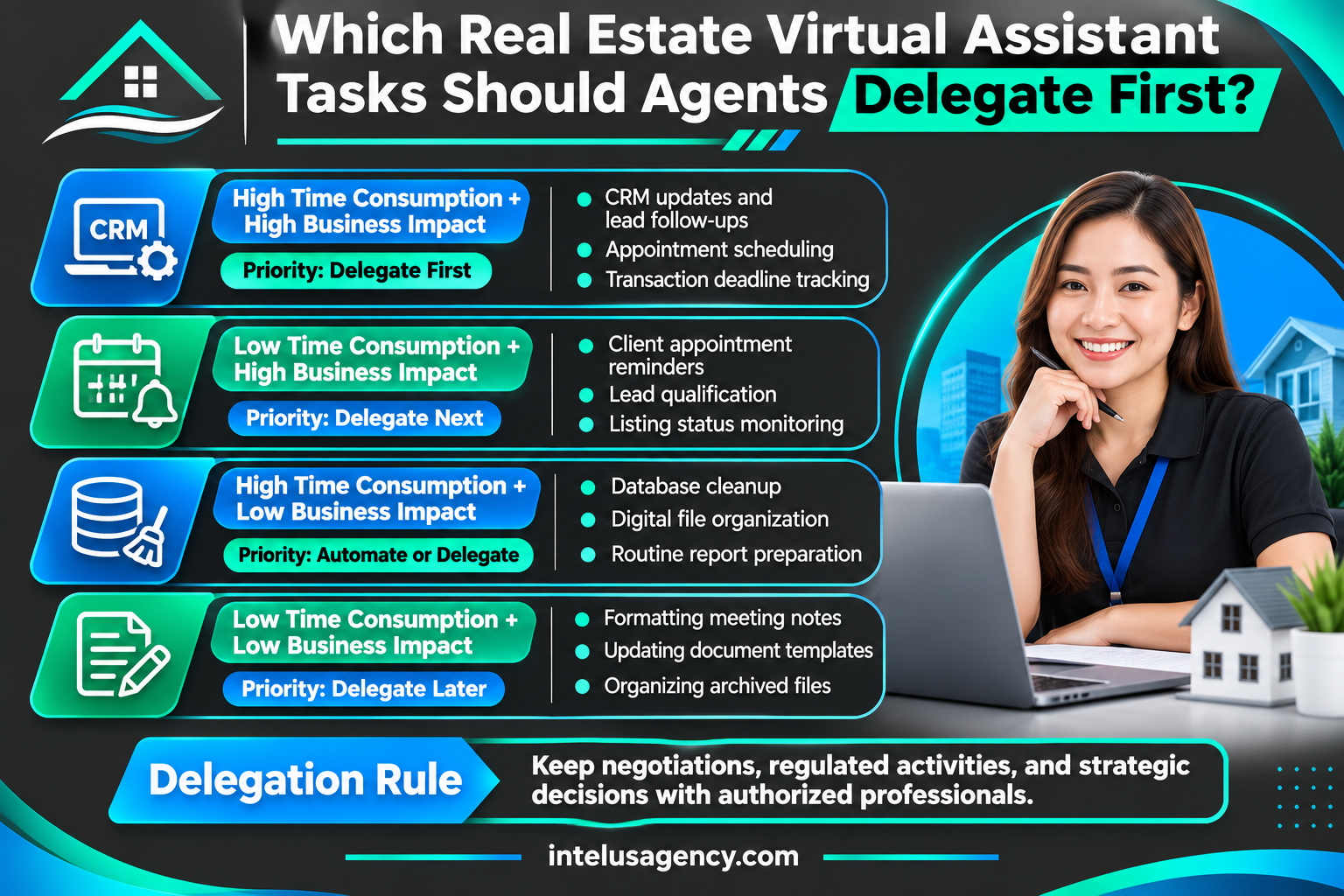
Not every real estate task should be outsourced immediately. The best approach is to start with repetitive, time-consuming responsibilities that follow clear processes and don't require an agent's professional judgment.
Begin by identifying activities that regularly interrupt prospecting, client consultations, and other revenue-generating work. CRM updates, data entry, appointment scheduling, and routine lead follow-ups are often ideal starting points because they are easy to document and measure.
Next, evaluate how frequently each task occurs and how much time it consumes. Responsibilities that demand several hours weekly but require minimal strategic decision-making should receive higher delegation priority.
Before assigning work, establish clear instructions, communication expectations, and quality standards. The small business management resources from the U.S. Small Business Administration offer guidance on building repeatable business processes.
Agents should also maintain oversight of confidential client information, regulated activities, and responsibilities requiring a real estate license.
As your virtual assistant becomes familiar with your workflows, gradually expand their responsibilities to include listing administration, marketing coordination, and transaction support.
The goal isn't to delegate everything. It's to create a reliable system that protects your time while keeping important business decisions under your control.
How Real Estate Virtual Assistant Services Help Agents Grow
Growing a real estate business isn't just about generating more leads. It's also about having the systems and support needed to manage increasing workloads without sacrificing client service.
Professional real estate virtual assistant services help agents build more efficient operations by taking repetitive responsibilities off their schedules.
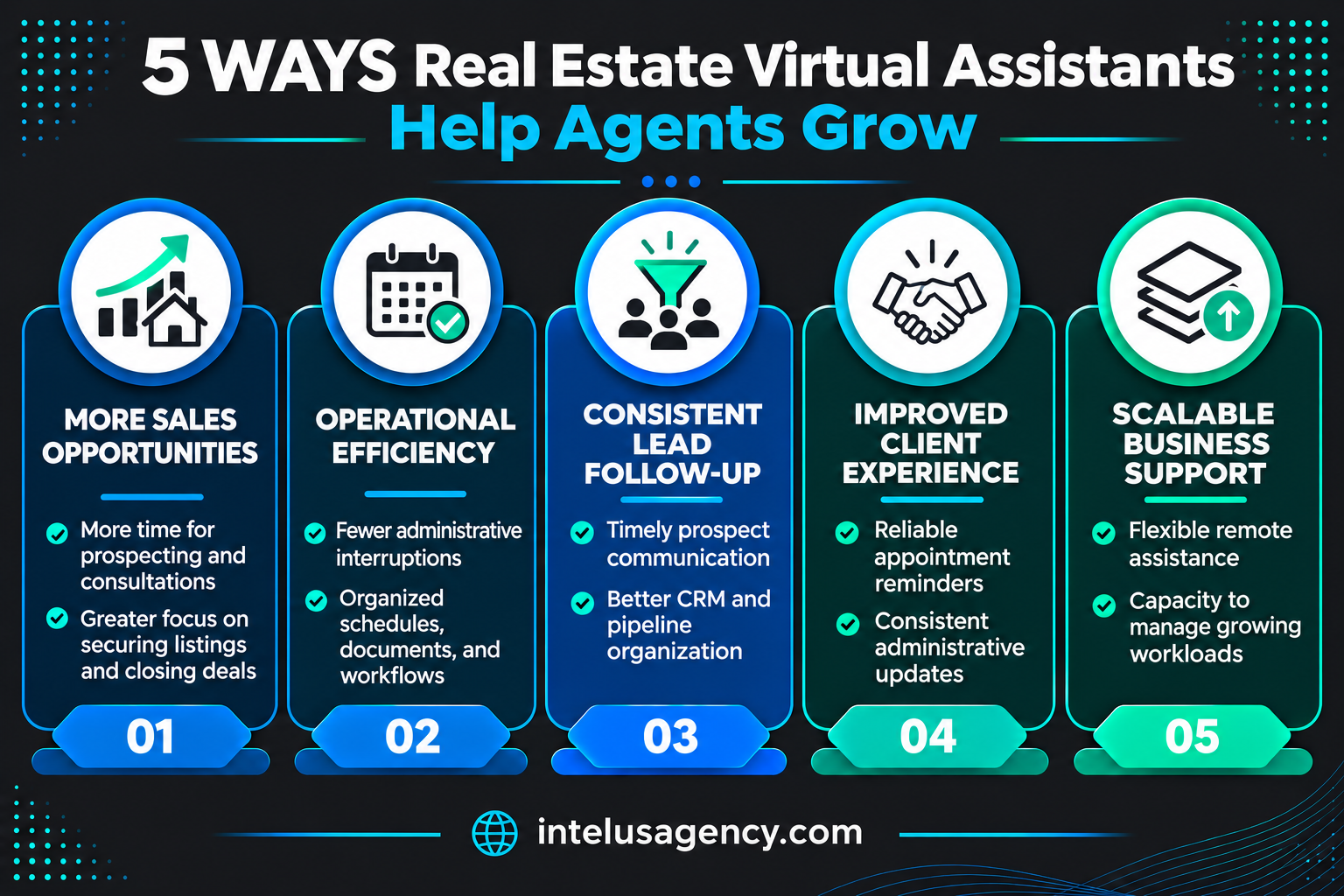
More Time for Revenue-Generating Activities
When virtual assistants handle administrative tasks, agents can dedicate more time to prospecting, conducting consultations, securing listings, and negotiating deals. This allows them to prioritize activities that directly contribute to business growth.
Reduced Administrative Workload
Delegating scheduling, inbox organization, CRM updates, and document management reduces daily interruptions. Agents can maintain productive routines without constantly switching between administrative and client-facing responsibilities.
More Consistent Lead Follow-Up
Virtual assistants help maintain organized lead databases, monitor follow-up schedules, and coordinate outreach. This consistency reduces missed opportunities and keeps prospects engaged throughout the sales process.
Improved Listing and Transaction Coordination
From organizing property marketing materials to tracking closing deadlines, virtual assistants help maintain reliable workflows. Standardized processes and project management tools also make it easier to coordinate multiple listings and transactions.
Better Client Experience and Scalable Support
Timely communication, organized records, and consistent administrative updates help clients feel informed and supported. As business demands increase, agents can expand remote assistance without immediately adding permanent in-house staff.
Monitoring real estate industry trends can also help agents anticipate changing operational demands.
Unlike traditional in-house hiring, outsourced support can offer greater flexibility in staffing and workload management.
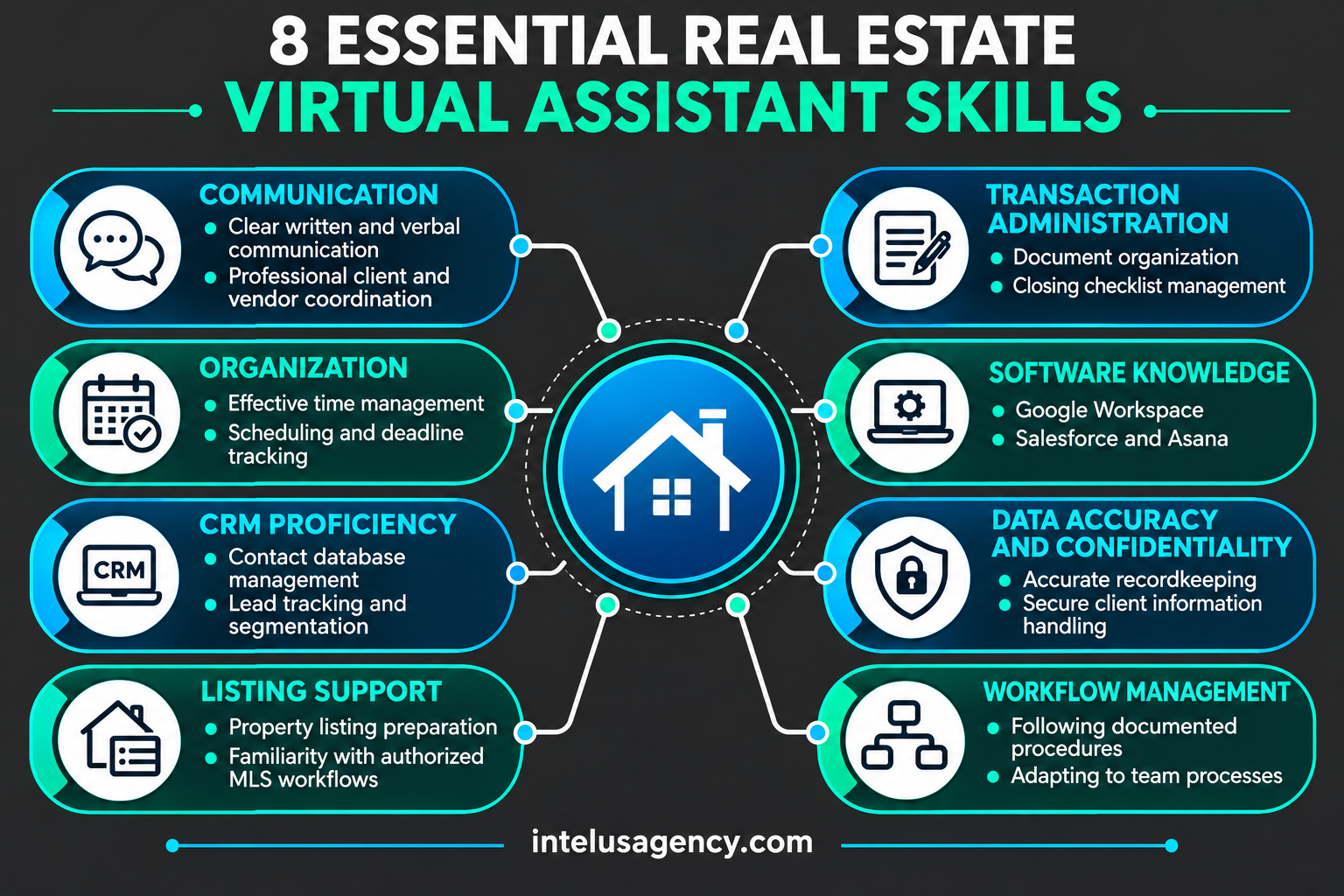
What Skills Should a Real Estate Virtual Assistant Have?
Hiring the right virtual real estate assistant requires more than finding someone who can handle administrative tasks. The best candidates combine strong communication, organization, technical knowledge, and an understanding of real estate workflows.
Communication and Organization
Strong written and verbal communication skills help virtual assistants coordinate with clients, vendors, and team members. Effective time management, attention to detail, and organizational abilities are equally important for managing competing deadlines and responsibilities.
CRM and Real Estate Administration
Experience with client databases, lead tracking, listing preparation, and transaction documentation helps assistants manage industry-specific tasks. Familiarity with MLS procedures is valuable when working within authorized permissions and licensing requirements.
Software and Collaboration Tools
Virtual assistants should be comfortable using Google Workspace for email, calendars, documents, and collaboration. CRM experience with platforms such as Salesforce supports accurate contact management, while project management tools like Asana help organize assignments and deadlines.
Confidentiality and Workflow Management
Real estate assistants frequently handle sensitive client and transaction information. Following cybersecurity best practices, maintaining accurate records, and respecting access permissions are essential.
Ultimately, the most valuable assistants can follow documented procedures, adapt to an agent's preferred workflows, and consistently complete tasks with minimal supervision.
Conclusion
Successful real estate agents understand that growing a business doesn't mean personally handling every administrative responsibility. It means building reliable systems and delegating tasks that don't require their direct involvement.
The 40 real estate virtual assistant duties covered in this guide demonstrate how much support remote professionals can provide, from lead follow-ups and CRM management to listing administration, marketing, and transaction coordination.
By outsourcing repetitive responsibilities, agents can spend more time prospecting, strengthening client relationships, negotiating offers, and closing deals.
With organized workflows and consistent administrative support, real estate businesses can manage increasing workloads without sacrificing efficiency or client service.
Whether you're an independent agent or managing a growing team, skilled virtual assistants can provide the flexibility and operational support needed for sustainable growth.
Ready to identify which responsibilities you can delegate? Book an outsourcing consultation with Intelus Agency to explore support options for your real estate business.