



Oops! Something went wrong while submitting the form.
Tax season can push even well-organized accounting firms to their limits. As client requests increase, filing deadlines overlap, and incomplete documents pile up, accountants often find themselves juggling complex tax preparation with time-consuming administrative tasks.
Without proper planning, these demands can quickly lead to excessive overtime, uneven workloads, and employee burnout. Beyond affecting team morale, prolonged stress can reduce productivity, increase turnover, and compromise the client experience.
But preparing for tax season shouldn't mean asking your team to work longer hours. It should mean building smarter workflows, setting realistic expectations, and ensuring your firm has the capacity to handle increased demand.
From improving document management and automating repetitive tasks to leveraging remote bookkeeping and administrative support, there are practical ways to reduce operational pressure.
Here's how to prepare for tax season while keeping your accounting firm efficient, your clients satisfied, and your team supported.
Why Tax Season Stress Leads to Employee Burnout
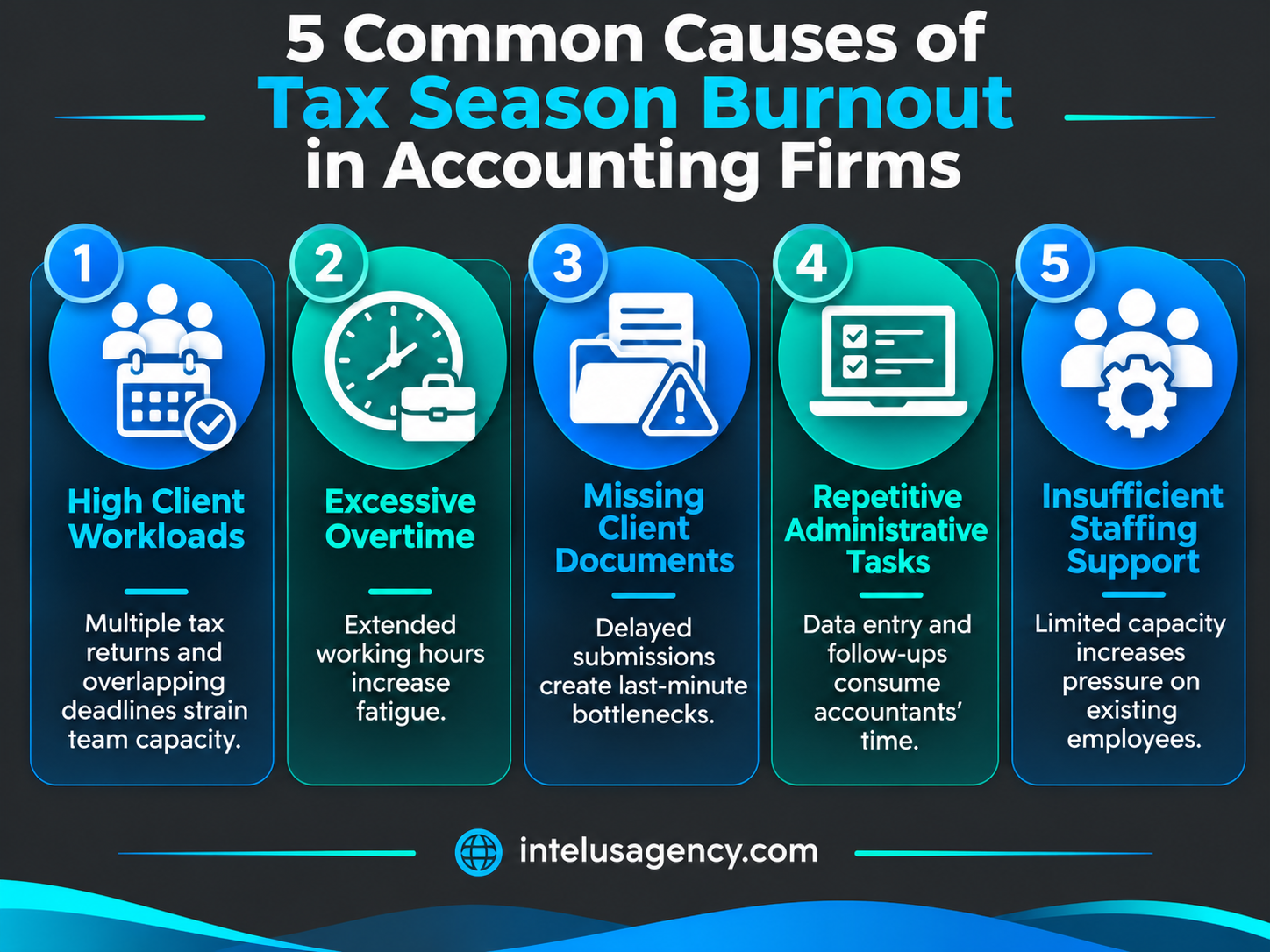
Tax season stress often results from more than tight filing deadlines. For accounting firms, the combination of high client volumes, inefficient workflows, and limited staffing capacity can create sustained pressure that eventually leads to employee burnout.
When multiple tax returns require attention simultaneously, accountants must balance preparation, professional reviews, and client communication. Missing documents and delayed submissions create additional bottlenecks, forcing employees to complete work within increasingly compressed timelines.
Repetitive administrative tasks make the situation worse. Instead of focusing on specialized accounting responsibilities, experienced professionals spend valuable hours entering data, organizing files, tracking outstanding requirements, and following up with clients.
Uneven workload distribution adds another challenge. Some accountants may handle significantly more complex engagements than others, particularly when assignments aren't aligned with individual availability and expertise. Unclear responsibilities and inconsistent internal processes can further increase duplicated work and unnecessary interruptions.
As deadlines approach, excessive overtime becomes a temporary solution that can quickly turn into an ongoing expectation. According to the National Institute for Occupational Safety and Health (NIOSH), prolonged workplace stress and mental health concerns deserve attention because they can affect employee well-being and organizational performance.
For accounting firms, sustained pressure can contribute to lower productivity, employee turnover, and inconsistent client service.
Identifying capacity limitations before peak season is essential. With clearer workflows, balanced assignments, and additional accounting support, firms can reduce administrative bottlenecks and protect their teams from unnecessary workload pressure.
How to Prepare Your Accounting Firm for Tax Season Without Overworking Your Team
Knowing how to prepare for tax season starts with evaluating your firm's processes, staffing capacity, and workload expectations. These eight strategies can help accounting firms manage increased demand without relying on excessive employee overtime.
1. Review the Previous Tax Season's Performance
Analyze last season's overtime records, missed internal deadlines, and recurring workflow bottlenecks. Identify which activities consumed the most staff hours and where employees experienced unnecessary delays.
Use these findings to prioritize operational improvements before workloads increase.
2. Forecast Client Demand and Team Capacity
Estimate upcoming tax return volumes using historical engagement data and projected new clients.
Compare expected demand against employee availability, technical expertise, and existing commitments. Identify staffing gaps early so additional support can be arranged before peak season.
3. Establish a Firm-Wide Tax Preparation Calendar
Create a centralized calendar covering client intake, document collection, preparation, review, and filing.
Set internal milestones ahead of statutory deadlines and assign clear owners to each stage. This helps prevent last-minute scheduling conflicts and improves accountability.
4. Standardize Client Document Collection and Intake
Develop consistent client onboarding checklists and document request procedures.
Use secure client portals and organized digital folders to collect financial records. Track outstanding documents and establish follow-up schedules so incomplete submissions don't delay preparation.
5. Streamline Bookkeeping and Financial Record Preparation
Identify client accounts requiring reconciliations, transaction categorization, or bookkeeping cleanup before tax preparation begins.
Standardize record organization according to applicable tax recordkeeping requirements.
Delegating routine reconciliations and financial record updates through supervised bookkeeping support can help accountants focus on higher-value responsibilities.
6. Create Standard Operating Procedures
Document repeatable workflows for client intake, data entry, document handling, and internal handoffs.
Include clear responsibilities, quality-control checkpoints, and approval requirements. Standard operating procedures reduce duplicated work, improve consistency, and help new support professionals become productive faster.
7. Automate Routine Administrative Work
Use practice management software to monitor engagement progress, assign tasks, and track outstanding requirements.
Automate client reminders, internal notifications, and routine follow-ups wherever appropriate. This reduces administrative interruptions and allows accountants to dedicate more uninterrupted time to complex tax work.
8. Delegate Tasks and Protect Team Capacity
Separate responsibilities requiring professional tax expertise from routine bookkeeping and administrative activities.
Distribute engagements based on employee availability, experience, and workload complexity. Regularly monitor staff utilization and overtime to identify capacity concerns.
Bringing in remote professionals for document organization, client coordination, and data entry support can relieve pressure before workloads become unmanageable.
Ultimately, effective tax season preparation means building processes and staffing arrangements that support both timely client service and sustainable employee workloads.

How to Manage Client Workloads and Tax Preparation Deadlines
Effective tax season workload management requires clear visibility into client engagements, employee capacity, and upcoming deadlines. Accounting firms can reduce last-minute pressure by implementing structured processes that keep work moving efficiently.
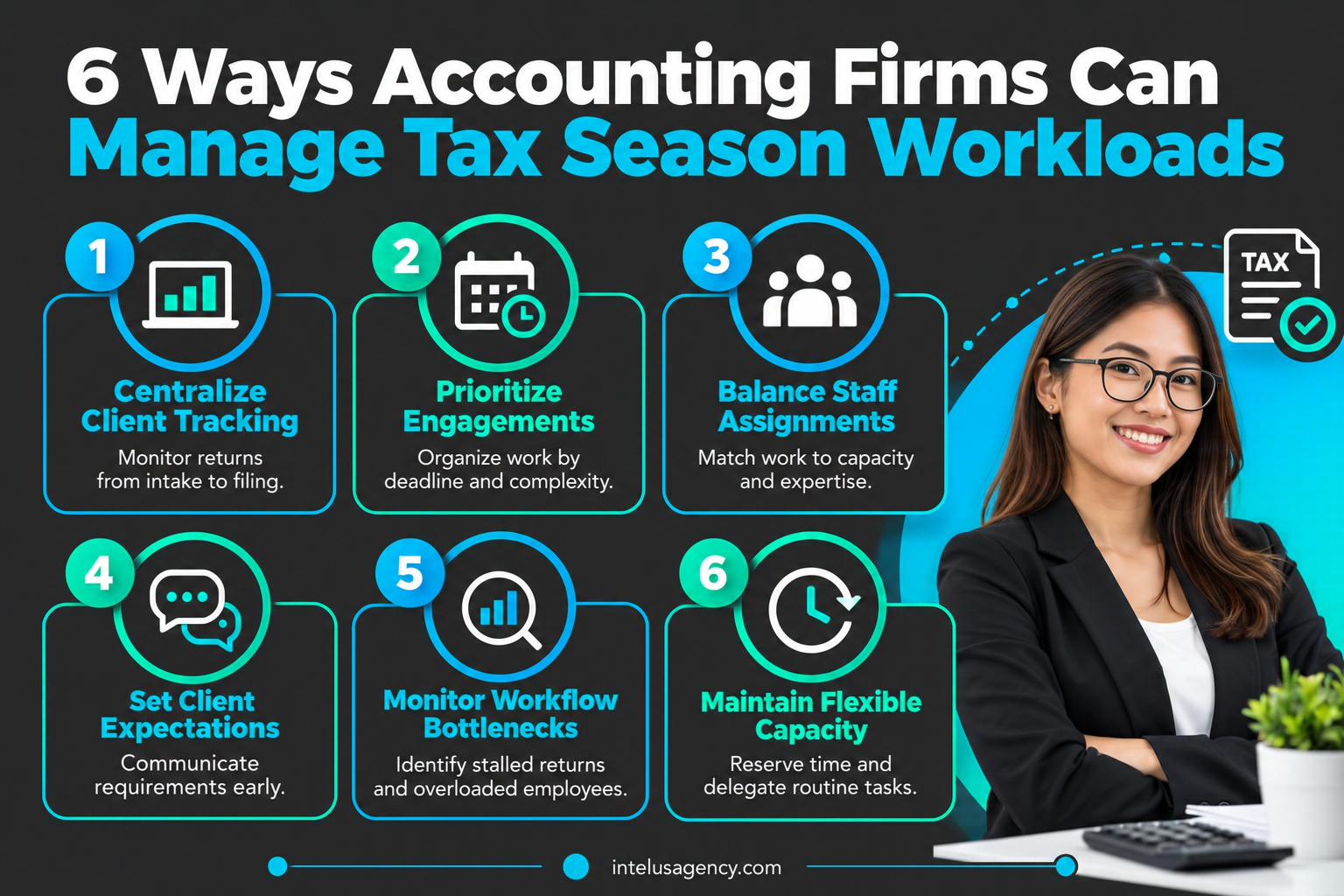
1. Build a Centralized Tax Return Tracking System
Use a centralized dashboard to monitor every engagement from client intake through filing.
Track assigned accountants, preparation stages, review statuses, and outstanding documents. This helps managers identify delays before they affect deadlines.
2. Prioritize Engagements Based on Deadlines and Complexity
Categorize tax returns by filing deadlines, complexity, and document readiness.
Use IRS tax filing information to verify applicable deadlines. Prioritize complex engagements requiring specialized expertise or additional review time.
3. Distribute Client Assignments Based on Team Capacity
Review individual workloads before assigning additional returns.
Consider employee availability, experience, and existing commitments to prevent uneven workloads and excessive overtime.
4. Establish Clear Client Communication Expectations
Communicate document submission deadlines, expected turnaround times, and outstanding requirements early.
Standardize reminders and explain how late submissions may affect preparation schedules.
5. Monitor Progress and Address Bottlenecks Early
Conduct regular workload reviews to identify stalled engagements, overdue milestones, and growing review queues.
Reassign routine tasks or adjust schedules when employees approach capacity limits.
6. Create Capacity Buffers for Unexpected Work
Reserve time for corrections, complex returns, and urgent client requests.
Flexible administrative support can absorb routine workload increases without disrupting specialized tax preparation.
Together, these practices help firms maintain predictable workflows, meet deadlines, and protect employee capacity.
Accounting Software and Tools That Simplify Tax Season Preparation
The right accounting software can help firms organize client records, monitor tax preparation workflows, and reduce repetitive administrative work. Choosing tools that integrate with existing processes is essential for efficient tax season preparation.
1. Use Accounting Software to Manage Client Financial Records
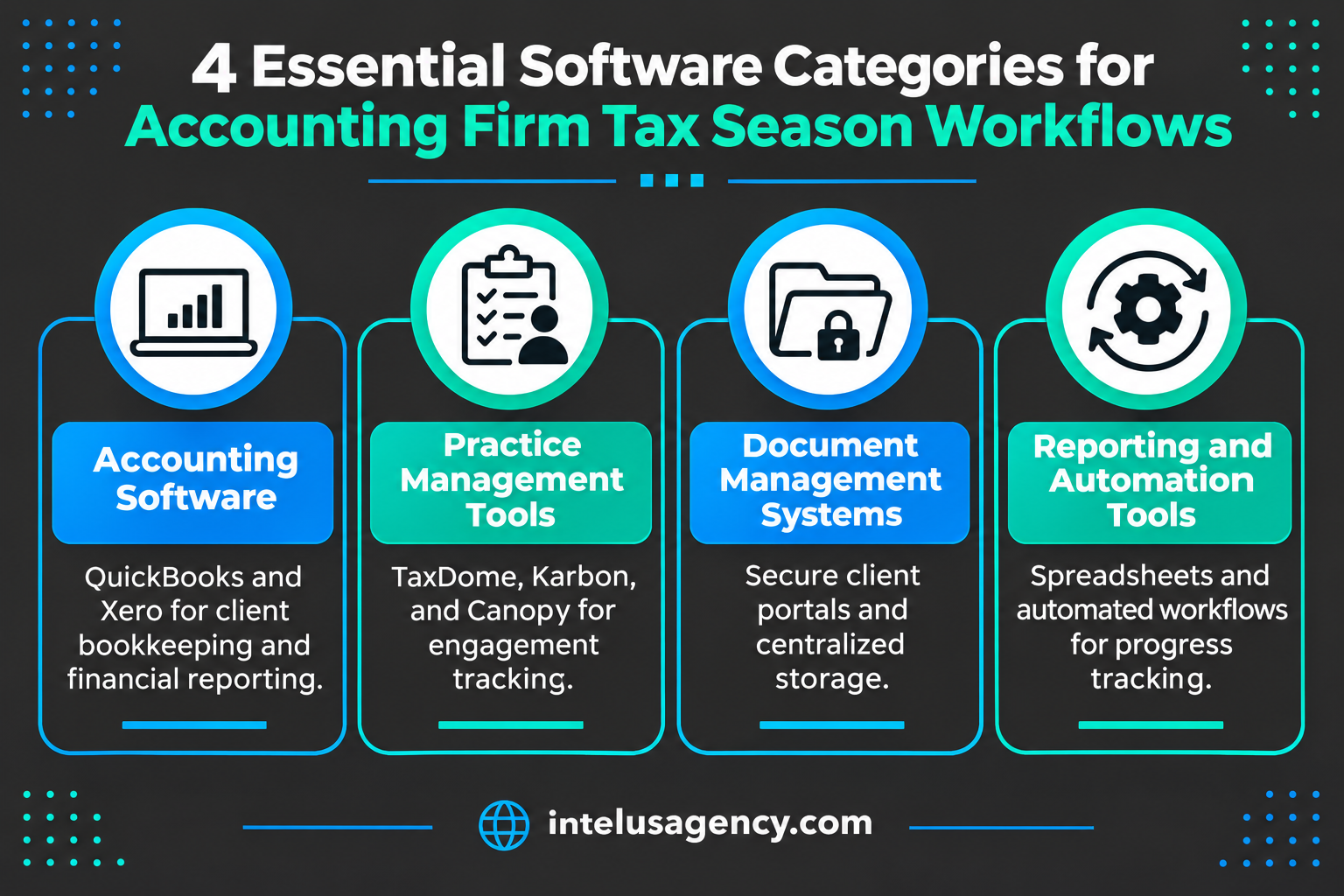
QuickBooks and Xero help firms manage transaction categorization, reconciliations, and financial reporting.
A QuickBooks virtual assistant can assist with routine bookkeeping updates, while a Xero virtual assistant can support reconciliations and client record organization under appropriate supervision.
2. Implement Practice Management Software
Platforms such as TaxDome, Karbon, and Canopy help accounting firms track engagement stages, employee assignments, deadlines, and outstanding client requirements.
Centralized dashboards improve workflow visibility and accountability.
3. Centralize Client Document Collection and Storage
Use secure client portals and cloud-based document management systems to organize financial records.
Standardize folder structures, access permissions, and document naming conventions to simplify retrieval and protect confidential information.
4. Automate Repetitive Administrative Processes
Automate client reminders, document requests, and internal task notifications.
Excel and Google Sheets can supplement practice management systems by tracking team capacity, engagement progress, and outstanding requirements.
5. Choose Tools That Support Existing Workflows
Evaluate software integrations, data security, employee proficiency, and training requirements before adopting new platforms.
Trained remote professionals can work within established systems, helping firms maintain consistent processes without introducing unnecessary complexity.
Which Tax Season Tasks Can Be Delegated to Remote Professionals?
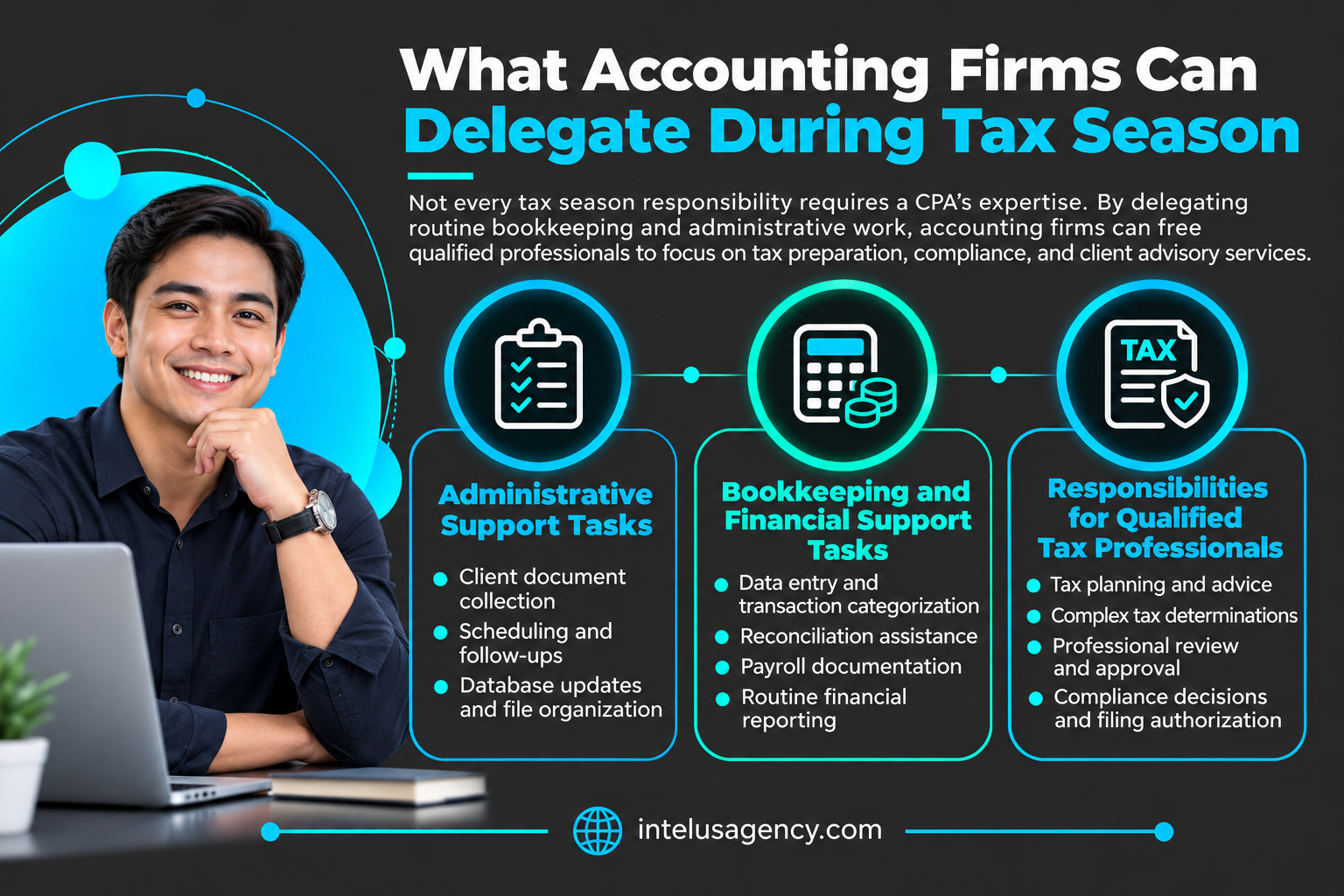
Not every tax season responsibility requires a CPA's expertise. By delegating routine bookkeeping and administrative work, accounting firms can free qualified professionals to focus on tax preparation, compliance, and client advisory services.
1. Identify Tasks That Don't Require a CPA's Expertise
Review recurring activities that consume accountants' time without requiring professional tax judgment.
Separate process-driven responsibilities, such as data entry and document organization, from complex tax decisions that require qualified personnel.
2. Delegate Client Document Collection and Organization
Remote professionals can request missing client documents, organize digital files, update intake checklists, and maintain outstanding requirement trackers.
This helps accountants access complete, organized records before beginning preparation or review.
3. Outsource Routine Bookkeeping and Data Entry
Trained remote bookkeepers can assist with transaction categorization, account reconciliations, and financial record updates.
They can also flag discrepancies and incomplete information for review by qualified accounting personnel.
4. Delegate Client Communication and Administrative Coordination
Remote administrative professionals can schedule appointments, send routine reminders, maintain client databases, and update engagement statuses.
Technical tax questions and requests requiring professional judgment should be escalated to authorized staff.
5. Assign Routine Payroll and Financial Reporting Support
Remote professionals can organize payroll documentation and assist with routine processing through payroll processing support, following established procedures.
They can also provide financial reporting support by preparing standard reports and supporting schedules for accountant review.
6. Keep Professional Tax Responsibilities With Qualified Personnel
Delegation should never replace professional oversight.
Tax advice, complex determinations, compliance decisions, professional review, and final filing authorization must remain with appropriately qualified or authorized personnel.
Accounting firms should follow applicable IRS guidance for tax professionals and establish clear supervision, quality-control checkpoints, confidentiality safeguards, and secure system access.
With appropriate boundaries, remote delegation can increase operational capacity while maintaining accountability and professional service standards.
How Remote Accounting Support Helps Firms Manage Tax Season
Remote accounting support helps CPA firms increase operational capacity without placing additional pressure on existing employees. By delegating routine responsibilities, firms can manage seasonal demand while maintaining service quality.
1. Reduce Administrative Workloads for In-House Accountants
Remote professionals can handle document organization, data entry, scheduling, and routine client follow-ups.
This allows in-house accountants to dedicate more time to tax preparation, professional reviews, and advisory services.
2. Increase Staffing Capacity During Peak Tax Season
Part-time or full-time remote support provides additional capacity when client workloads increase.
Onboarding remote professionals before peak season helps reduce reliance on excessive overtime and gives teams time to establish efficient working relationships.
3. Improve Client Document Management and Communication
Consistent client follow-ups and organized financial records help prevent preparation delays.
With dedicated data management support, firms can maintain centralized client information, monitor missing documents, and track outstanding administrative requirements.
4. Protect Employee Well-Being and Maintain Service Quality
Distributing routine responsibilities across a broader support team reduces pressure on in-house accountants.
Balanced workloads help employees maintain accuracy, responsiveness, and sustainable working hours during demanding filing periods.
5. Build More Efficient Year-Round Operations
Unlike permanent in-house hiring, flexible remote staffing can accommodate changing workload requirements.
Firms can maintain bookkeeping and administrative assistance beyond tax season, improving operational consistency and preparing proactively for future filing periods.
Conclusion
Preparing your accounting firm for tax season requires more than meeting filing deadlines. It means building efficient workflows, forecasting staffing needs, and creating realistic workloads that protect your team from burnout.
With proactive capacity planning, standardized processes, and strategic delegation, firms can reduce last-minute pressure while maintaining accuracy and client satisfaction.
Remote bookkeeping and administrative professionals can help qualified accountants focus on specialized responsibilities without overwhelming existing employees.
Intelus Agency provides remote staffing solutions to help accounting firms strengthen operational capacity.
Ready to prepare your firm for a more manageable tax season? Schedule an outsourcing consultation today.