



Oops! Something went wrong while submitting the form.
Imagine starting your day with a full calendar of client meetings, only to spend your first few hours answering emails, chasing paperwork, updating client records, and coordinating appointments.
For many financial advisors, this is a familiar challenge. As your client base grows, so does the administrative workload behind every relationship. Tasks that seem small individually can consume valuable hours that could otherwise go toward financial planning, strengthening client relationships, and growing your practice.
According to financial advisory industry research, how advisory firms allocate their time is an important consideration in improving productivity.
A client service associate helps address this challenge by managing recurring administrative responsibilities and keeping client service workflows organized.
With the right support, advisors can reduce operational bottlenecks and reclaim time for higher-value work.
Here's how a client service associate can help you work more efficiently, deliver consistent client service, and create room for sustainable growth.
What Is a Client Service Associate?
A client service associate is a financial services support professional who manages administrative tasks, coordinates client interactions, and helps financial advisors maintain efficient daily operations.
Within financial advisory firms, registered investment advisors (RIAs), and wealth management practices, client service associates serve as an important connection between advisors, clients, and internal operations.
Unlike a general administrative assistant, a client service associate understands the specialized workflows involved in financial services. These may include account documentation, client onboarding, meeting preparation, CRM updates, and ongoing service requests.
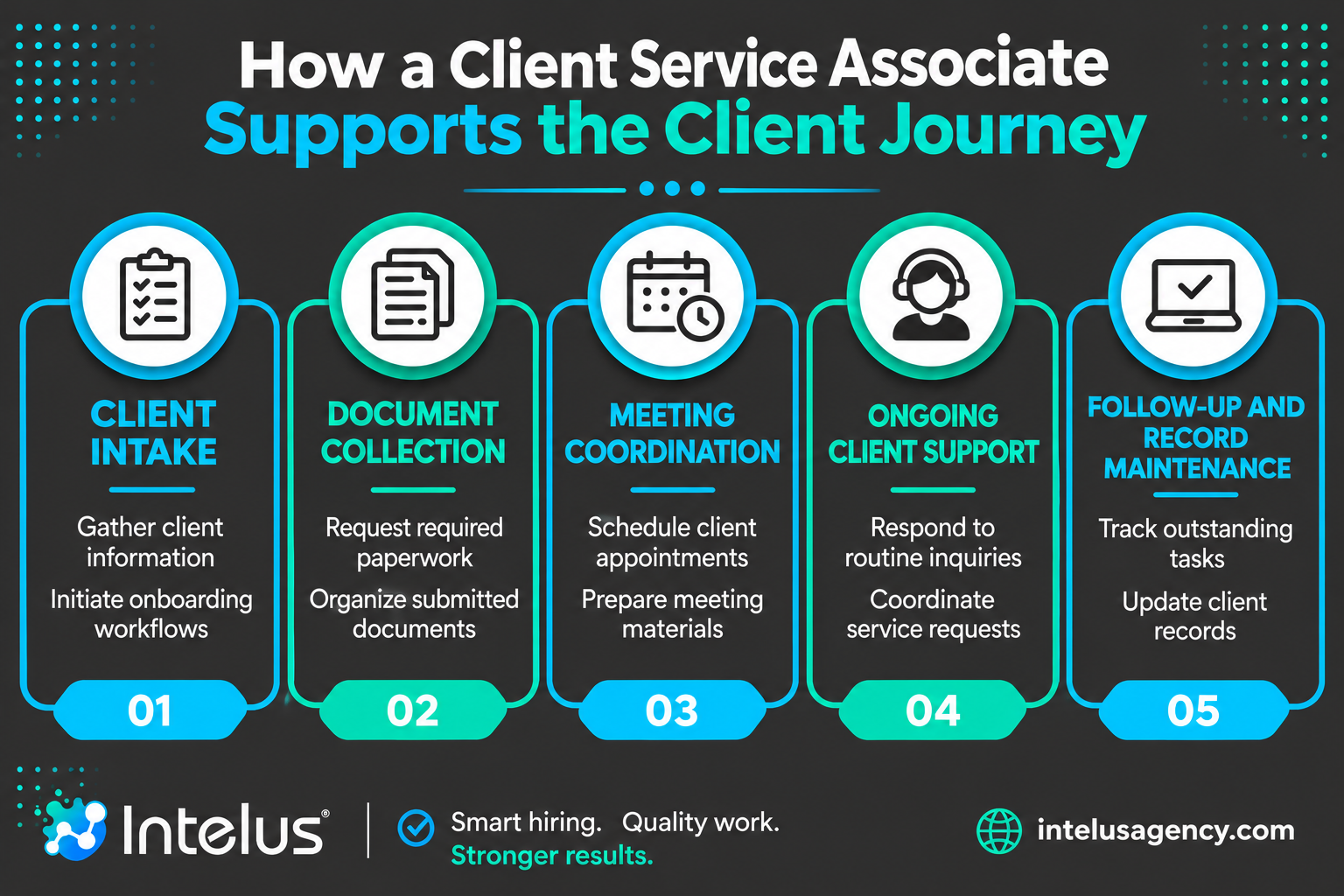
Their responsibilities extend across the entire client relationship lifecycle, from welcoming new clients and collecting required information to coordinating reviews and maintaining accurate records.
However, client service associates do not replace licensed financial advisors. Financial planning recommendations, investment advice, and other regulated activities remain the responsibility of appropriately authorized professionals, consistent with standards governing the financial planning profession.
Client service associates can work in-house or remotely, depending on a firm's operational needs. Both arrangements can help establish organized workflows, consistent communication, and dependable administrative support.
For firms seeking flexible staffing options, a financial services virtual assistant can provide many of these administrative functions without requiring an additional on-site employee.
Ultimately, a client service associate helps advisors spend less time managing operational details and more time delivering the personalized financial guidance their clients expect.
What Does a Client Service Associate Do?
A client service associate handles the recurring administrative responsibilities that keep a financial advisory practice running smoothly. From onboarding new clients to preparing meeting materials, these professionals help advisors maintain organized workflows and deliver consistent service.
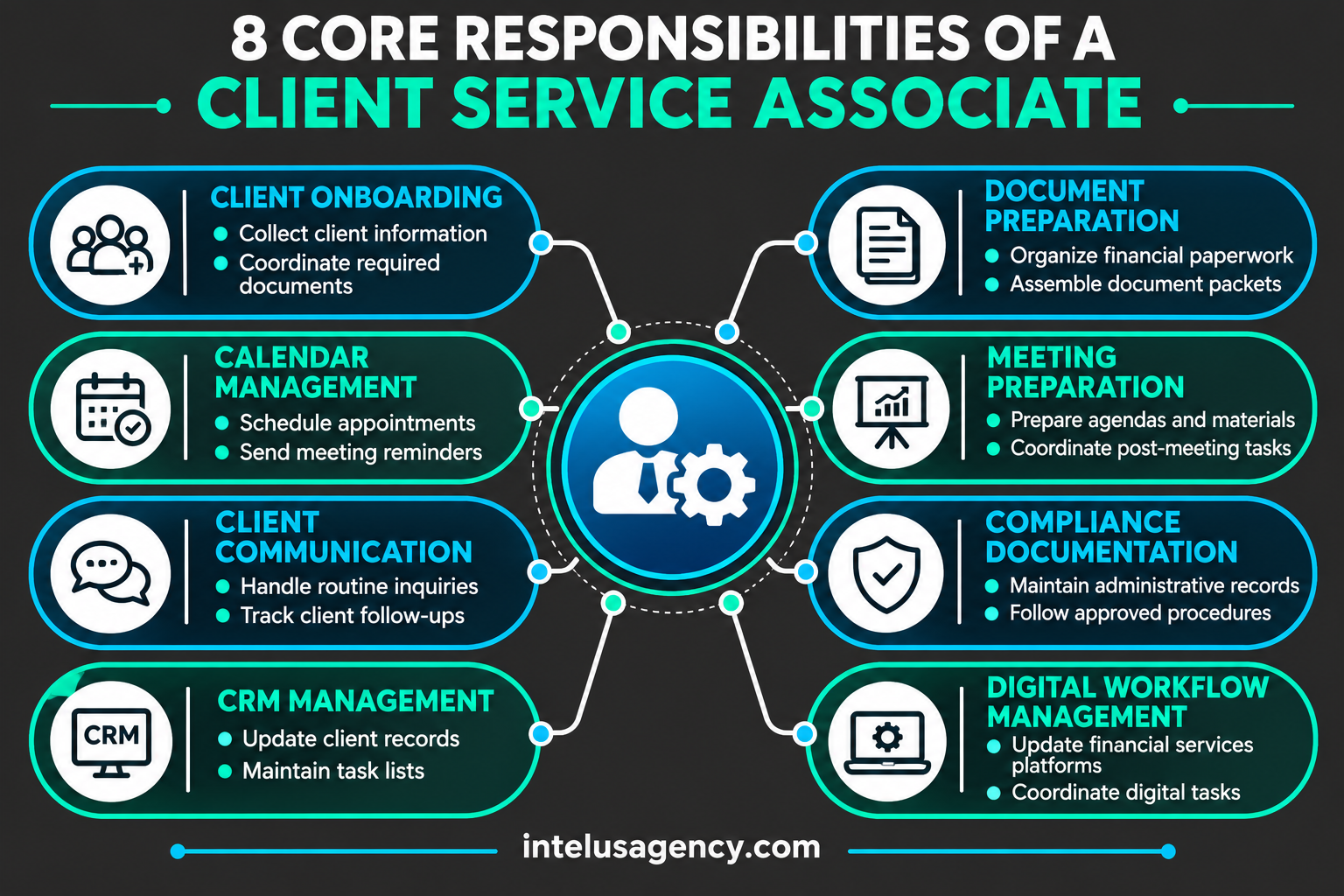
Here are eight essential client service associate responsibilities within financial advisory and wealth management firms.
Client Onboarding and Documentation
Client service associates coordinate the onboarding process by gathering client information, requesting required documents, tracking outstanding paperwork, and organizing account-opening materials.
Dedicated client intake and onboarding support helps advisors welcome new clients efficiently while ensuring documentation is ready for appropriate review.
Appointment Scheduling and Calendar Management
Coordinating client reviews, prospect consultations, and internal meetings can consume significant administrative time.
Client service associates provide calendar management by scheduling appointments, sending reminders, managing calendar changes, and preventing scheduling conflicts.
Client Communication and Follow-Ups
Routine client inquiries, appointment confirmations, document requests, and follow-up reminders require consistent attention.
A client service associate manages these administrative communications, tracks pending requests, and escalates questions requiring an advisor's expertise. This helps clients receive timely responses without constantly interrupting the advisor.
CRM Management and Client Records
Accurate client information is essential for maintaining organized advisory operations.
Through CRM management, associates update contact details, record administrative interactions, maintain task lists, and track follow-up activities.
These practices help advisors access current client information before important conversations.
Financial Document Preparation
Client service associates organize financial statements, account forms, reports, and supporting documents for advisor review.
They may assemble document packets, check materials for completeness, and coordinate secure file storage, reducing the time advisors spend locating paperwork.
Client Meeting Preparation
Before client meetings, associates organize agendas, confirm appointments, gather relevant records, and prepare approved presentation materials.
Afterward, they document administrative action items, coordinate follow-ups, and track outstanding requests so advisors can focus on client relationships.
Compliance Documentation Support
Financial advisory firms operate within established financial industry regulatory requirements.
Client service associates support administrative recordkeeping by organizing required documents, maintaining approved records, and following established retention procedures.
Compliance decisions, supervisory reviews, and regulated advisory activities remain with authorized personnel.
Financial Services Software and Digital Workflows
Modern advisory practices rely on specialized platforms to manage client relationships and financial planning workflows.
Depending on the firm's systems, associates may provide Redtail CRM virtual assistant services, Wealthbox CRM support, eMoney Advisor virtual assistant assistance, and RightCapital administrative support.
Under appropriate supervision and access controls, they help maintain data, coordinate workflows, and prepare information for advisor review.
Together, these responsibilities create a more organized, responsive advisory practice.
How a Client Service Associate Frees Up Your Advisory Hours
Every hour spent managing administrative tasks is an hour unavailable for financial planning, client conversations, or business development.
A client service associate helps financial advisors reclaim valuable time by taking ownership of recurring operational responsibilities.
Instead of starting each morning sorting emails, confirming appointments, and tracking paperwork, advisors can delegate these activities through dedicated email and calendar management.
This reduces interruptions throughout the workday and creates longer periods for focused advisory work.
Associates also handle routine client follow-ups, coordinate outstanding documentation, and prepare materials before scheduled reviews. Advisors can enter meetings with organized information rather than spending valuable preparation time searching for records.
With reliable data management services, client information stays organized, accessible, and ready for advisor review.
The result is more time for meaningful client conversations, personalized financial planning, prospecting, and relationship development.
Research on financial advisor productivity also provides useful context for evaluating how advisory professionals allocate their working hours.
To measure the potential impact, advisors can conduct a simple weekly time audit:
- Track administrative hours: Record time spent on scheduling, documentation, email, and CRM updates.
- Identify delegable tasks: Separate routine administrative work from activities requiring advisor expertise.
- Measure reclaimed time: Compare weekly administrative hours before and after introducing support.
- Reallocate available hours: Prioritize client meetings, financial planning, and business development.
For example, reclaiming five administrative hours weekly creates approximately 20 additional hours over four weeks that could be redirected toward advisory responsibilities.
Beyond productivity, reducing repetitive administrative work can support a more manageable schedule and healthier work-life balance.
Ultimately, hiring a client service associate isn't simply about completing tasks faster. It's about protecting the advisor's time for the work that matters most.

How Client Service Associates Help Financial Advisory Firms Grow
As financial advisory firms expand, administrative demands increase alongside their client base. Without dedicated support, advisors may struggle to maintain responsiveness, manage growing workloads, and deliver consistent service.
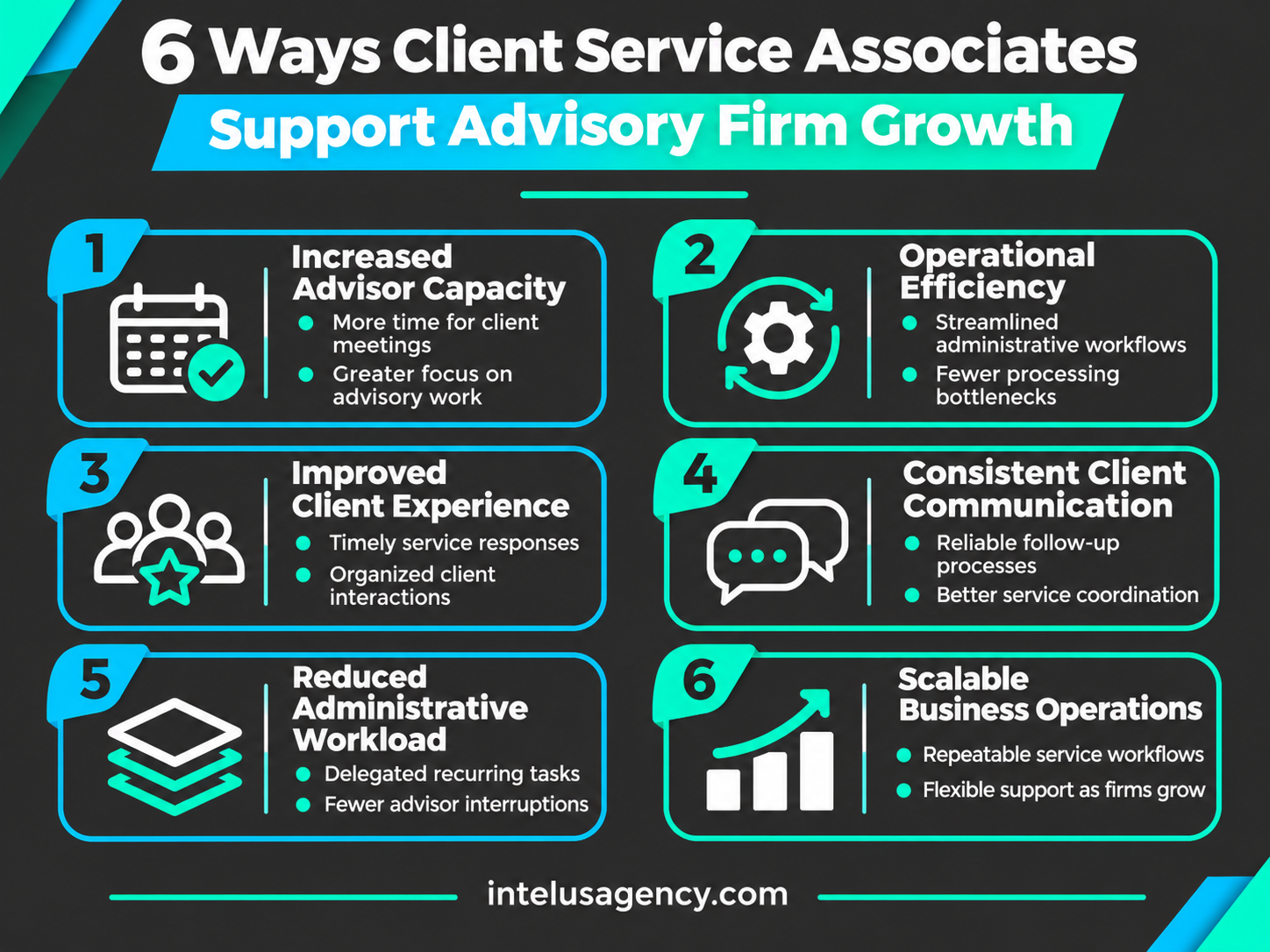
A client service associate helps firms increase advisor productivity and client capacity by managing recurring administrative responsibilities. With fewer operational distractions, advisors can dedicate more time to financial planning, client relationships, and business development.
Reliable customer service support also strengthens the client experience. Timely responses, organized follow-ups, and consistent communication help clients feel supported throughout their relationship with the firm, contributing to long-term retention.
Beyond daily efficiency, associates establish repeatable workflows for onboarding, scheduling, documentation, and client communication. These standardized processes reduce bottlenecks and make operations easier to scale.
Firms experiencing delayed follow-ups, overloaded advisor calendars, or inconsistent administrative processes may benefit from dedicated support.
When evaluating staffing options, firms can hire an in-house associate or work with outsourced remote administrative assistants.
In-house employees provide on-site availability, while an outsourced client service associate can offer flexible administrative capacity without expanding physical office space.
Regardless of staffing model, firms must protect confidential client information through approved systems, appropriate access permissions, secure communication, and supervisory procedures.
The SEC's investment advisor resources provide guidance relevant to investment advisory firms and their regulatory responsibilities.
Ultimately, professional client service support creates a stronger operational foundation, helping advisory firms serve more clients without sacrificing service quality.
Conclusion
A client service associate is more than an administrative hire. They're an essential support professional who helps financial advisors reclaim valuable time, strengthen client relationships, and build more efficient practices.
By delegating scheduling, client onboarding, documentation, CRM updates, and routine follow-ups, advisors can focus on delivering financial guidance and growing their business.
Dedicated client service support also improves operational consistency, enhances the client experience, and creates scalable workflows as advisory firms expand.
For firms looking to increase capacity without building larger in-house administrative teams, outsourcing offers a practical and flexible alternative.
The Small Business Administration's growth resources provide additional guidance on managing and expanding business operations.
Ready to spend less time managing administrative tasks and more time advising your clients?
Book an outsourcing consultation with Intelus Agency to explore dedicated remote support tailored to your financial advisory practice.