



Oops! Something went wrong while submitting the form.
Managing multiple construction projects means juggling subcontractor schedules, material deliveries, inspections, deadlines, and constant communication between office and field teams. When project updates are missed or approvals are delayed, even minor administrative issues can disrupt construction schedules and create costly setbacks.
For general contractors and project managers, keeping every job organized often means spending valuable hours tracking documents, confirming schedules, and following up on outstanding tasks instead of focusing on construction progress.
A remote construction project coordinator helps reduce this administrative burden by centralizing project information, monitoring deadlines, coordinating communication, and maintaining visibility across active jobs.
As construction industry trends highlight the importance of efficient project operations, dependable coordination becomes increasingly valuable for growing construction businesses.
Understanding the responsibilities, software skills, and operational benefits of remote construction coordination can help contractors maintain organized workflows and keep projects moving forward.
What Is a Remote Construction Project Coordinator?
A remote construction project coordinator is an administrative professional who supports construction project managers, general contractors, and field teams by organizing schedules, managing documentation, tracking project tasks, and coordinating communication. Similar to a construction virtual assistant, this role provides essential operational support without requiring a full-time presence at the construction site.
Unlike a construction project manager, who oversees project execution, budgets, technical decisions, and overall performance, a project coordinator focuses on the administrative workflows that keep construction activities organized. This distinction aligns with the broader responsibilities involved in construction project management.
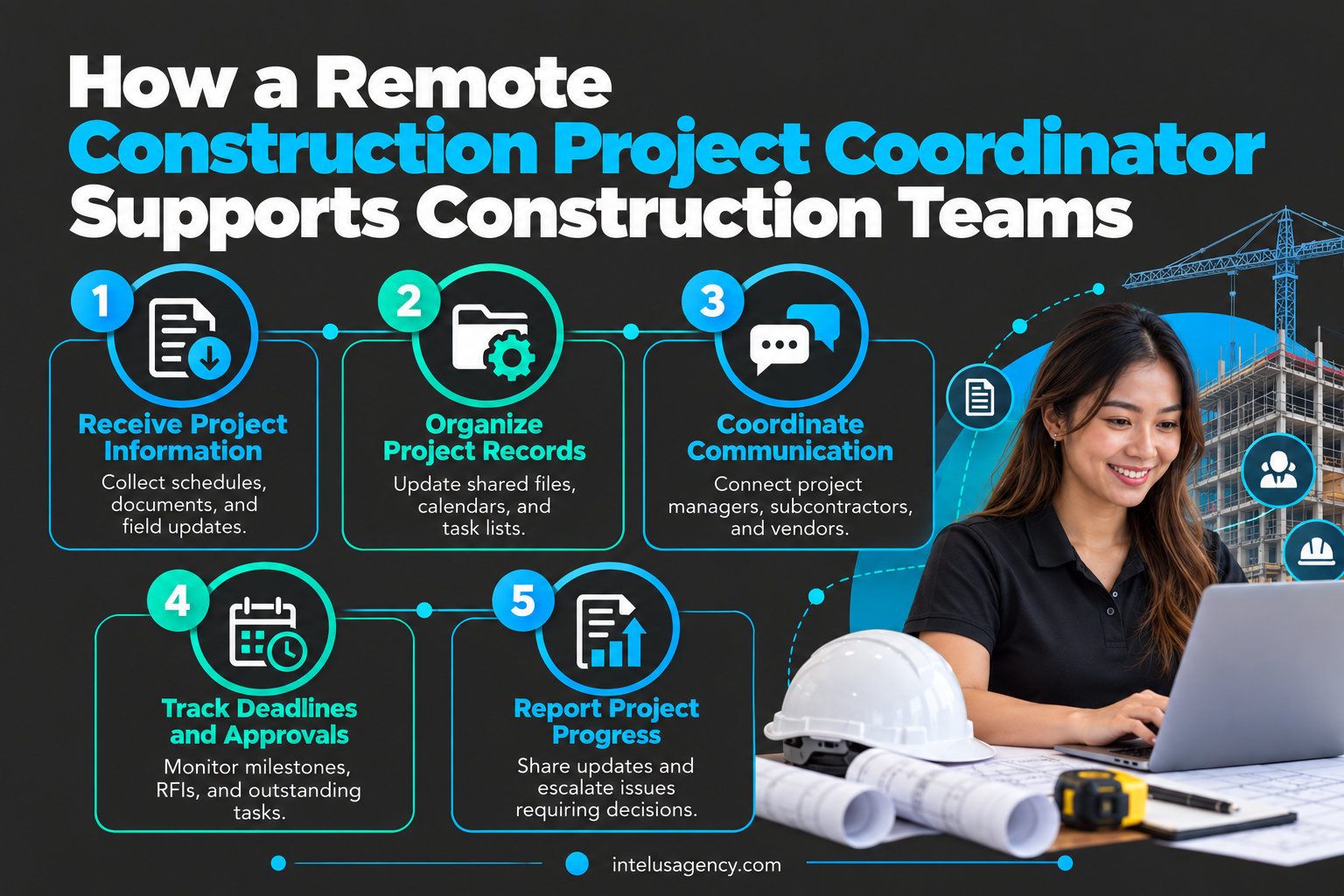
A remote construction project coordinator works closely with subcontractors, vendors, field supervisors, and office personnel to maintain accurate project information. Responsibilities include updating schedules, organizing construction documents, monitoring outstanding approvals, tracking deadlines, and communicating important updates to relevant stakeholders.
Using cloud-based construction management platforms, coordinators can access authorized project records, maintain task lists, and provide progress updates from virtually anywhere. This centralized approach helps construction teams stay informed while reducing repetitive administrative work.
However, remote coordinators do not replace on-site supervision or qualified construction professionals responsible for safety, technical approvals, and project management decisions.
By maintaining organized information and consistent communication, remote coordinators provide dependable project management support that helps contractors manage multiple active projects more efficiently.
What Are the Main Construction Project Coordinator Duties?
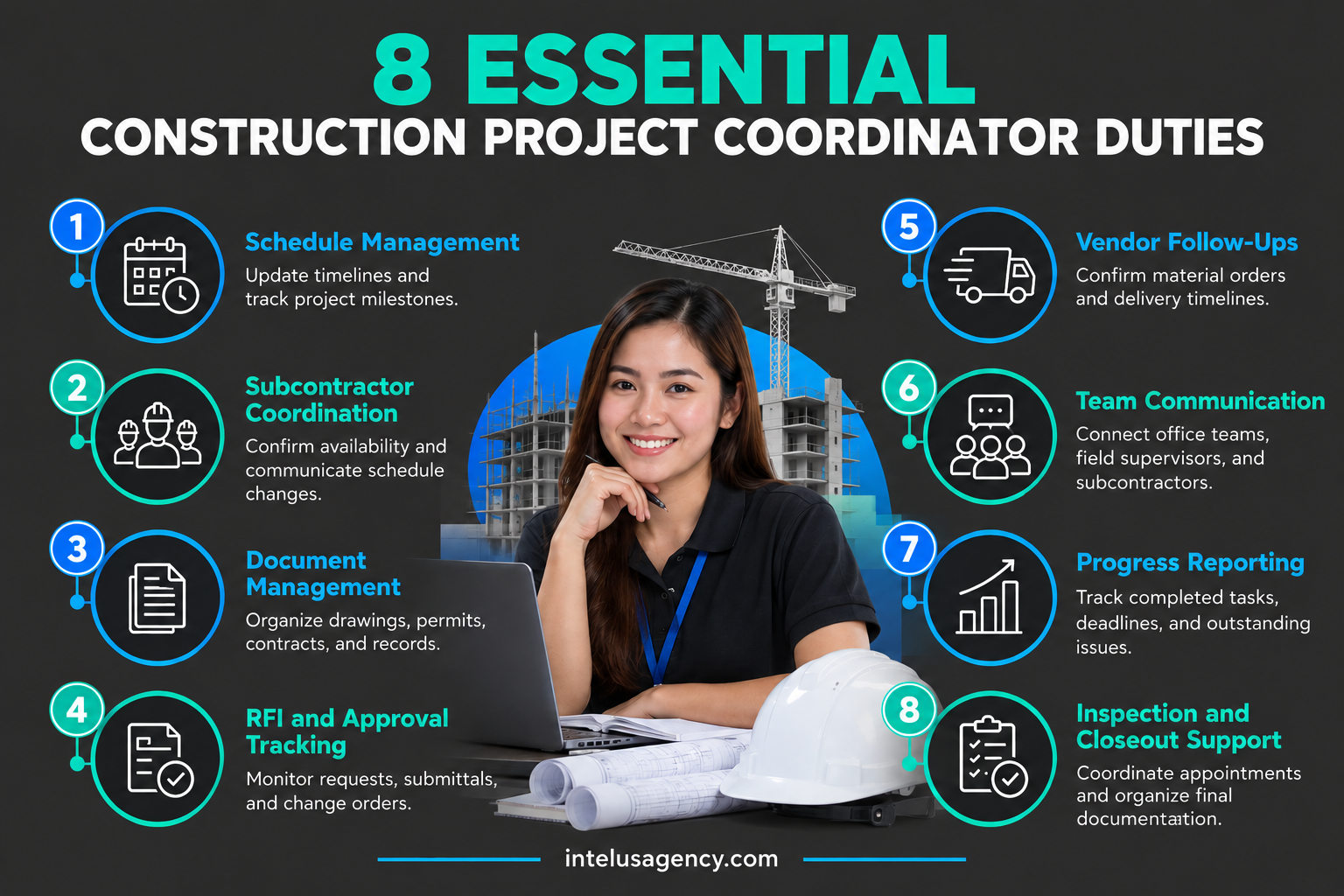
The primary construction project coordinator duties involve organizing schedules, managing documentation, coordinating subcontractors, and tracking project activities. These responsibilities help contractors maintain efficient workflows, reduce administrative delays, and keep multiple construction jobs organized.
1. Construction Scheduling and Milestone Tracking
Construction project coordinators maintain project schedules, update milestone calendars, and monitor upcoming deadlines. They track scheduled activities, identify potential conflicts, and notify project managers when adjustments may be necessary.
2. Subcontractor Scheduling and Coordination
Effective subcontractor coordination involves confirming availability, communicating schedule changes, and following up on upcoming work. Coordinators help ensure subcontractors receive timely information about project requirements and scheduled activities.
3. Construction Document Management
Accurate construction documentation keeps project information accessible and organized. Coordinators maintain drawings, contracts, permits, meeting records, and other essential files within shared document management systems.
4. RFI, Submittal, and Change Order Tracking
Coordinators manage RFI documentation by recording requests, monitoring response deadlines, and following up on outstanding approvals. They also support change order tracking by organizing requests, updating records, and communicating approval status without making technical or contractual decisions.
5. Material Deliveries and Vendor Follow-Ups
Coordinators communicate with suppliers to confirm delivery dates, monitor outstanding orders, and flag potential material delays that could affect upcoming construction activities.
6. Office-to-Field Communication
Remote coordinators maintain communication between project managers, field supervisors, subcontractors, and vendors. They distribute updates, organize meetings, document discussions, and track action items requiring follow-up.
7. Project Progress Monitoring and Reporting
Coordinators collect project updates, maintain task trackers, and prepare status reports highlighting completed milestones, upcoming deadlines, and unresolved administrative issues.
8. Inspection Scheduling and Project Closeout
Administrative responsibilities include coordinating inspection appointments, tracking required documentation, and organizing closeout records, warranties, and outstanding deliverables.
Consistent coordination supports established construction project management practices by improving accountability, maintaining accurate records, and reducing the likelihood of overlooked tasks or scheduling conflicts.
How Remote Construction Project Coordinators Keep Jobs on Schedule
Keeping construction projects on schedule requires more than maintaining a timeline. A remote construction project coordinator supports daily operations by monitoring deadlines, identifying outstanding tasks, and ensuring project information reaches the right people before administrative issues cause delays.
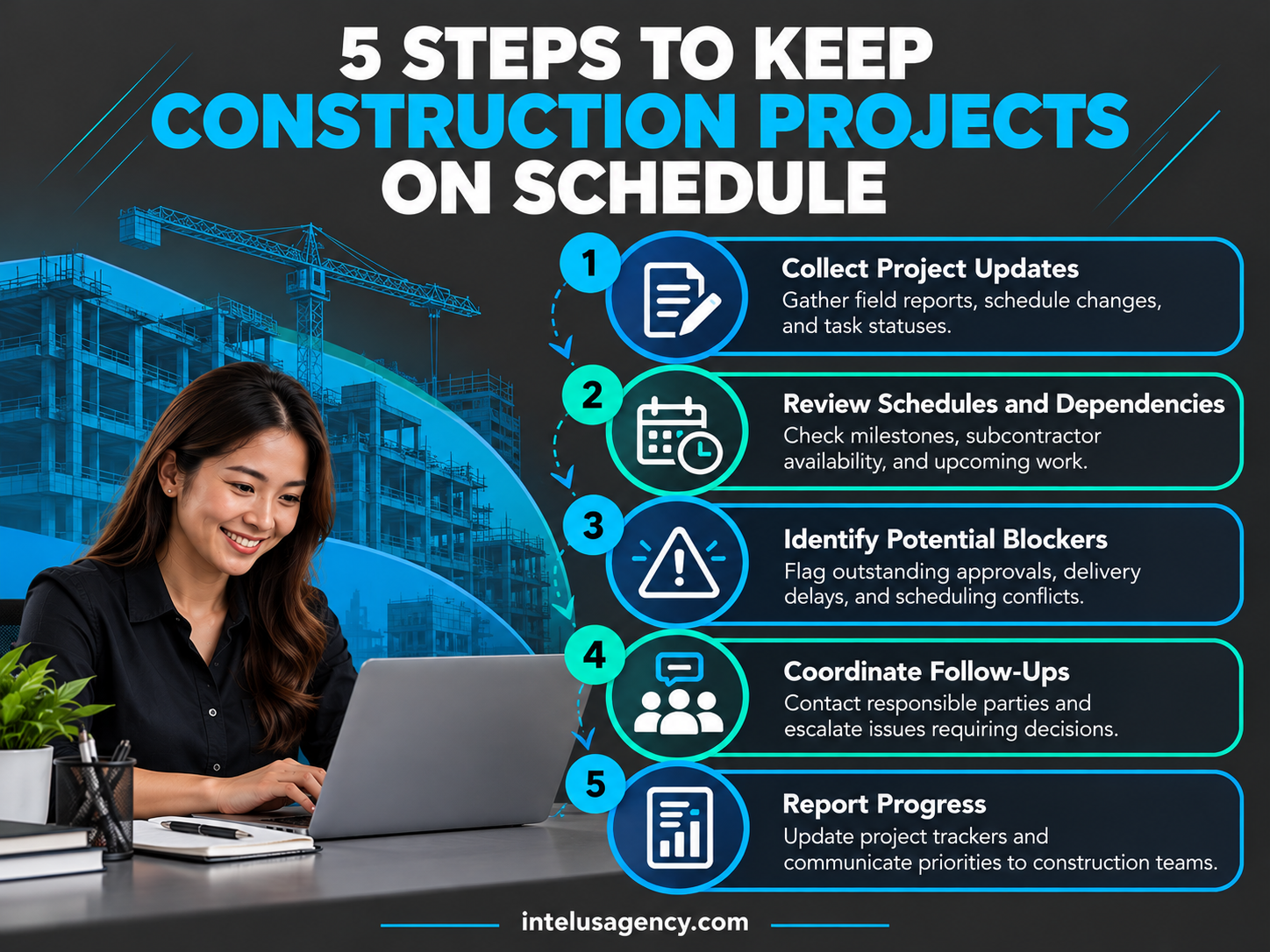
1. Maintain Updated Project Schedules
Coordinators regularly update project schedules, milestone calendars, and task trackers using information provided by project managers and field supervisors. This gives construction teams a centralized view of upcoming activities, deadlines, and scheduling changes.
2. Identify Scheduling Conflicts and Dependencies
Construction activities often depend on subcontractor availability, completed inspections, material deliveries, and approved documents. Coordinators review these dependencies, identify potential scheduling conflicts, and alert project managers when upcoming work may be affected.
3. Monitor RFIs, Submittals, and Approvals
Outstanding RFIs, pending submittals, and delayed approvals can prevent scheduled activities from proceeding. Remote coordinators maintain tracking logs, monitor response deadlines, and follow up with responsible parties to keep administrative requirements moving.
4. Coordinate Vendor and Subcontractor Follow-Ups
Coordinators confirm material delivery timelines, request subcontractor schedule updates, and document vendor commitments. They communicate relevant changes to field supervisors and escalate potential disruptions to project managers for appropriate decisions.
5. Provide Consistent Progress Reporting
Daily or weekly status reports summarize completed milestones, upcoming deadlines, unresolved issues, and outstanding action items. Standardized reporting gives project managers better visibility across multiple construction sites without requiring constant administrative follow-ups.
Reliable construction scheduling and project delivery depend on timely information and coordinated workflows. Through consistent communication, task monitoring, and remote subcontractor coordination, construction businesses can reduce preventable administrative delays while keeping on-site execution and scheduling decisions under qualified supervision.
Construction Management Software Remote Coordinators Should Know
Proficiency in construction project management software allows remote construction project coordinators to manage schedules, organize documentation, and maintain communication across multiple jobs. Familiarity with established platforms helps coordinators access authorized project information and support existing construction workflows efficiently.
1. Procore
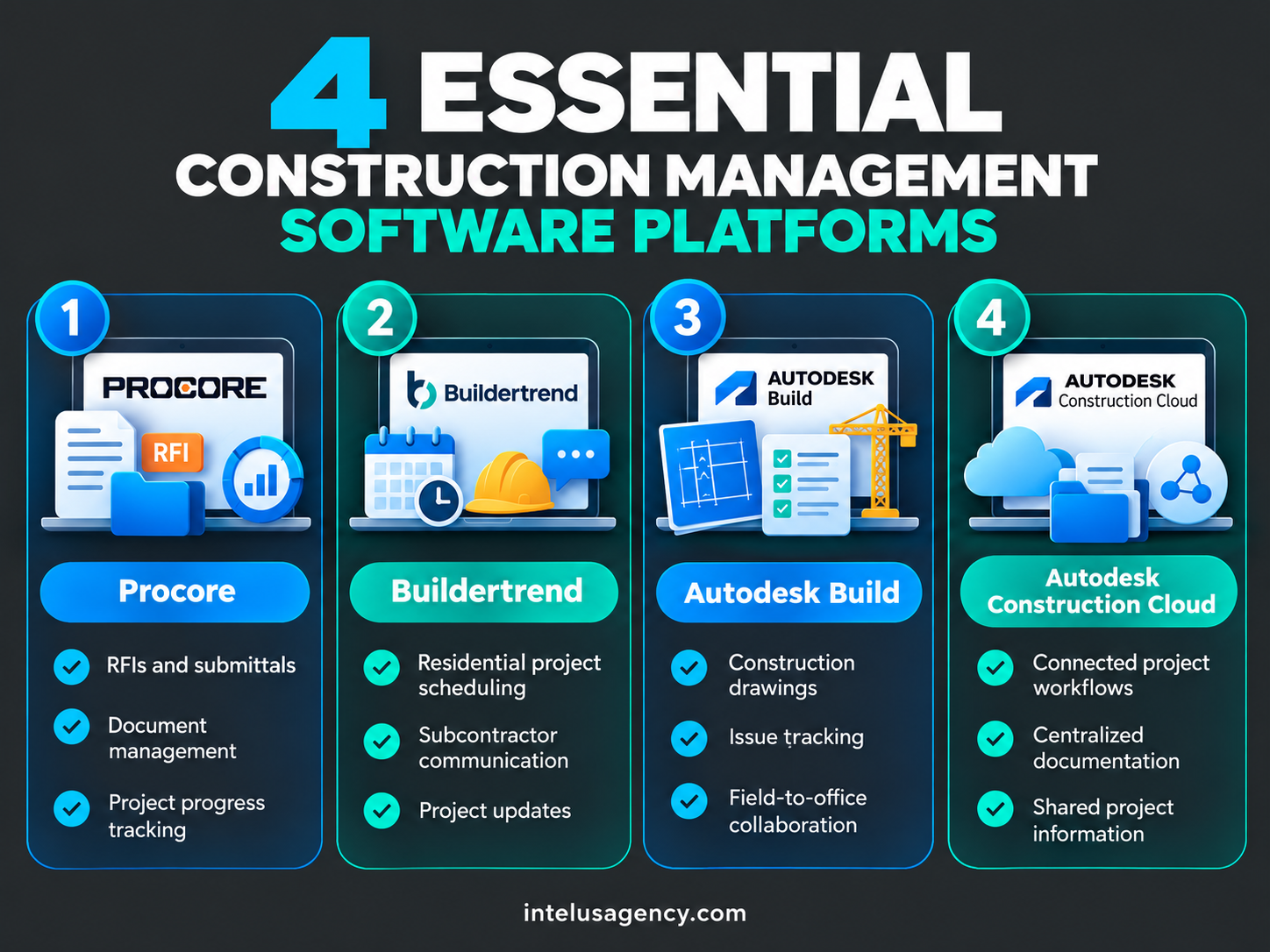
Procore supports construction documentation, RFIs, submittals, and project progress tracking. A Procore virtual assistant can organize records, monitor outstanding requests, and maintain updated project information.
2. Buildertrend
Buildertrend helps residential construction teams manage schedules, subcontractor communication, and project updates. A Buildertrend virtual assistant supports scheduling updates, task tracking, and administrative coordination.
3. Autodesk Build
Autodesk Build connects construction drawings, project issues, documentation, and field-to-office communication. An Autodesk Build specialist helps maintain organized records and track outstanding project activities.
4. Autodesk Construction Cloud
Autodesk Construction Cloud supports connected construction workflows and document management. An Autodesk Construction Cloud specialist helps coordinate shared project information and maintain document accessibility.
Microsoft Excel and shared calendars also support supplementary reporting, deadline monitoring, and task tracking.
Using familiar construction project management software allows remote coordinators to integrate into existing systems without disrupting established workflows.
How Remote Construction Project Coordinators Help Construction Businesses Grow
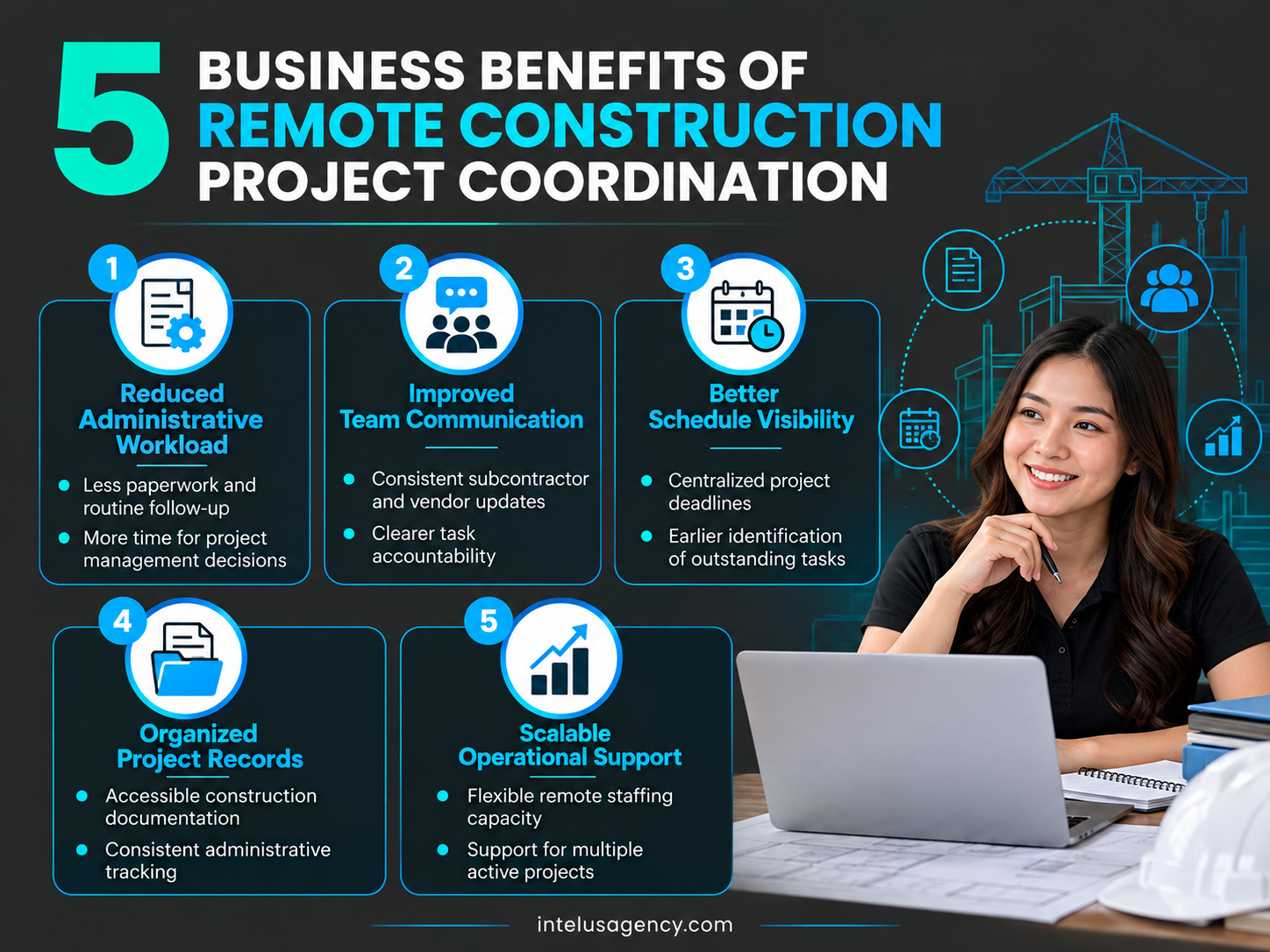
As construction companies take on more projects, administrative responsibilities increase alongside operational demands. A remote construction project coordinator helps growing contractors manage these workloads without immediately expanding their in-house administrative teams.
1. Reduce Administrative Workload
Remote coordinators handle recurring scheduling updates, document organization, and routine follow-ups. This allows project managers to concentrate on field execution, quality control, and critical project decisions while business owners spend less time managing paperwork.
2. Improve Communication and Accountability
Consistent subcontractor and vendor communication helps prevent missed updates and overlooked responsibilities. Coordinators maintain organized task records, track outstanding requests, and ensure relevant information reaches the appropriate team members.
3. Strengthen Project Visibility
Centralized schedules, progress reports, and documentation provide clearer visibility across multiple active construction jobs. This helps managers identify upcoming deadlines, monitor unresolved tasks, and reduce preventable administrative oversights.
4. Support Scalable Business Operations
While in-house coordinators provide dedicated office support, outsourcing offers flexible administrative capacity without immediately increasing office space or permanent staffing commitments.
As construction industry research informs operational planning, contractors can explore remote construction staffing to maintain organized workflows, support increasing project volumes, and improve administrative efficiency as their businesses grow.
Conclusion
A remote construction project coordinator does more than maintain schedules. By organizing documentation, coordinating subcontractor communication, and monitoring outstanding tasks, these professionals help construction businesses reduce preventable delays and maintain visibility across multiple active projects.
Reliable administrative support allows project managers to focus on construction execution while maintaining consistent workflows. Combined with practical small business growth resources, outsourcing can support more efficient and scalable operations.
Intelus Agency provides remote construction staffing solutions to help contractors streamline project coordination. Schedule an outsourcing consultation to explore how dedicated remote support can keep your construction projects organized and on schedule.