



Oops! Something went wrong while submitting the form.
Customer expectations continue to rise as businesses compete to deliver faster, more personalized, and more proactive experiences. Companies that invest in strong customer success manager skills are better positioned to guide customers beyond the initial purchase, helping them achieve long-term value while building stronger relationships. As highlighted by recent customer experience trends, organizations that prioritize customer-centric strategies consistently improve satisfaction and loyalty.
This shift has given rise to the digital customer success manager, a professional who combines technology, customer data, automation, and strategic engagement to deliver exceptional experiences at scale. Rather than waiting for customers to encounter problems, digital customer success managers proactively help users adopt products, achieve goals, and maximize outcomes. If your organization is looking to modernize its customer experience strategy, an outsourcing consultation can help determine the most effective approach for sustainable growth.
What Is a Digital Customer Success Manager?
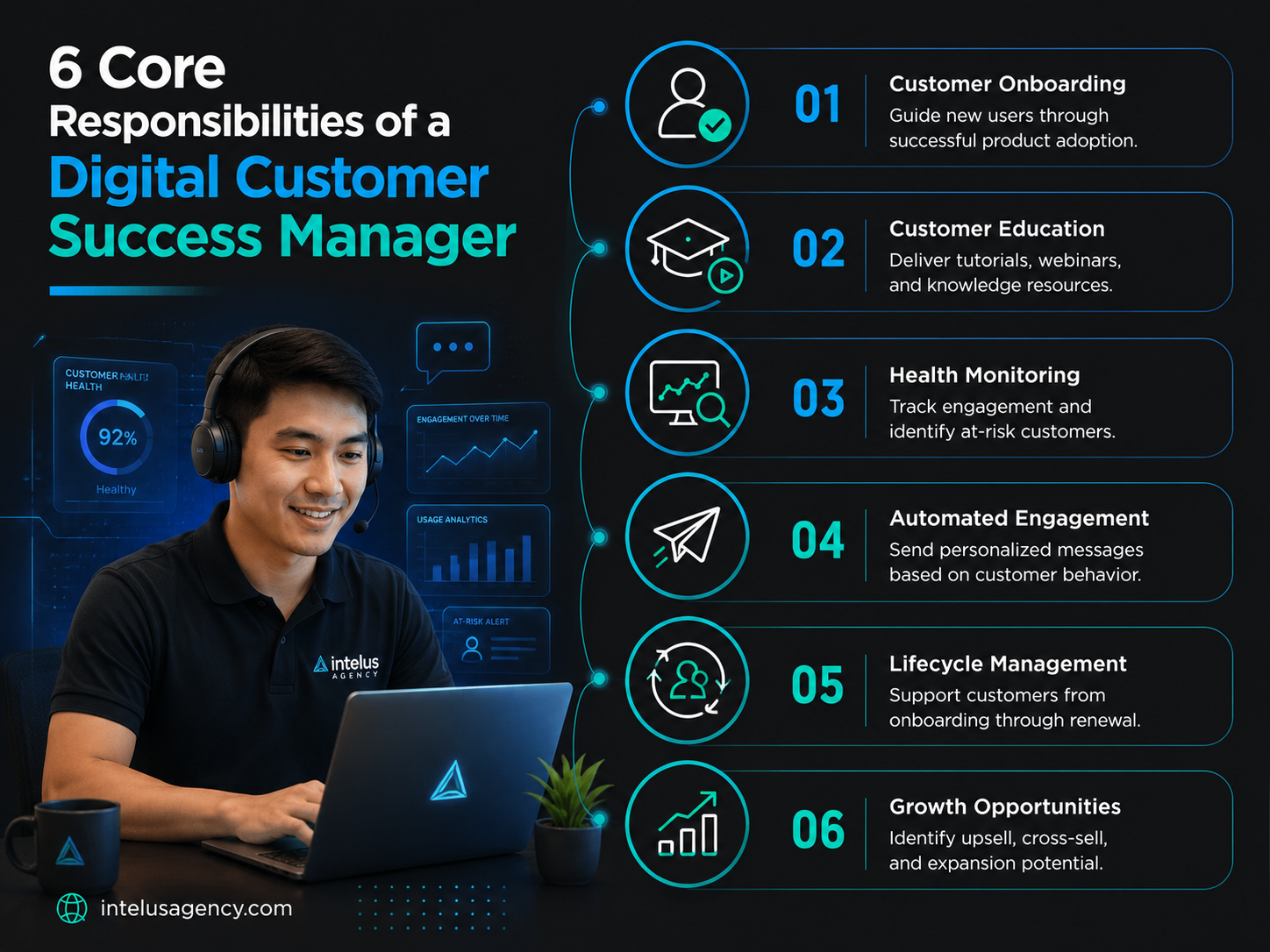
A customer success manager is responsible for helping customers achieve measurable success with a company's products or services. A digital customer success manager takes this role a step further by using technology, automation, customer data, and digital communication channels to manage customer relationships at scale. Instead of relying solely on one-on-one interactions, they leverage digital tools to deliver timely guidance, personalized experiences, and proactive support throughout the customer journey. Many of these responsibilities align with established customer success best practices that emphasize long-term customer value over reactive service.
On a typical day, a digital customer success manager monitors customer health scores, reviews product usage data, automates onboarding workflows, develops educational resources, and identifies opportunities to increase product adoption. They collaborate closely with sales, marketing, and product teams to ensure customers receive consistent support throughout every stage of the lifecycle.
Unlike traditional customer support, which primarily resolves issues after they occur, digital customer success focuses on preventing problems before they arise. By anticipating customer needs and delivering relevant information at the right time, these professionals improve customer satisfaction while reducing support requests and churn.
As SaaS companies continue to grow, managing thousands of customer relationships manually becomes increasingly difficult. Digital customer success managers make scalable customer engagement possible through intelligent automation without sacrificing personalization. Organizations like Intelus Agency help businesses access skilled professionals who can build these proactive customer success strategies and strengthen long-term customer relationships.
Why Customer Experience Matters More Than Ever
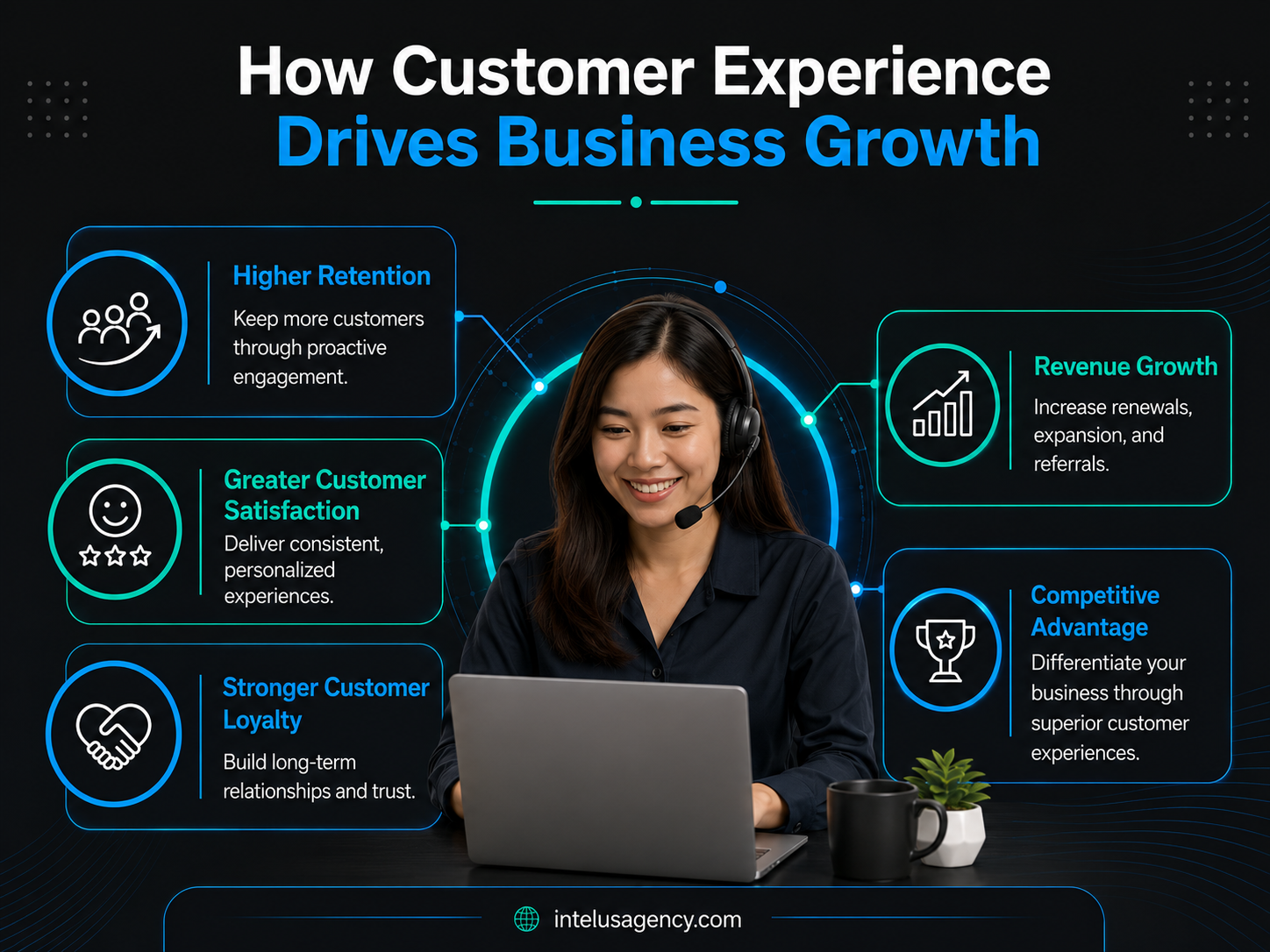
Today's customers have more choices than ever before, making exceptional customer experience a key differentiator for businesses. Companies that invest in proactive engagement, seamless support, and personalized interactions are more likely to retain customers, increase lifetime value, and earn positive referrals. Rather than viewing customer experience as a support function, leading SaaS organizations treat it as a growth strategy. An outsourcing consultation can help businesses evaluate how to strengthen customer experience through scalable customer success initiatives. Insights from customer experience research also demonstrate that memorable customer interactions significantly influence loyalty and long-term relationships.
Retention is often more cost-effective than acquiring new customers, making customer experience a critical driver of sustainable revenue growth. When customers quickly realize value from a product, they are more likely to renew subscriptions, expand their usage, and recommend the solution to others. Organizations that develop strong customer success manager skills are better equipped to identify customer needs early, provide relevant guidance, and resolve potential challenges before they affect satisfaction. As competition continues to intensify across the SaaS industry, delivering a consistently positive customer experience has become a lasting competitive advantage rather than an optional investment.
How Digital Customer Success Managers Improve Customer Experience
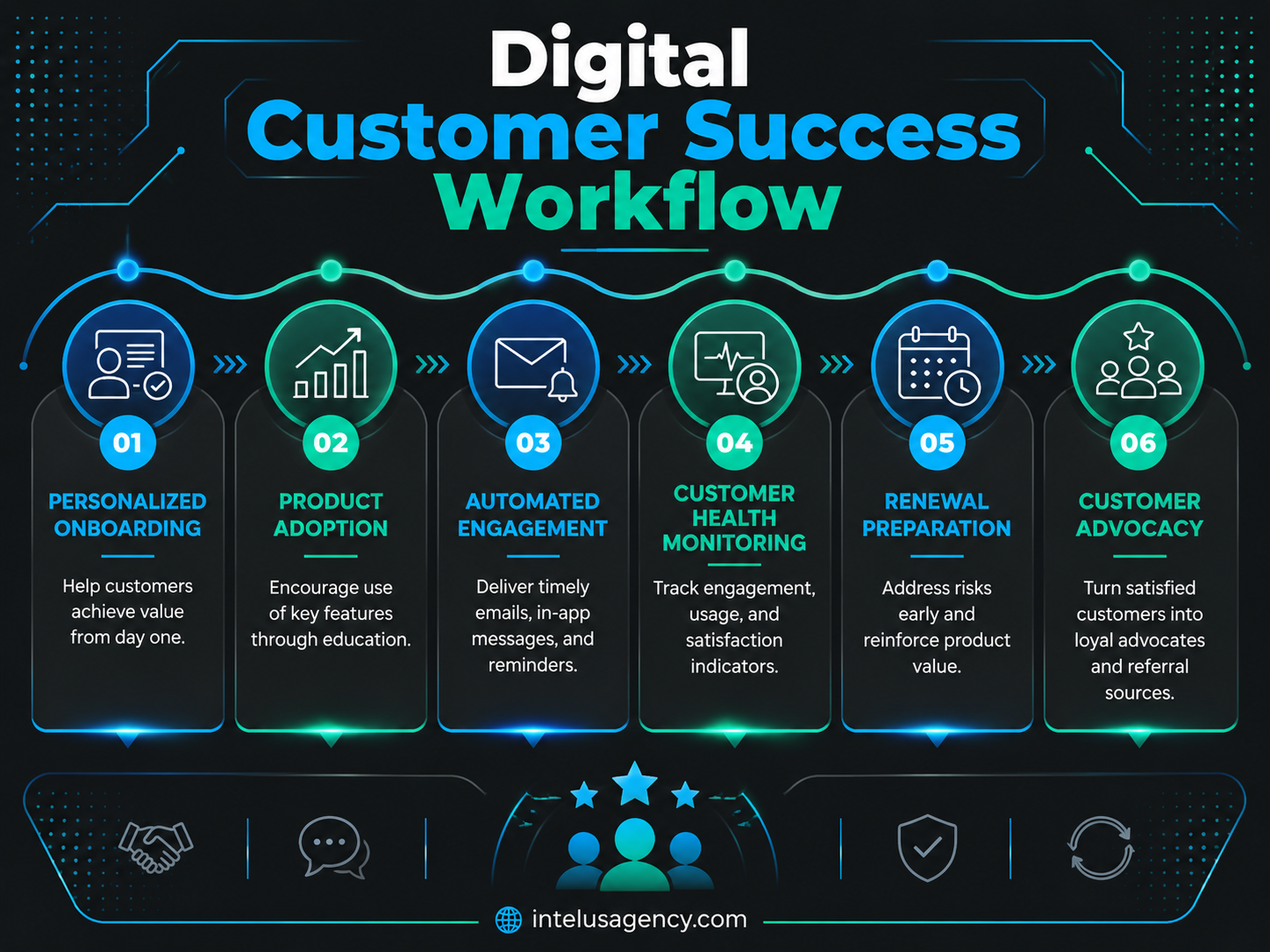
Digital customer success managers create meaningful customer experiences by combining human expertise with technology-driven processes. Their goal is to help customers achieve success at every stage of the journey, from onboarding to renewal, through timely, personalized, and proactive engagement. By using customer data and automation, they can scale these efforts without compromising the quality of the customer relationship. Effective customer onboarding strategies reinforce the importance of guiding users toward early wins that build confidence and long-term engagement.
One of the most valuable contributions of a digital customer success manager is personalized onboarding. Rather than providing every customer with the same experience, they tailor onboarding resources, tutorials, and communications based on customer goals, company size, product usage, or industry. This personalized approach accelerates time-to-value and helps customers become productive more quickly.
Customer education is another critical responsibility. Through knowledge bases, webinars, in-app guidance, email campaigns, and self-service resources, digital customer success managers empower users to solve problems independently while continuously discovering new product capabilities. Educated customers are typically more confident, engaged, and likely to remain loyal.
Automation also plays a significant role in improving customer experience. Automated welcome emails, milestone reminders, feature announcements, and renewal notifications ensure customers receive relevant information at the right time. These workflows reduce manual effort while maintaining consistent communication throughout the customer lifecycle.
To identify opportunities for improvement, digital customer success managers monitor product adoption and customer health scores. By analyzing usage patterns, login frequency, feature adoption, and support activity, they can quickly identify customers who may need additional guidance. Proactive outreach before problems escalate helps reduce churn and strengthens customer trust.
Consistent communication ties these efforts together. Instead of waiting for customers to report issues, digital customer success managers regularly check in, share best practices, recommend useful features, and celebrate customer milestones. This proactive approach transforms customer success from a reactive support function into a strategic partnership that encourages long-term loyalty, higher retention, and sustainable business growth.
Technologies That Power Digital Customer Success
Technology is the foundation of modern digital customer success, enabling businesses to deliver personalized experiences efficiently and at scale. Customer relationship management (CRM) systems, customer success platforms, automation tools, artificial intelligence (AI), analytics dashboards, and customer feedback solutions work together to provide a complete view of the customer journey. Businesses considering an outsourcing consultation can identify the right combination of tools and talent to build a scalable customer success strategy. Research into customer success software also highlights the importance of user-centered technology in improving customer engagement and adoption.
CRM platforms centralize customer information, allowing digital customer success managers to track interactions, monitor account activity, and maintain consistent communication across teams. Customer success platforms add another layer by measuring health scores, automating workflows, managing onboarding, and identifying accounts that may require proactive attention.
Automation reduces repetitive tasks by sending personalized emails, scheduling follow-ups, triggering in-app guidance, and notifying teams when customer behavior changes. AI enhances these capabilities by predicting churn risks, recommending next-best actions, and surfacing valuable insights from customer data. Analytics tools measure engagement, adoption rates, and retention trends, while customer feedback platforms collect surveys and product insights that support continuous improvement. Combined with strong customer success manager skills, these technologies help organizations create efficient, data-driven customer success programs that scale alongside business growth.
Ways AI Helps Digital Customer Success Managers
Artificial intelligence has become an essential tool for digital customer success managers, allowing them to deliver faster, more personalized experiences while reducing manual work. Instead of replacing human interaction, AI enhances decision-making by analyzing large volumes of customer data and identifying patterns that would be difficult to detect manually.
AI-powered onboarding personalizes the customer journey by recommending relevant tutorials, resources, and product features based on user behavior and business goals. This helps customers achieve value more quickly while improving product adoption.
Customer health scoring is another major application of AI. By evaluating factors such as product usage, engagement frequency, support history, and customer feedback, AI can identify accounts that may be at risk. These insights enable customer success managers to intervene proactively before issues lead to dissatisfaction or churn.
AI also improves churn prediction by recognizing behavioral trends associated with declining engagement. Automated alerts allow customer success teams to take timely action through targeted outreach, additional training, or personalized support.
In addition, AI streamlines automated follow-ups by sending relevant emails, reminders, and in-app messages based on customer actions. Smart recommendations further enhance the customer experience by suggesting features, integrations, or educational content that align with each customer's unique needs. Together, these capabilities allow digital customer success managers to build stronger relationships while delivering scalable, data-driven customer experiences.
Benefits for SaaS Companies
Investing in digital customer success delivers measurable benefits that extend far beyond customer support. By helping customers achieve value earlier and maintaining consistent engagement throughout the customer lifecycle, businesses create stronger relationships that contribute directly to long-term growth.
One of the most significant advantages is lower customer churn. Proactive onboarding, continuous education, and regular health monitoring enable customer success managers to identify potential challenges before they become reasons for cancellation. This improves retention while reducing the cost of acquiring replacement customers.
Digital customer success also increases renewal rates by demonstrating ongoing value. Customers who understand how to maximize product capabilities are more likely to continue their subscriptions and expand their usage over time. These stronger relationships naturally create opportunities for upselling and cross-selling additional products or services.
Beyond revenue, effective customer success improves customer satisfaction by providing personalized experiences that make users feel supported throughout their journey. Because much of the engagement is powered by automation and data-driven insights, SaaS companies can scale customer success efficiently without sacrificing quality. As businesses grow, digital customer success becomes a strategic advantage that supports sustainable expansion, stronger customer loyalty, and increased lifetime value.
Conclusion
The future of customer experience depends on building proactive, technology-enabled relationships rather than simply responding to support requests. Digital customer success managers play a vital role by combining customer insights, automation, AI, and personalized engagement to help customers achieve lasting success. As businesses continue to scale, this proactive approach strengthens retention, increases customer satisfaction, and creates sustainable opportunities for growth. Industry discussions around the future of customer experience continue to reinforce the importance of delivering personalized, data-driven customer journeys.
Organizations looking to stay competitive should regularly evaluate whether their customer success strategy is proactive or reactive. Partnering with Intelus Agency gives businesses access to experienced customer success professionals who can help improve customer experience at scale. Ready to strengthen customer relationships and accelerate growth? Book an outsourcing consultation today and continue developing the customer success manager skills needed to support long-term business success.


.png)

.png)
.png)
.png)
