



Oops! Something went wrong while submitting the form.
Behind every successful real estate closing is a long list of contracts, deadlines, documents, and conversations that need careful attention. For busy agents managing multiple clients and properties, keeping everything organized can quickly become overwhelming. According to real estate industry trends, agents operate in a competitive environment where efficiency and client service remain essential.
A real estate transaction coordinator helps manage the administrative details of a transaction, from tracking important deadlines to coordinating paperwork and communicating with everyone involved. By keeping transactions organized, coordinators allow agents to spend more time building relationships, generating leads, and closing deals.
But the value of a great transaction coordinator goes beyond completing daily tasks. Over time, dependable coordinators learn an agent's workflow, anticipate recurring needs, and become trusted business partners. Understanding what they do helps explain why many real estate professionals choose to keep them for years.
What Is a Real Estate Transaction Coordinator?
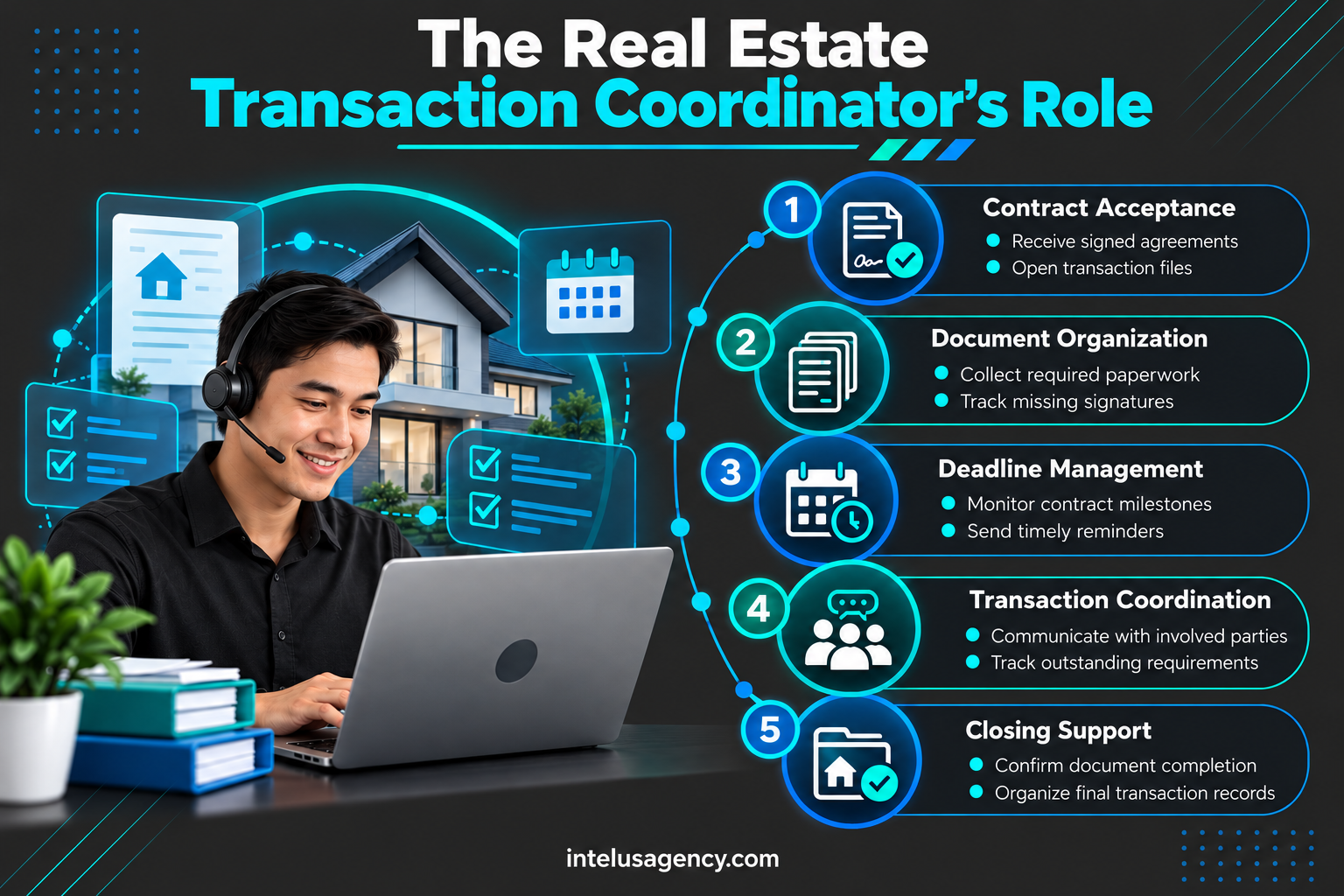
A real estate transaction coordinator is a professional who manages the administrative details of a property transaction, typically from contract acceptance through closing. Their primary responsibility is to keep documents organized, monitor deadlines, and coordinate communication between everyone involved in the transaction. For agents handling multiple deals, a coordinator provides essential support that helps transactions move forward efficiently.
Unlike general administrative assistants who may handle scheduling, marketing, and everyday office tasks, transaction coordinators focus specifically on the real estate transaction process. They work closely with agents, buyers, sellers, lenders, title companies, and escrow officers to ensure required paperwork is collected and important milestones are tracked.
A transaction coordinator also helps maintain accurate records, follows up on outstanding documents, and supports compliance with brokerage procedures. While they manage administrative responsibilities, negotiations, contract advice, and activities requiring a real estate license remain with appropriately licensed professionals. The exact responsibilities depend on state regulations and brokerage policies.
For growing real estate businesses, working with a real estate virtual assistant who specializes in transaction coordination can provide flexible support without expanding an in-house administrative team.
Ultimately, a reliable transaction coordinator brings structure and consistency to an otherwise complex process. By managing the details behind each transaction, they help agents reduce administrative pressure, maintain professional communication, and deliver a more organized experience for clients from contract to closing.
Why Real Estate Agents Keep Good Transaction Coordinators for Years
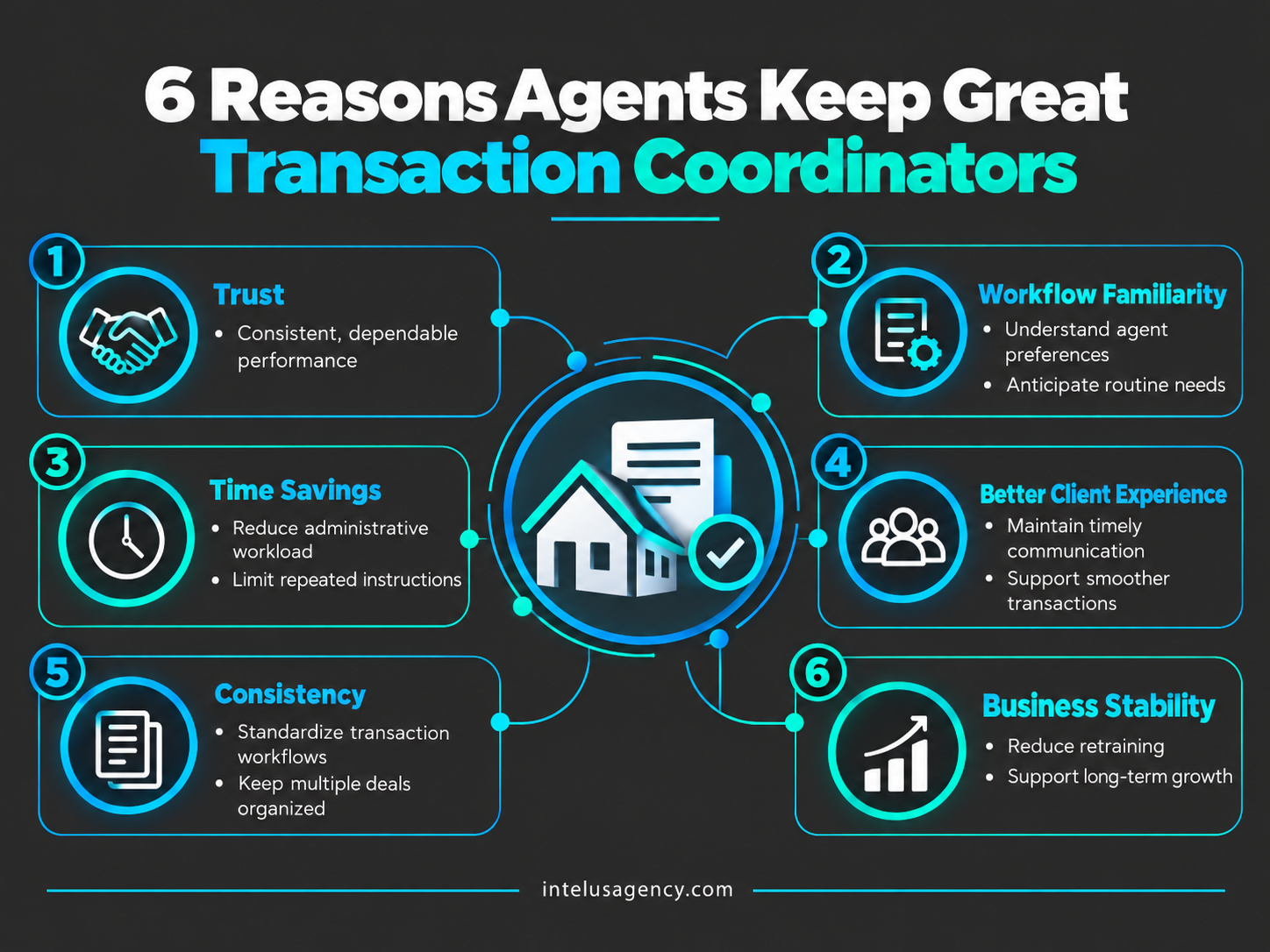
A reliable transaction coordinator does more than manage paperwork. Over time, they become a trusted part of an agent's business, providing consistency, organization, and dependable support. Strong real estate business practices rely on repeatable processes, and experienced coordinators help maintain those standards across every transaction.
Trust Built Through Consistent Performance
Trust develops when a coordinator consistently meets deadlines, maintains accurate records, and communicates proactively. Agents gain confidence knowing that important administrative responsibilities are handled without constant supervision.
Familiarity With an Agent's Workflow
Long-term coordinators understand an agent's communication preferences, brokerage requirements, and transaction management systems. This familiarity reduces repeated instructions and allows coordinators to anticipate routine needs before they become problems.
Reduced Administrative Workload
An experienced transaction coordinator takes ownership of recurring administrative tasks, including document collection, deadline monitoring, and transaction updates. Agents spend less time managing paperwork and more time focusing on clients and sales opportunities.
Better Communication and Client Experience
Clients appreciate timely updates and organized communication throughout the buying or selling process. A dependable coordinator helps maintain consistent follow-ups, reducing confusion and creating a smoother transaction experience.
Consistency Across Multiple Transactions
As transaction volume increases, maintaining the same level of organization becomes challenging. Long-term coordinators establish reliable workflows that help agents manage multiple deals without sacrificing administrative accuracy.
Operational Stability and Business Growth
Replacing a coordinator often requires additional training and adjustments to established processes. Keeping an experienced professional provides continuity and allows agents to focus on prospecting, building relationships, and closing deals.
Familiarity with real estate platforms further strengthens this partnership by supporting consistent digital workflows.
Ultimately, agents retain great transaction coordinators because their value grows with experience. The longer they work together, the more efficiently they can support daily operations and long-term business goals.
What Does a Real Estate Transaction Coordinator Do?
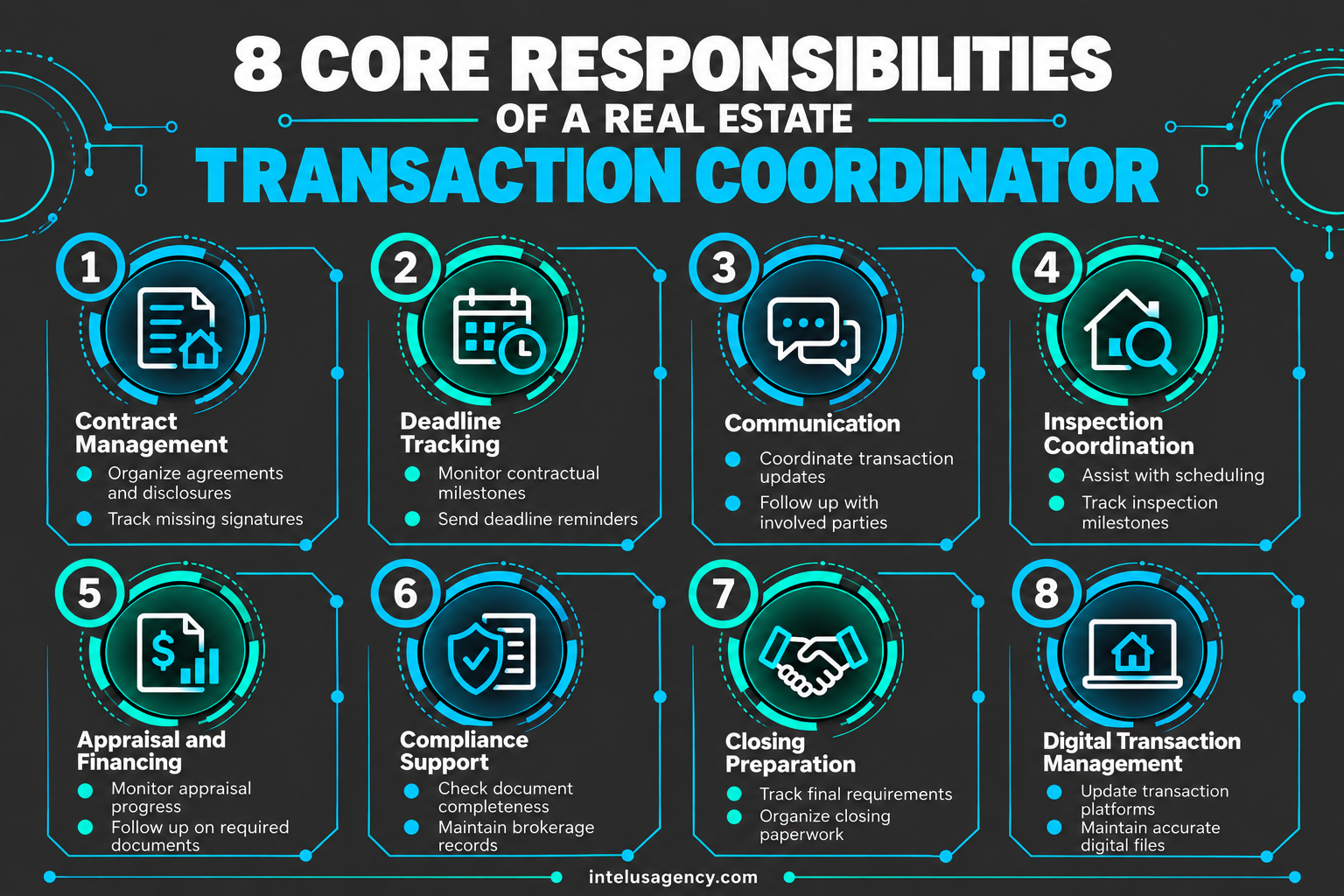
A real estate transaction coordinator handles the administrative responsibilities that keep property transactions organized from contract acceptance to closing. While agents focus on negotiations, client relationships, and sales, coordinators manage the documentation, deadlines, and communication required throughout the process. Effective real estate transaction management depends on these details being handled consistently and accurately.
Contract and Document Management
Every real estate transaction involves purchase agreements, disclosures, addenda, and other important documents. A transaction coordinator organizes these records, checks for missing information or signatures, and ensures paperwork is stored in the appropriate transaction files.
Maintaining complete documentation helps agents access important information quickly and reduces unnecessary delays caused by misplaced or incomplete paperwork.
Transaction Deadline Tracking
Real estate contracts include important deadlines for inspections, financing, appraisals, and closing preparations. Missing these dates can create complications for buyers, sellers, and agents.
A transaction coordinator monitors contractual timelines, maintains transaction calendars, and sends reminders to relevant parties. This organized approach helps agents stay informed about upcoming requirements without constantly reviewing every transaction themselves.
Communication Between Transaction Parties
Successful closings require consistent communication among buyers, sellers, real estate agents, lenders, title companies, and escrow officers.
Transaction coordinators facilitate administrative communication by sharing updates, requesting outstanding documents, and following up on pending requirements. They help ensure everyone understands the next steps while leaving negotiations and licensed responsibilities to the appropriate professionals.
Inspection, Appraisal, and Financing Coordination
After a contract is accepted, several important activities must take place before closing.
A coordinator helps schedule inspections, tracks appraisal milestones, and follows up on financing-related documentation. They also monitor whether required reports and updates have been received, allowing agents to address potential issues promptly.
Compliance Documentation Support
Brokerages often require specific disclosures, signed agreements, and transaction records to maintain compliance with internal procedures and applicable regulations.
A transaction coordinator reviews files for administrative completeness, identifies missing documentation, and helps maintain organized records. However, legal interpretation and activities requiring a real estate license remain the responsibility of authorized professionals.
Closing Preparation and Follow-Up
As closing approaches, transaction coordinators help confirm that required documents have been collected and outstanding administrative tasks are completed.
They coordinate closing-related updates, communicate with title or escrow representatives, and organize final transaction records. After closing, they may also assist with file archiving and administrative follow-up.
Transaction Management Software and Digital Workflows
Modern coordinators use transaction management platforms, electronic signature tools, shared calendars, and cloud-based document systems to streamline daily operations.
These technologies make it easier to monitor transaction progress, maintain accurate records, and collaborate remotely. Digital workflows also support consistency when agents manage several transactions simultaneously.
Businesses seeking specialized administrative assistance can explore Intelus Agency's real estate support services to strengthen their transaction workflows.
Ultimately, a dependable transaction coordinator brings organization, accountability, and consistency to the contract-to-close process, allowing agents to concentrate on serving clients and growing their businesses.
How Transaction Coordinators Help Real Estate Businesses Grow
As real estate businesses expand, managing multiple transactions becomes increasingly demanding. Professional transaction coordination allows agents to focus on revenue-generating activities while maintaining organized workflows and consistent client service. Companies like Intelus Agency provide outsourcing solutions that help growing teams manage administrative responsibilities more efficiently. According to real estate industry research, understanding market activity and changing business conditions is essential for real estate professionals planning sustainable growth.
More Time for Revenue-Generating Activities
By handling paperwork, deadline reminders, and transaction follow-ups, coordinators free agents to focus on prospecting, securing listings, negotiating offers, and building client relationships.
Improved Efficiency and Fewer Administrative Delays
Organized transaction files, standardized checklists, and consistent deadline tracking reduce the risk of overlooked administrative tasks. Coordinators help ensure important documents and updates receive timely attention.
Consistent Client Communication
Reliable communication strengthens the client experience. Transaction coordinators provide administrative updates, coordinate with transaction partners, and help keep buyers and sellers informed throughout the closing process.
Support for Higher Transaction Volumes
As agents handle more deals, administrative responsibilities increase. A dedicated coordinator helps maintain consistent workflows across multiple transactions without requiring agents to manage every detail personally.
Flexible In-House and Outsourced Support
In-house coordinators work directly within a brokerage, while outsourced professionals can provide remote administrative support based on business needs. Both arrangements can be effective depending on transaction volume, budget, and workflow requirements.
Teams using modern real estate platforms can streamline collaboration with remote coordinators, making outsourcing a practical option for scalable business growth.

Conclusion
A real estate transaction coordinator does more than manage contracts and paperwork. By organizing documents, tracking deadlines, and maintaining communication, they provide dependable support that helps agents deliver smoother transactions and better client experiences.
Over time, reliability, consistency, and familiarity with an agent's workflow create lasting professional relationships. Experienced coordinators become trusted partners who reduce administrative pressure, maintain operational stability, and give agents more time to focus on clients, listings, and business growth.
For growing real estate businesses, outsourcing transaction coordination offers a flexible way to strengthen daily operations. Resources such as small business growth resources can also help agents evaluate opportunities to improve efficiency.
Intelus Agency offers outsourcing solutions for real estate professionals, including support for real estate listing management.
Ready to simplify your transaction workflows and grow your business? Book an outsourcing consultation to explore dependable administrative support tailored to your needs.